 Admin
Admin My maasi lost 11 kilos in just about 8 months. No gym. No nutritionist. No exotic imports from a super-store. What she actually did was pretty dull to describe- she quit her usual paratha breakfast and took to the simple meals her mother used to feed her; moong dal chilla, ragi porridge, daliya with last night’s leftover sabzi…and that was it. This thought of hers lingered while I was wrestling with my weight loss because every “healthy breakfast” article I chanced upon assumes you have a fridge full of kale. Mine contained half an onion and a portion of last night’s deal. A slightly different problem, you see. I realized after years of trial and error and truly horrifying diet smoothies which tasted like regret- Indian breakfast foods, made the traditional way, are actually among the best foods to eat for weight loss. We just somewhere forgot about it in between Maggi turning into a breakfast food and breakfast cereals claiming to be “heart healthy”. It’s about taking it back to its basics. Healthy Indian Breakfast Recipes are the perfect way to start your day with energy and balanced nutrition. From protein-rich moong dal chilla to wholesome vegetable upma and oats idli, these easy breakfast ideas are delicious, filling, and suitable for the whole family.
What Your Breakfast Actually Needs to Do
This is where I’d recommend people start. Not because it’s chic and “nutritionist approved” by some magazine, but because it works, it’s surprisingly satisfying for something this light, and after the first attempt at the batter, you can knock out two in under ten minutes.
Soak a cup of yellow moong dal for five to six hours. Grind into a fine batter – not too thick and not too thin, in between the two. Add a finely chopped onion, a green chili if you like spice, a bit of turmeric, cumin, salt and fresh coriander. Put a non-stick tawa over medium heat, pour in a ladleful of batter, and spread out into a circle. Two or three minutes, flip and another two minutes. Done.
Eat with pudina chutney or plain dahi. That’s it.
Two chillas contain anywhere between 12-14 grams of protein and will keep you full until at least lunch. The reasoning behind this is that moong lentils are very high in plant protein, and their high fiber content slows down digestion immensely. In fact, your body will still be breaking down your breakfast while your co-workers are checking their mailboxes for that packet of biscuits.
The Recipes
Moong Dal Chilla
This is where I’d tell everyone to start. Not because it’s trendy or because some nutritionist put it in a magazine — but because it genuinely works, it’s filling in a way that feels almost surprising for something so light, and once you get the batter right, you can make two of them in 10 minutes flat.
Soak a cup of yellow moong dal for about five or six hours. Grind it into a smooth batter — not too thick, not watery, somewhere in between. Add a finely chopped onion, green chilli if you want it, a little turmeric, cumin, salt, fresh coriander. Heat a non-stick tawa on medium, pour a ladle of batter, spread it in a circle. Two to three minutes, flip, another two minutes. Done.
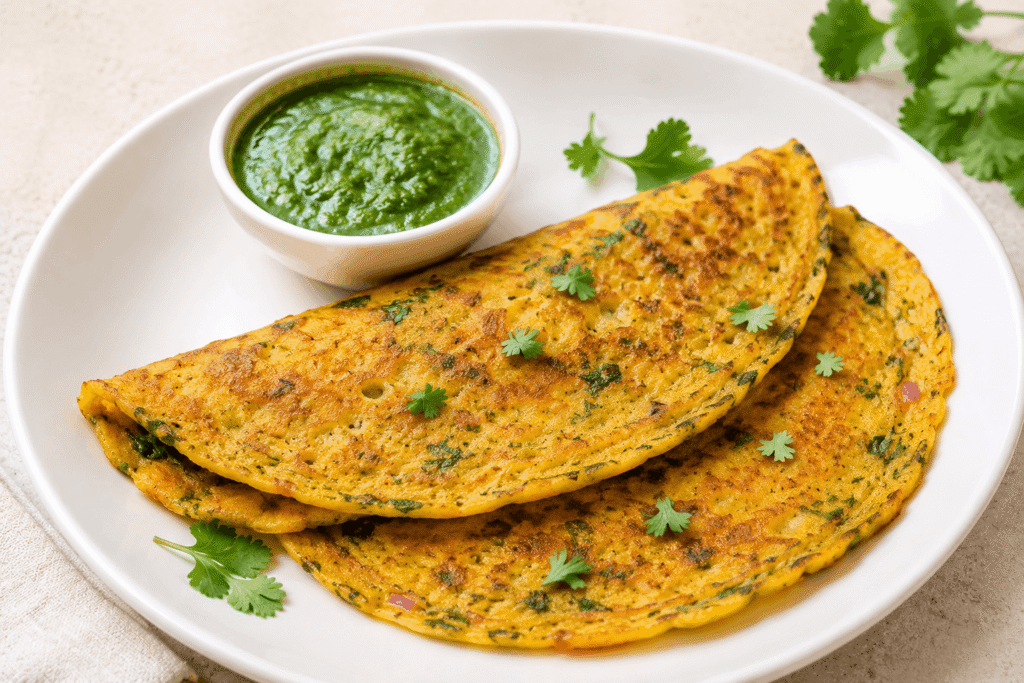
Eat it with pudina chutney or plain dahi. That’s it.
Two chillas gives you somewhere around 12-14 grams of protein and keeps you full easily until noon. The reason is that moong lentils are very high in plant protein and the fibre in them slows digestion considerably. Your body is basically still processing breakfast while your colleagues are already eyeing the biscuit tin.
One variation I actually prefer — stuff a teaspoon of grated paneer in the centre before folding. Adds protein, tastes a lot more indulgent than it is.
Check Previous Blog: Healthy Fast Food Recipes You Can Make
Oats Upma
I know. Just stay with me.
The version of oats upma that you’re imagining-the bland, grey hospital mush-is not the version I’m talking about. The version that’s actually delicious requires you to dry-roast your rolled oats in a dry pan until they give off a faintly nutty aroma. Trust me on this one. It makes all the difference. Do not skip this step.
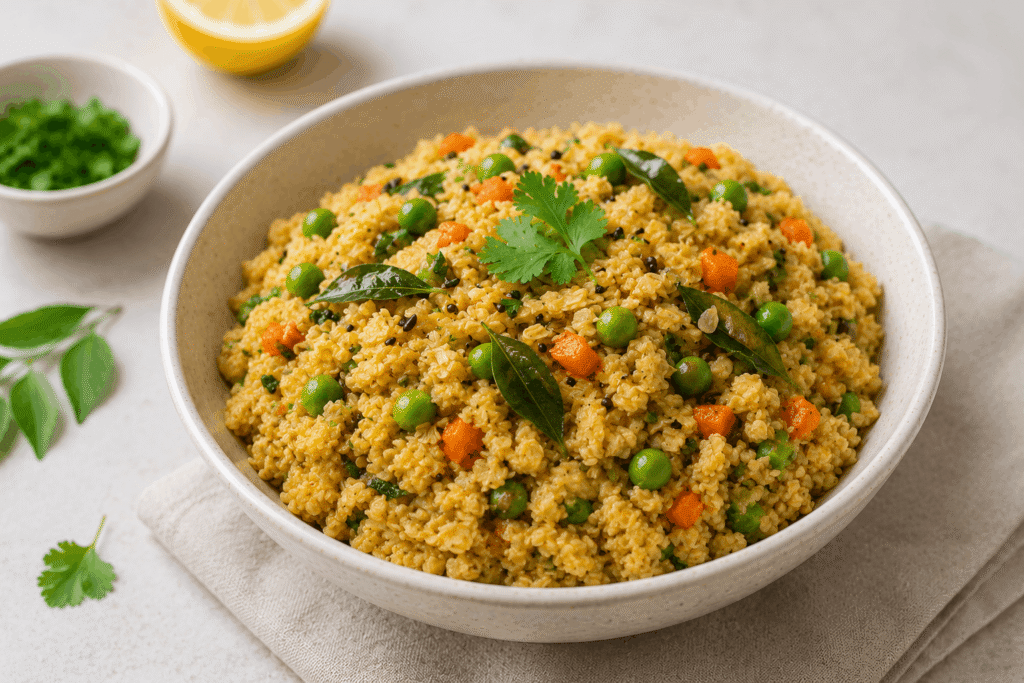
And then it’s simply upma. Put the mustard seeds into hot oil, then curry leaves, urad dal, ginger, finely chopped veggies(I tend to use whatever I have available on and off, mainly carrots, capsicum, green peas). Saute for a couple of minutes, then stir in the roasted oats, and add the water(slightly more than 1.5 times the amount of oats), and stir over medium heat until it thickens to a cooked consistency. Juice plenty of lemon and serve hot
And why this specific dish works so brilliantly for weight loss- oats have a certain component called beta-glucan which is a type of soluble fiber. It’s particularly excellent at keeping your blood sugar levels stable. For anybody with PCOS or insulin resistance (an incredibly common, and incredibly under-diagnosed problem among Indian women), stable blood sugar is about half the battle. Oats upma achieves this in the span of 15 minutes like nothing else.
Poha — Made Properly This Time
Poha gets a bad reputation in diet circles and it’s not entirely unfair, but it’s also not the whole story.
The problem version of poha has too much oil, potatoes (which add basically nothing nutritionally), and no protein to speak of. That version isn’t great for weight loss. But that’s a preparation problem, not a poha problem.
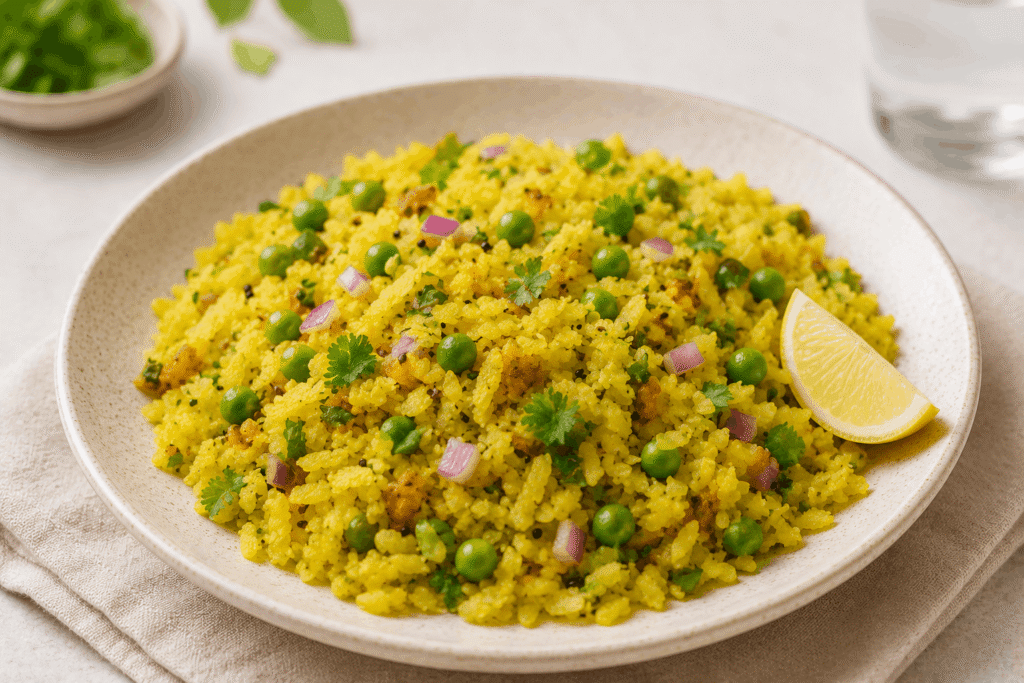
The version that works: use thin poha, rinse it well, let it drain. One teaspoon of oil — measure it, don’t eyeball it. Mustard seeds, curry leaves, green chilli, turmeric. Skip the potato entirely. Add whatever vegetables you have — frozen peas work perfectly fine. Add the drained poha, toss on low heat, finish with lemon and coriander.
That version is around 200 calories, has decent iron content (thin poha is a reasonable source), and is satisfying in a way that feels like you actually ate something real. Which is more than you can say for most “healthy” packaged breakfast options.
Check Previous Blog: Healthy Recipes Using Curd: 10 Nutritious
Sprouted Moong Salad
No cooking whatsoever needed for this dish – the very purpose it serves on mornings you oversleep or cannot even consider going near a hot stove at 7 AM.
Soak the entire moong dal overnight. Drain and wrap it in a wet cloth or place it in a sprouting jar overnight. By morning, you should have sprouts. Wash it and add to a bowl with chopped cucumber and tomato, a small amount of finely chopped onion, a pinch of chaat masala, a squeeze of lemon juice and salt and freshly chopped coriander. It takes five minutes to assemble.
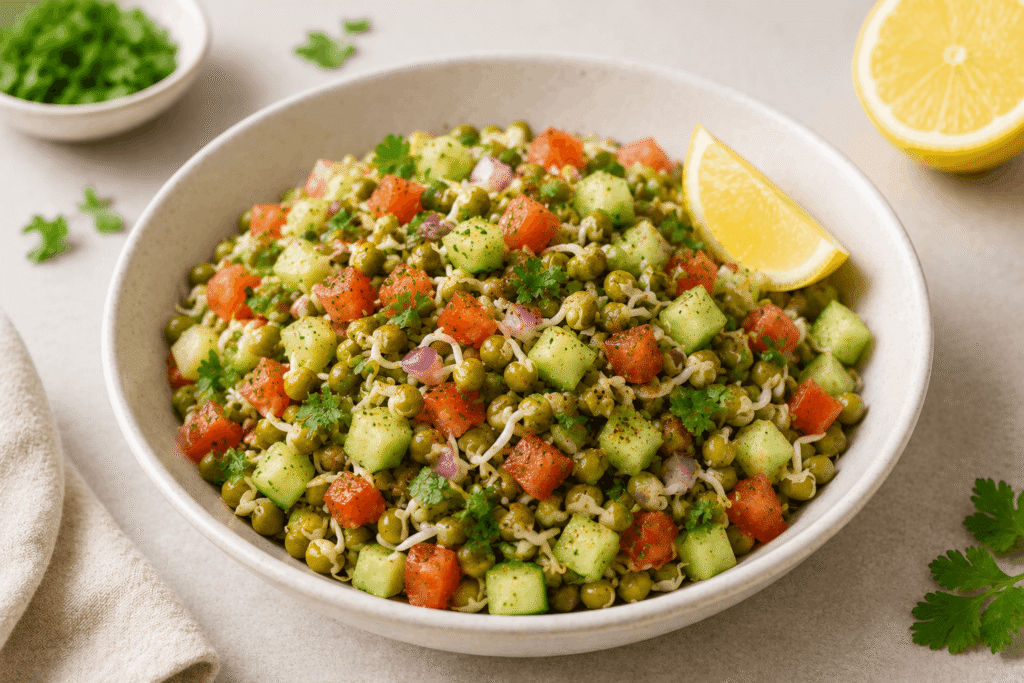
Sprouting changes the nutrient profile of the lentils in very beneficial ways-the protein is more easily assimilated, certain nutrients increase, and compounds that lead to flatulence (which is the reason many people avoid lentils) are reduced considerably. Even people who cannot stomach well generally find sprouted moong quite palatable.
A large bowl of this dish should be less than 150 calories, so it is by far the lowest calorie dish on this entire menu. Good to remember the next morning after a dinner that got a little out of hand.
Idli and Sambhar
Two or three idlis with a bowl of vegetable-loaded sambhar is a complete meal. Anyone who tells you idli isn’t good for weight loss is probably eating six of them with half a cup of coconut chutney and wondering why it’s not working.
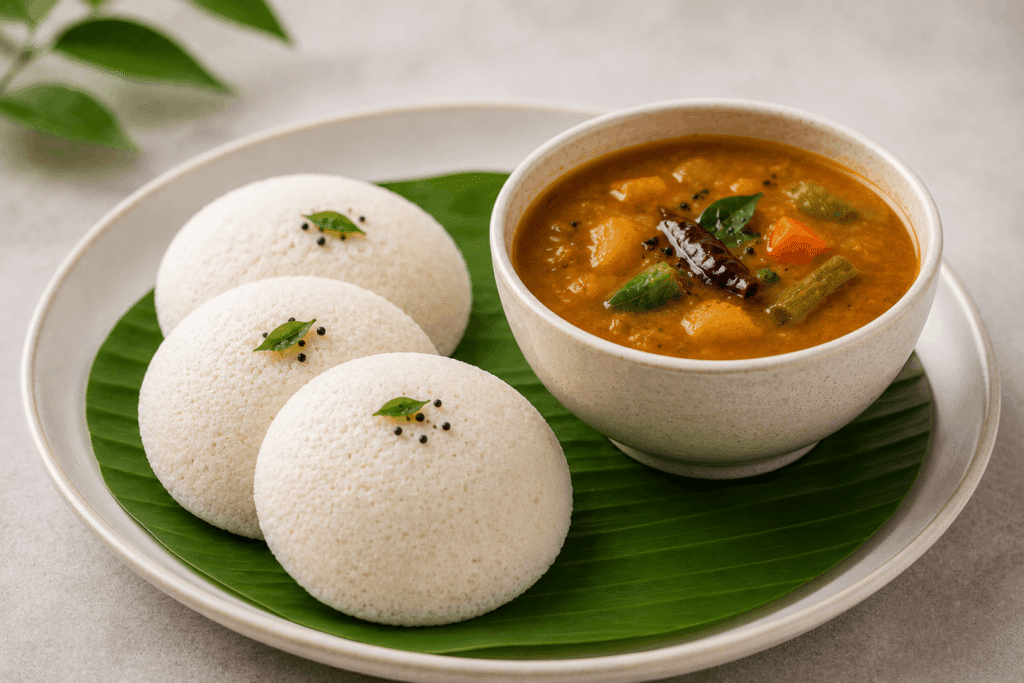
The fermentation is what makes idli genuinely good for you. Overnight fermentation creates lactic acid bacteria — probiotics — that support gut health in ways that are increasingly being linked to weight regulation. Your gut microbiome affects how efficiently you extract calories from food, how much of what you eat gets stored as fat, and even how hungry you feel. Idli supports all of this.
If you want to improve the recipe further, replace 30-40% of the rice in the batter with ragi flour or rolled oats. The idlis come out slightly denser but the glycaemic index drops noticeably, which means less blood sugar spike, less insulin response, less fat storage. Small change, real difference.
Check Previous Blog: High Protein Indian Breakfast Recipes for Muscle
Besan Cheela with Paneer Filling
This besan chilla is what moong dal chilla is to some people and chickpea flour pancakes to some, depending on where your mother is from and so on. Both are very good. The besan variety is slightly more filling though.
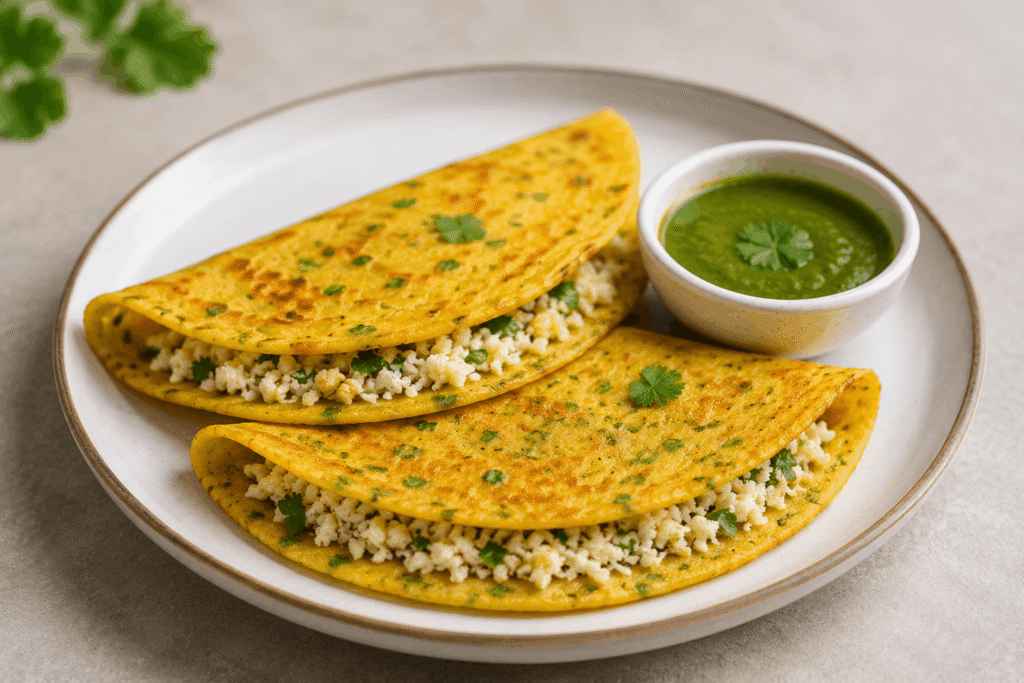
Mix your batter with besan, ajwain, red chilli powder, salt and sufficient water to get a runny, lump-free batter. Fill with some grated low-fat paneer before folding. Fry each cheela on a non-stick pan using one teaspoon of oil.
With chickpea flour and paneer, you’re looking at approximately 15g of protein per cheela. This is a really straightforward way of getting your protein numbers up for vegetarians without needing supplements and such.
Ragi Porridge
Ragi (finger millet) is genuinely one of the most nutritious grains you can eat and somehow it still feels like a secret outside of South India.
The calcium content alone is remarkable — higher per gram than most dairy products. For a country where a significant chunk of the population is calcium deficient, particularly women over 35, this matters quite a bit. It also has good iron, solid fibre, and a relatively low glycaemic index compared to wheat or rice.
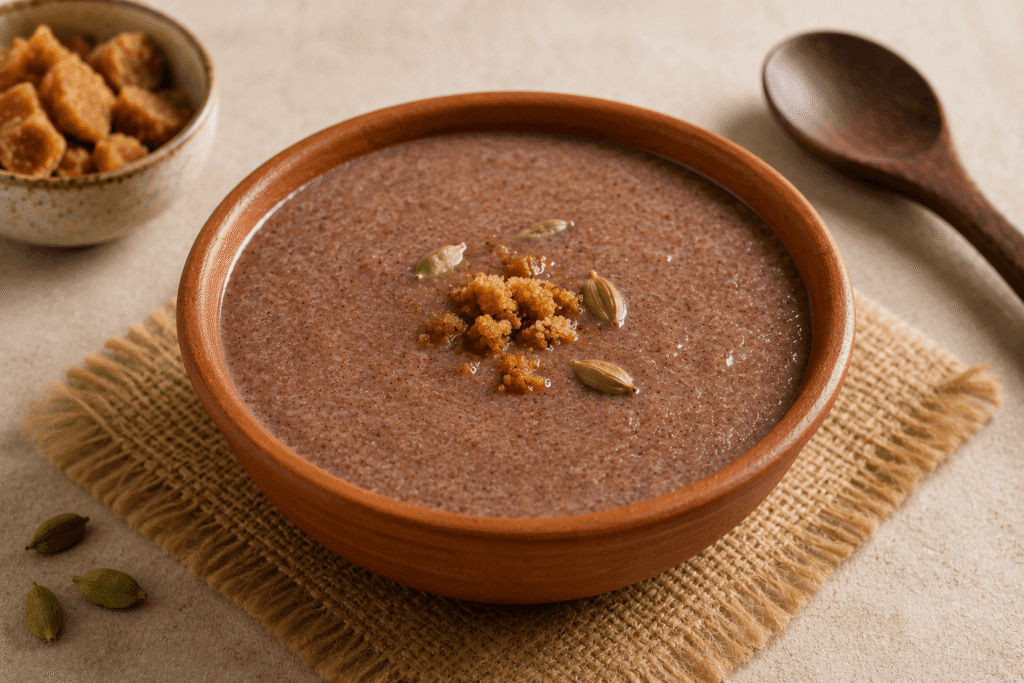
Make the porridge simply. Mix 3 tablespoons of ragi flour with a little cold water to form a lump-free paste. Boil a cup of water or low-fat milk. Add the ragi paste while stirring, keep the heat low, stir continuously for about 6-7 minutes until it thickens. A small piece of jaggery, a pinch of cardamom, maybe some chopped dates for sweetness. That’s all it needs.
It tastes warm and slightly earthy and genuinely satisfying. And it’ll keep you full for hours in a way that’s hard to explain until you try it.
Daliya (Broken Wheat) Upma
Daliya is inexpensive, available at every kirana store across the country, filling and pretty decent if made right. The fact that it’s whole wheat (keeping the bran and germ) means that it is full of fiber and nutrients that processed white flour has totally lost.
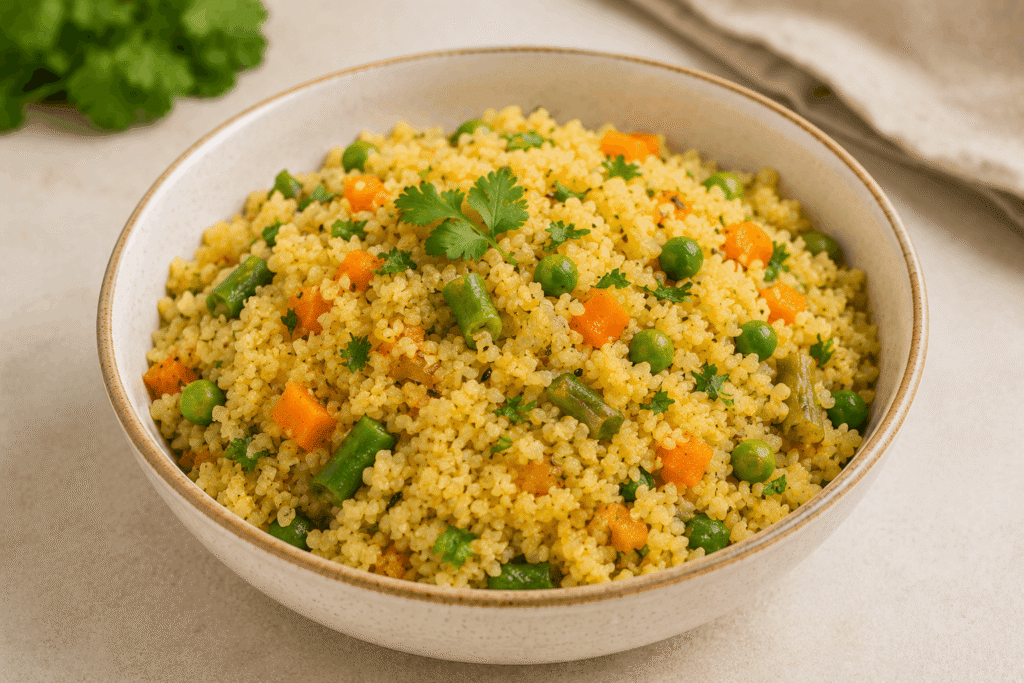
Studies which compare whole grains and processed grain have consistently shown over time that people who eat whole grains lose more abdominal fat, even if their caloric intake is equivalent. This happens because fiber feeds those good bacteria that control fat storage. And that small amount adds up over months.
Prepare it like upma. Dry roast the daliya first. Then tadka with ghee (yes, it’s ok to add a little ghee, it aids in the absorption of fat soluble nutrients). Then cumin seeds, vegetables of your choice, then pressure cook with 1.5 glasses of water with 2 whistles. Then add a squeeze of lemon.
Egg White Bhurji
For those who eat eggs — this is the fastest high-protein breakfast on this list. Four egg whites, one whole egg if you want richness, chopped onion, tomato, green chilli, turmeric, cumin powder. Barely any oil needed if your pan is non-stick. The whole thing is done in 8 minutes.
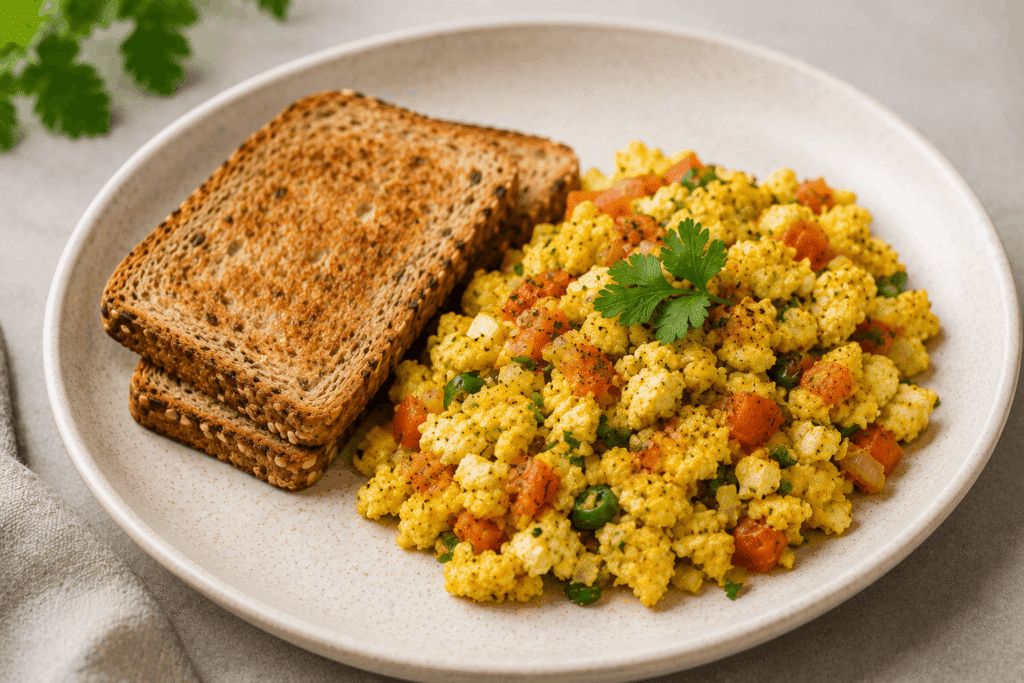
Indian spices make egg white bhurji taste like actual food rather than the bland diet punishment it would otherwise be. The protein content is around 18-20 grams per serving. Protein has what nutrition scientists call a high “thermic effect” — meaning your body spends more energy digesting it than it does digesting carbohydrates or fat. It’s a small effect, but over time, it genuinely contributes to weight loss.
Pair with one or two slices of multigrain bread. Not white bread — white bread behaves almost exactly like sugar in your bloodstream.
Dahi Smoothie with Seeds and Fruit
It’s not every morning that there is the time and ability to cook. Travel days. Restless nights. Starting late. These things happen and are a common scenario, in which case a meal plan will inevitably falter.
This smoothie is designed for days such as these. Low fat curd – provides you with protein, probiotics and calcium all in one package. Half a banana or some papaya will be enough to provide a sweetness that avoids refined sugar. Add some omega 3 fatty acids in the form of a spoonful of chia seeds or flax seeds. Add a few, possibly four or five, almonds (if soaked first) and a pinch of cinnamon.
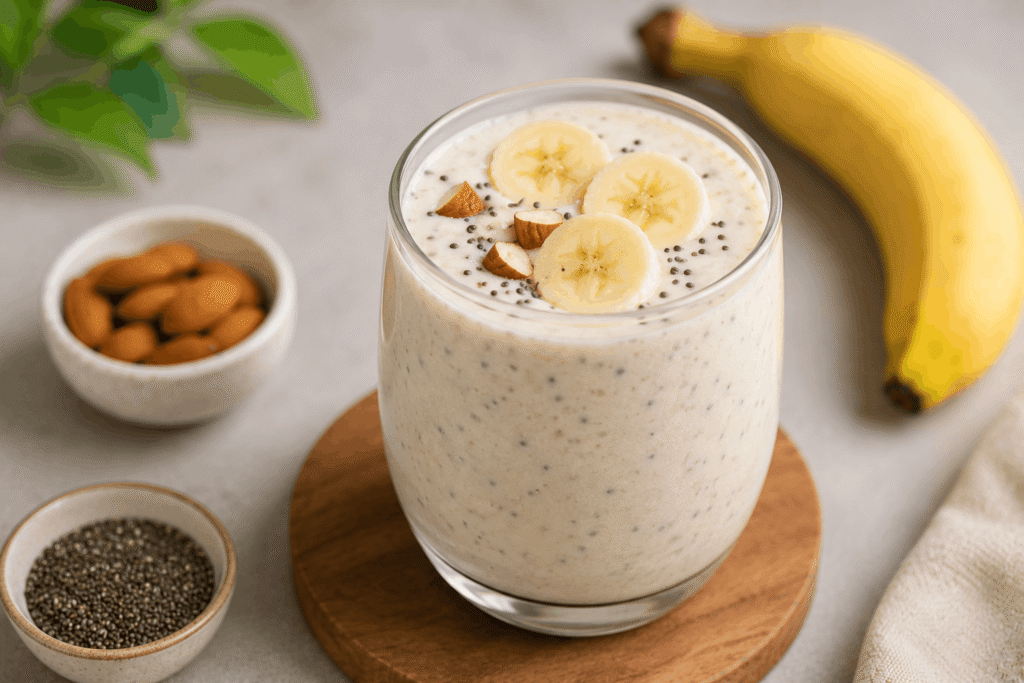
Blend, and drink. Approximately 200 calories. It will take only five minutes and it can be taken with you.
Specifically on cinnamon, I must make a mention of its relevance; even in very small amounts it has a significant influence on blood sugar levels.
Rough Calorie Reference
| Breakfast | Calories | Protein |
| Moong Dal Chilla (2) | ~360 kcal | 24g |
| Oats Upma | ~200 kcal | 7g |
| Vegetable Poha | ~210 kcal | 5g |
| Sprouted Moong Salad | ~150 kcal | 10g |
| Idli + Sambhar (2 idlis) | ~200 kcal | 8g |
| Besan Cheela + Paneer | ~250 kcal | 15g |
| Ragi Porridge | ~170 kcal | 5g |
| Daliya Upma | ~230 kcal | 7g |
| Egg White Bhurji | ~210 kcal | 18g |
| Dahi Smoothie | ~200 kcal | 9g |
The Things That Actually Sabotage Progress
The other issue is oil – specifically, eating too much oil. One extra tablespoon of oil is 120 calories; on the surface that seems trivial, until you realise it’s 200 calories vs. 320 calories per breakfast, seven days a week-that’s nearly 850 extra calories a week. Over the month, that’s substantial. Invest in a good non-stick pan; use a teaspoon, or measure it, until you know how it looks in your pan.
The second thing is eating too fast. Your brain doesn’t register fullness for about 20 minutes after you start eating. If you finish breakfast in four minutes, you’ve still got 16 minutes in which you’ll continue to feel hungry even if you’ve had enough. Eating slower isn’t just a well-being platitude. It’s demonstrably linked to eating less and costs absolutely nothing.
The chai. Just three cups of chai with two teaspoons of sugar each equals 90-120 calories of pure sugar. Most people do not count this. Many people consume four or five cups a day. The numbers get nasty fast. Reducing sugar in chai is arguably the easiest way for most Indians to cut calories with the least discomfort. Healthy Indian Breakfast
One Last Thing
There’s no point searching for Western replacements for Indian food or believing that roti is the enemy. Roti is not the enemy. Too much oil, too much sugar, too much quantity, zero protein in the morning, those are the real enemies.
These recipes come from a cuisine that has sustained a billion people for thousands of years, a diet built on legumes, fermented grains, millets, whole and vegetables. If you take away the recent Westernized additions that crept in over the past few decades, then what remains is fantastic food.
Start by trying one recipe. Try moong dal chilla for the quickest gains. Try ragi porridge if bone strength is also of interest. Try sprouted moong for no cooking required. Try one, practice making it three or four times until it becomes second nature and then try another.
This is how change really happens. Not with an all-out new diet that falls apart after 11 days. Just one good breakfast consistently made over a long time.

 Admin
Admin
[…] and gives your metabolism a nudge before caffeine takes over. Some people add lemon, some soak methi seeds overnight — an old trick, honestly, and there’s something to […]
[…] are Indian breakfasts bad for losing weight? Not at all! If you take a look at what traditional Indian breakfasts were traditionally composed of – fermented batter from lentil, flattened rice, millet porridges, and raw […]
[…] Check Previous Blog: Healthy Indian Breakfast Recipes for Weight Loss […]