
 Admin
Admin For close to 2 years, I tested pretty much every hair oil and every serum and every ‘miracle’ shampoo that flashed across my social media feed. A lot of them had some serious wow-factor smell too. Most of them did absolutely nothing for my hair fall. It was only when a nutritionist friend sat me down and said, “Stop putting money on your scalp and start putting nutrition in your body” — that things actually started changing.
And that changed my perspective on food completely. And if you’re reading this, maybe you’re standing at that same point. Maybe your comb is collecting more hair than it should. Maybe your ponytail feels thinner than it used to. Whatever brought you here — you are in the right place.
Because today we are going to talk about the best vegetables for hair growth, and how to build a proper diet plan around them that works for the Indian lifestyle. Not a complicated one. Not an expensive one. It is a pragmatic and attainable recipe using ingredients in your kitchen or local fruit & veg shop.
First, Why Hair Falls in the First Place
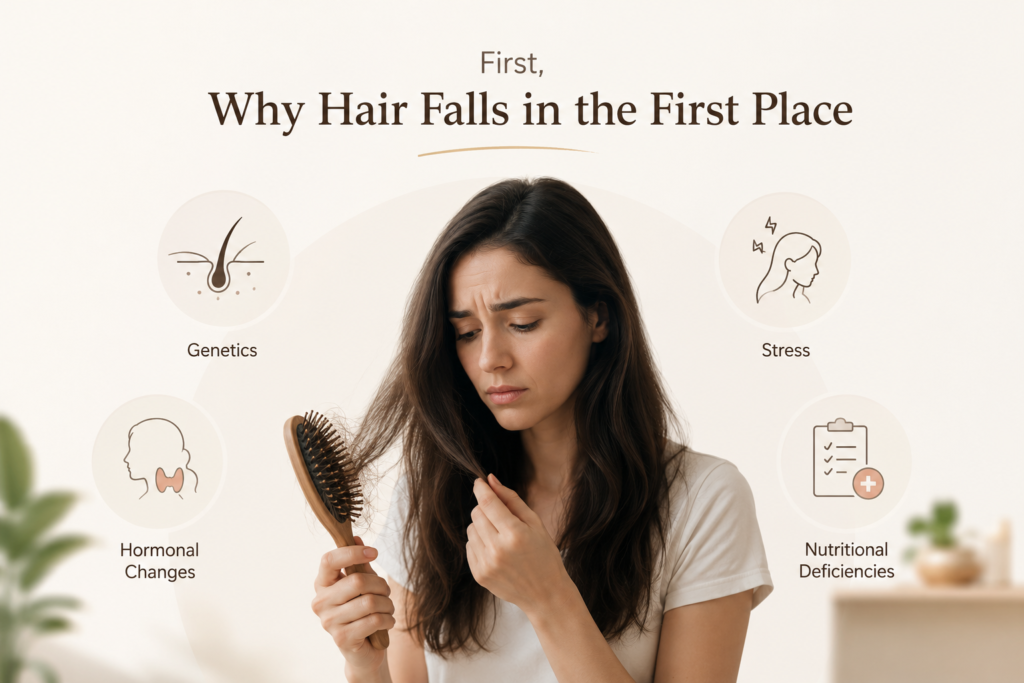
Your hair does not fall because your shampoo is wrong. It falls because your body is trying to tell you something. Actually hair growth is quite low on the body’s agenda – in the event of nutrient shortage the hair cells will not be receiving anything until heart, liver and brain are well catered for. Hair just doesn’t matter that much.
So when you are not eating enough iron, zinc, protein, or vitamins A and C consistently — hair fall is almost always one of the first visible signs. Iron Deficiency anemia in India- It is one of the most commonly prevalent issues and affects a large number of people and more particularly women of the country. The impact shows as and how much time passes. You can see it in the mirror – thinning hair, shedding more than 100 strands a day, no shine.
The solution is not another oil. It is a smarter diet plan. Specifically, a diet plan built around the best vegetables for hair growth — and that is exactly what we are building today.
1. Spinach (Palak) — The One Your Dadi Was Right About
Here is the thing about spinach — it is not trendy. It is not fancy.It still just softly will get a whole lot accomplished for the hair in comparison with even very costly supplements
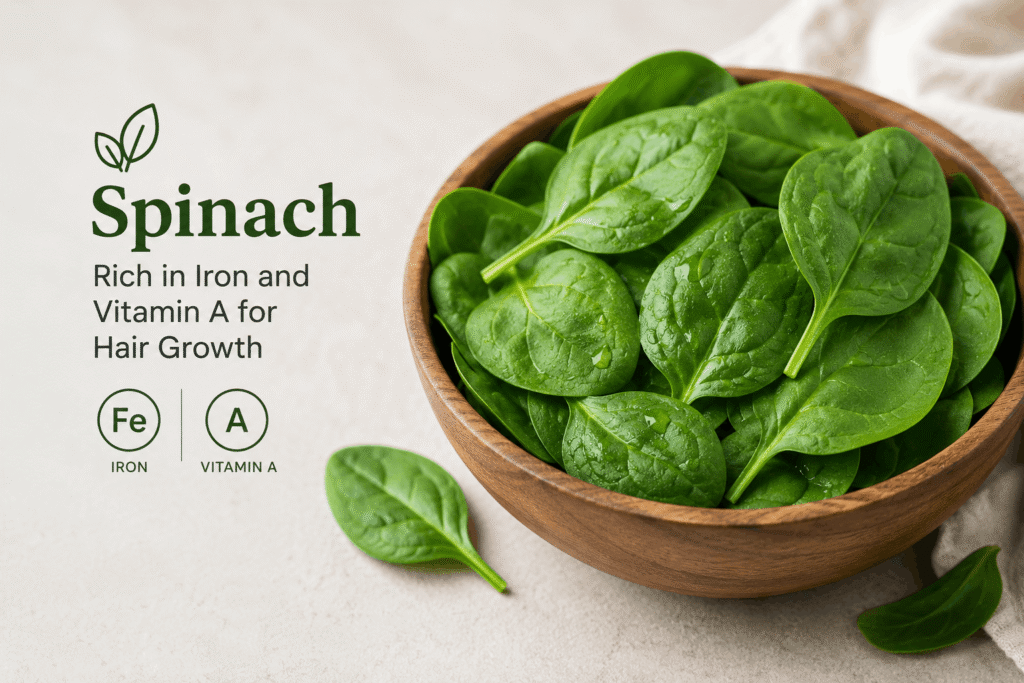
The fact that palak is also packed with folate, iron and vitamin A and vitamin C makes it near perfect as a food designed to create an optimal environment for your hair to thrive. The iron within the leaf provides the means for your body to deliver oxygen to your hair follicles – because when these can’t get oxygen, they shut down for a while and cause your hair to begin to thin. Vitamin C steps in here and helps your gut absorb that iron more efficiently — so every bite works harder.
Vitamin A, on the other hand, supports sebum production.Sebum, also known as oil or our scalp moisturizing and hair conditioning agent, protects hair from becoming dry and brittle. If your body is properly nourished with adequate amounts of foods such as spinach containing vitamin A, then the scalp health will maintain hair protection.
And folate? It encourages cell division. New cells mean new hair growth. Simple as that.
Real talk tip: Do not boil spinach until it turns into mush.Gently sauté in some ghee or olive oil with a bit of garlic. Or blitz a handful with your morning amla & banana smoothie. Take around 3 to 4 times a week and your scalp will really thank you.
2. Sweet Potato (Shakarkandi) — The Snack That Secretly Builds Hair
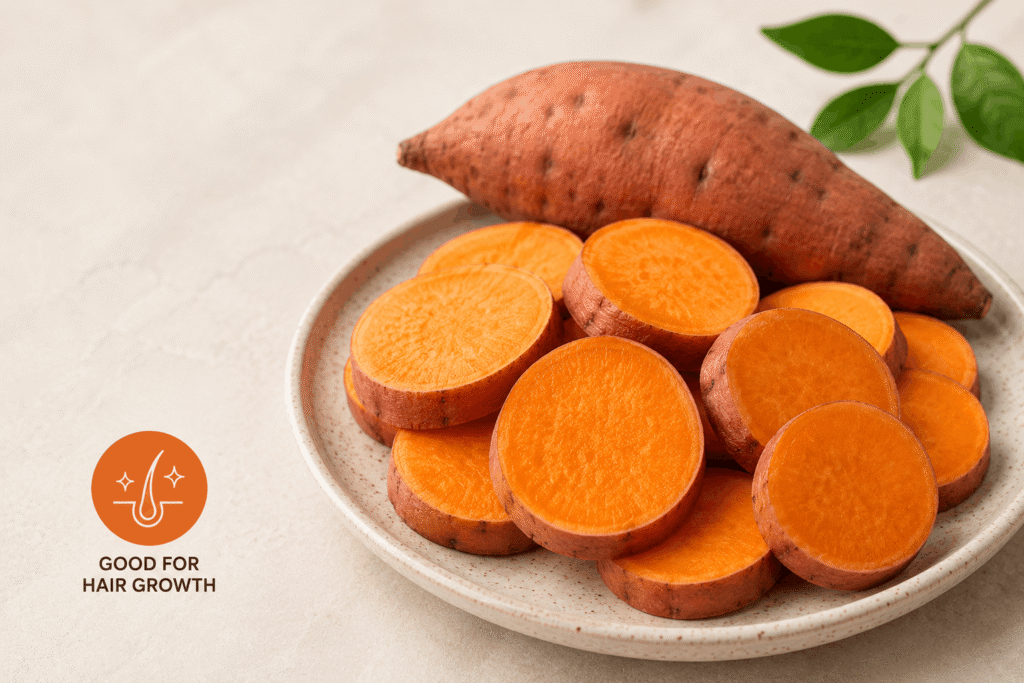
We all are familiar with sweet potatoes or shakarkandi (in India) in the form of a street food and dessert during winters where they are roasted over coals and served with chaat masala, a squeeze of lime and a generous dollop of yogurt. What we perhaps did not know is, sweet potato is one of the most beta-carotene packed foods on the earth.
Your body converts beta-carotene into vitamin A — the same vitamin we just talked about in spinach. But sweet potato delivers it in significantly higher doses. A single medium sweet potato can give you more than 100% of your daily vitamin A requirement. That is not a small thing.
Vitamin A You know what’s really bad for your hair? A lack of vitamin A, also called retinol, which makes hair dry, flaky, and likely to break off on its own in many pieces throughout the day. Including sweet potato in your diet plan helps reverse that damage from the inside.
It has a hefty dose of Vitamin C and it’s also a great source of dietary fiber, which is essential for overall digestive health. The better your digestion, the better nutrient absorption occurs and the greater chance your body has of sending those benefits back up your scalp.
How to make it work for you: Boil it and eat it as a mid-morning snack. Roast it in the oven with jeera and rock salt. Add chunks of it to your vegetable curry. One sweet potato a few times a week is all you need to start feeling the difference.
3. Carrots (Gajar) — One of the Best Vegetables for Hair Growth That We Ignore
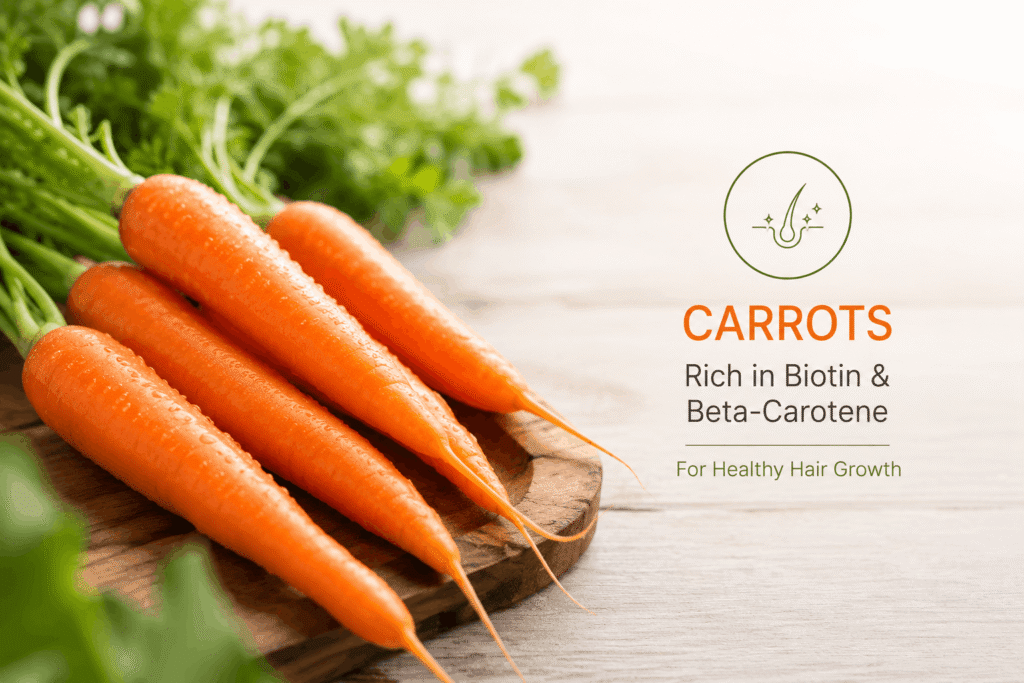
Here is something I did not know until recently — carrots are actually one of the best vegetables for hair growth specifically because of biotin.
Most people associate biotin with supplements. The ones sold in shiny bottles with “Hair, Skin & Nails” printed on them. But biotin is a B-vitamin found naturally in foods like carrots. It supports keratin production — and keratin is literally the protein that your hair is made of. When your biotin intake is even slightly low, the first thing to suffer is hair thickness and strength.
Besides this important biotin, your root has:- beta carotene (turns into Vitamin A in the body when consumed, yet has its own direct perks for hair!)- B vitamin 6- B vitamin 12- plenty of antioxidants to help protect hair from pollution and UV exposure. It would be especially useful if you’re living in a metro like Delhi, Mumbai, Bangalore etc where you regularly get a dose of harmful environmental factors!
Practical suggestion: Eat a handful of raw carrot sticks every afternoon as a snack. Or drink fresh gajar-beetroot juice three mornings a week. Raw is better than cooked here — heat breaks down some of the more delicate nutrients in carrots.
4. Fenugreek (Methi) — The Vegetable That Belongs in Your Meals AND Your Hair Routine
Methi is one of those vegetables that Ayurveda figured out thousands of years ago and modern science is still catching up to.
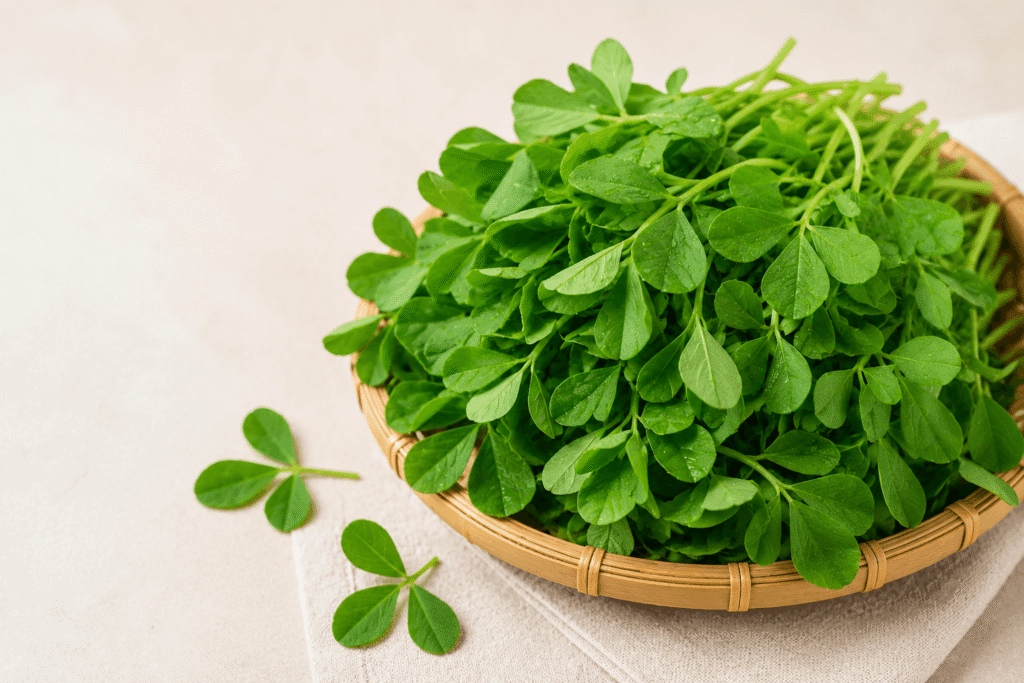
Fenugreek leaves are rich in protein, iron, and nicotinic acid — a compound that directly stimulates hair growth at the follicle level. The seeds also contain lecithin, which hydrates and strengthens hair strands individually. And there is emerging research around the ability of fenugreek compounds to interfere with DHT — the hormone responsible for pattern hair loss in both men and women.
What I love most about methi as part of a hair growth diet plan is that it does not ask you to change your lifestyle dramatically. You are probably already eating methi paratha or methi aloo at some point during the week. Just make it more intentional. Make it more frequent.
The slight bitterness of methi leaves is actually a good sign — that flavor comes from phytonutrients that have real biological effects inside your body. Do not be tempted to cook the bitterness out completely.
One small habit worth trying: Soak a tablespoon of methi seeds overnight in a glass of water and drink it first thing in the morning. Bitter, yes. Worth it, absolutely.
5. Amla (Indian Gooseberry) — Vitamin C So Concentrated It Almost Feels Unfair
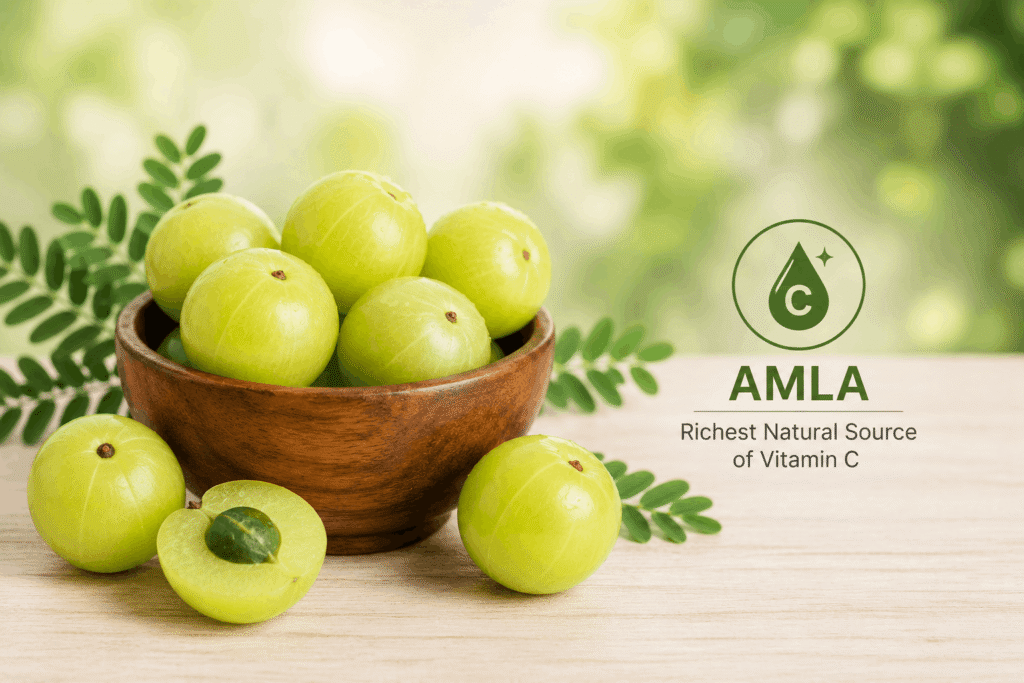
A single fresh amla contains roughly as much vitamin C as 20 oranges. That is not a typo. And for hair growth, vitamin C does three critical things at once — it builds collagen (the structural foundation of your hair follicles), it dramatically improves iron absorption from your gut, and it protects your scalp cells from oxidative damage.
Collagen is something most people hear about in the context of skin.But at the base of your hair are these specialized follicles embedded in a collagen-rich matrix, which helps anchor them. But a deficiency of vitamin C destabilizes this matrix causing hair to shed too soon in its lifecycle.Amla directly addresses this.
It is also deeply cooling according to Ayurvedic principles, which means it helps manage internal heat — something that traditional medicine has linked to premature hair fall, especially during hot Indian summers.
How to use it daily: The best thing is to consume fresh amla juice every morning on an empty stomach. In case fresh is not available, you can consume amla powder soaked in warm water. Even amla pickles will help if taken in small quantities. If you continue to make it a daily ritual, observe what unfolds after three months!
6. Onion (Pyaaz) — The Most Underestimated Vegetable for Hair Health
Pyaaz is in practically every Indian dish. We have been unknowingly supporting our hair health for centuries through our cuisine.
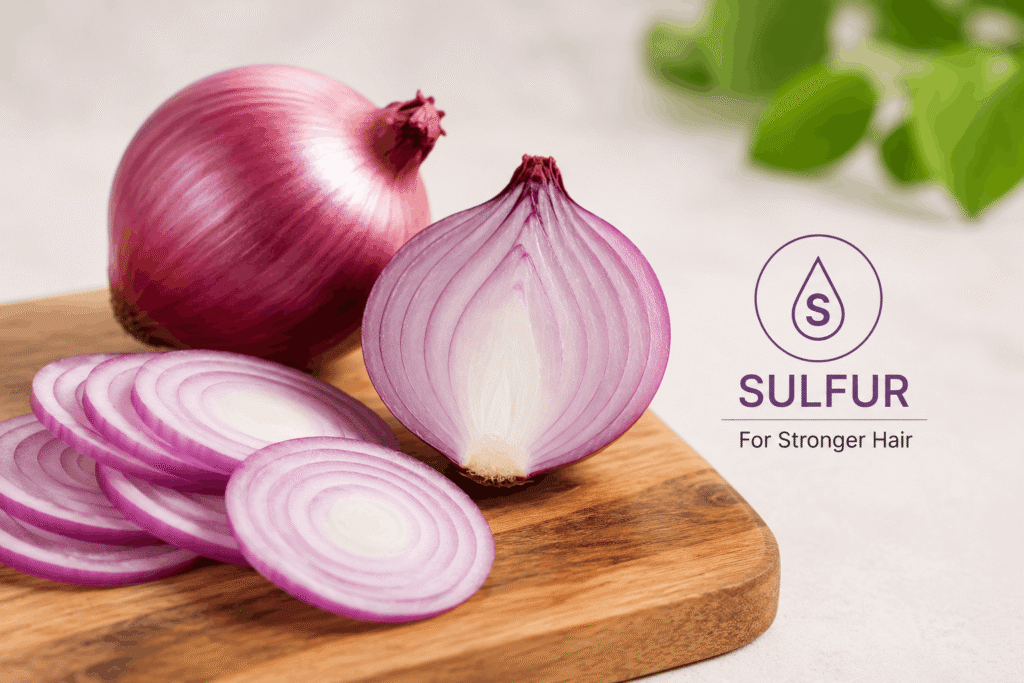
Ours may look like these “alliums” when you visit a Farmer’s Market, onions are incredibly rich plant-based sources of sulfur, which is necessary to make keratin and collagen. These molecules are responsible for binding together the components of your hair fibers creating tensible strength and elasticity. Without sufficient levels, you’ll notice a hair fiber that can break apart at its middle, feels brittle, weak at the root and does not have bounce or volume.
In addition to the sulfur, onions have got a great antioxidant called Quercetin, which brings down the effects of Inflammation and that the inflammation that continues round your hair follicle will be one of the leading – if overlooked causes for gradual thinning hair! Don’t mistake it for hair thinning in the short term because it just steadily begins to slowly shrink your hair follicle to hair bulb until you suddenly notice a major difference.
Eating onions regularly — especially some portions of them raw — helps keep that inflammation in check. But one problem here: quercetin is also destroyed by heat, which is why the health-promoting compounds in cooked onions are significantly lower than those present in raw onions.
Easy habit: Add a small serving of raw sliced onion to your dal-rice or roti meals a few times a week. It sounds simple because it is. The best habits usually are.
7. Beetroot (Chukander) — The Circulation Booster That Wakes Up Sleeping Follicles
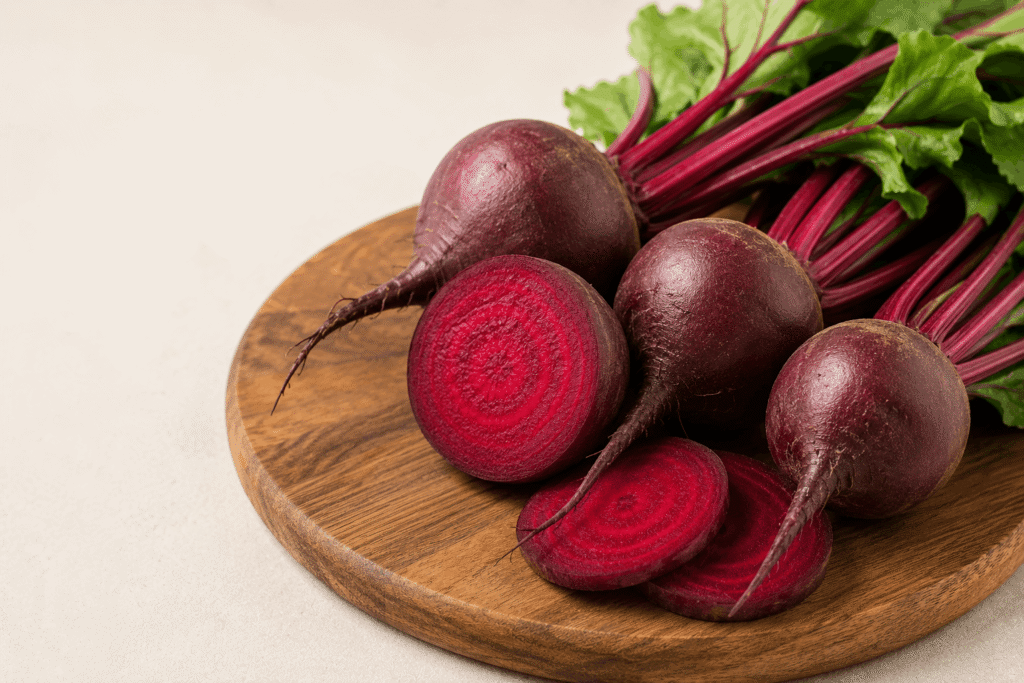
All beets contain heaps of nitrates. When these make their way into your system, the nitrates in your body are transformed into nitric oxide (a molecule which essentially widens your blood vessels and relaxes blood circulation – with results all over your body). Including your scalp.
Better scalp circulation means more oxygen and nutrients physically reaching your follicles. Follicles that have been receiving poor blood supply — which is extremely common at the crown and temples, areas where thinning is most visible — can actually begin functioning more actively again when circulation improves. It is not magic. It is basic physiology.
Beet also provides folate, potassium, iron and betalains (anti-inflammatory compounds that boost liver health). Our liver is a much bigger factor in hair development than we understand. This is due to the fact that the liver controls the hormones connected with hair growth cycle. A fatigued, worn out liver results in hormonal hair loss.
Simple routine: Make gajar-chukander juice three to four times a week; even one glass will work wonders with time. Or toast beet slices and make them a side dish for dinner. It can adapt to any Indian meal you may be preparing.
Building a Practical Diet Plan Around These Vegetables
Knowing the best vegetables for hair growth is step one. Actually eating them consistently — that is where most people struggle.
So here is a framework that is realistic for Indian eating habits:
Morning: Fresh amla juice or gajar-chukander juice. A small handful of soaked methi seeds if you can manage the taste.
Breakfast: Palak poha, methi paratha, or palak dal with roti. Something that gets one leafy green into your first meal.
Lunch: Make this your most vegetable-heavy meal. Rotate through spinach dal, methi sabzi, chukander salad, sweet potato curry, or a mixed vegetable dish that includes at least two of the vegetables from this list.
Evening snack: Raw carrot sticks, roasted shakarkandi with chaat masala, or a small bowl of gajar-pyaaz salad.
Dinner: Keep it lighter, but include a cooked vegetable. A simple palak paneer or methi dal with roti covers both protein and hair-friendly nutrients in one dish.
This is not a diet in the restrictive sense. It is a sustainable, enjoyable, culturally rooted way of eating that happens to be deeply supportive of your hair.
One more thing — pair all of this with enough protein. Dal, paneer, eggs, curd, sprouts. Your hair is made of protein. Vegetables bring the supporting nutrients, but protein is the raw material. Both matter equally.
What Is Working Against You (Even If You Are Eating Well)
Even the best diet plan for hair growth can be undermined if you are simultaneously doing damage elsewhere. Maida, refined sugar, excessive fried food, and packaged snacks create internal inflammation and deplete nutrients your body has to use to neutralize that damage — nutrients that would otherwise go to your hair.
Crash diets are exceptionally damaging for hair. If your calories plummet over a short span, hair begins to appear non-essential to the body. As a result, a nutritional deficit is inflicted on hair follicles right away. Typically, someone realizing the cause of their sudden shedding on a stringent diet will do so only months after it occurred and it is becoming noticeably visible.
The Honest Truth Nobody Tells You
Results from dietary changes take time. Three months is a realistic minimum before you start seeing meaningful changes in hair texture and fall reduction. Six months is when the real transformation becomes visible to others.
That timeline is not a reason to give up. It is actually reassuring — it means the changes are real, structural, and lasting. Not the temporary cosmetic fix of a new product that stops working the moment you stop using it.
These vegetables for hair loss treatment have been hanging out in our kitchens and at our local Indian markets for ages now. Spinach, sweet potato, carrots, methi, amla, onion, beetroot – accessible, cheap and undeniably effective when consumed with intent, regularly.
Start this week. Add one or two of these to your meals more deliberately. Build from there. Give your body the raw materials it has been asking for, and your hair will slowly, surely, visibly respond.
Because the truth is — your hair has never needed a better shampoo. I need a better diet plan. And now you have one.

 Admin
Admin
[…] And honestly, it’s not really her fault, or yours, or mine.Almost all the online health tips are for people who live a different kind of life, they are for someone who can afford 2 hours at the gym, a pantry that stocks everything from avocado to quinoa, and a job that lets them wake up late. Real-life India rarely looks this pretty; you have traffic, uninvited in-laws and a client in another time zone demanding that you take an 9 PM work call, the very aroma of your mother’s dal, which can make ‘no carbs’ seem like treason. 7 Best Vegetables for Hair Growth […]
[…] — the stuff that keeps skin firm and bouncy — is made from amino acids that come from food. The antioxidants that fight daily skin damage from pollution and stress? Also from food. The […]
[…] In fact, the foods that your hair needs the most are probably sitting right in your kitchen — dal, eggs, methi seeds, amla, and more. You just need to know how to use […]