 Admin
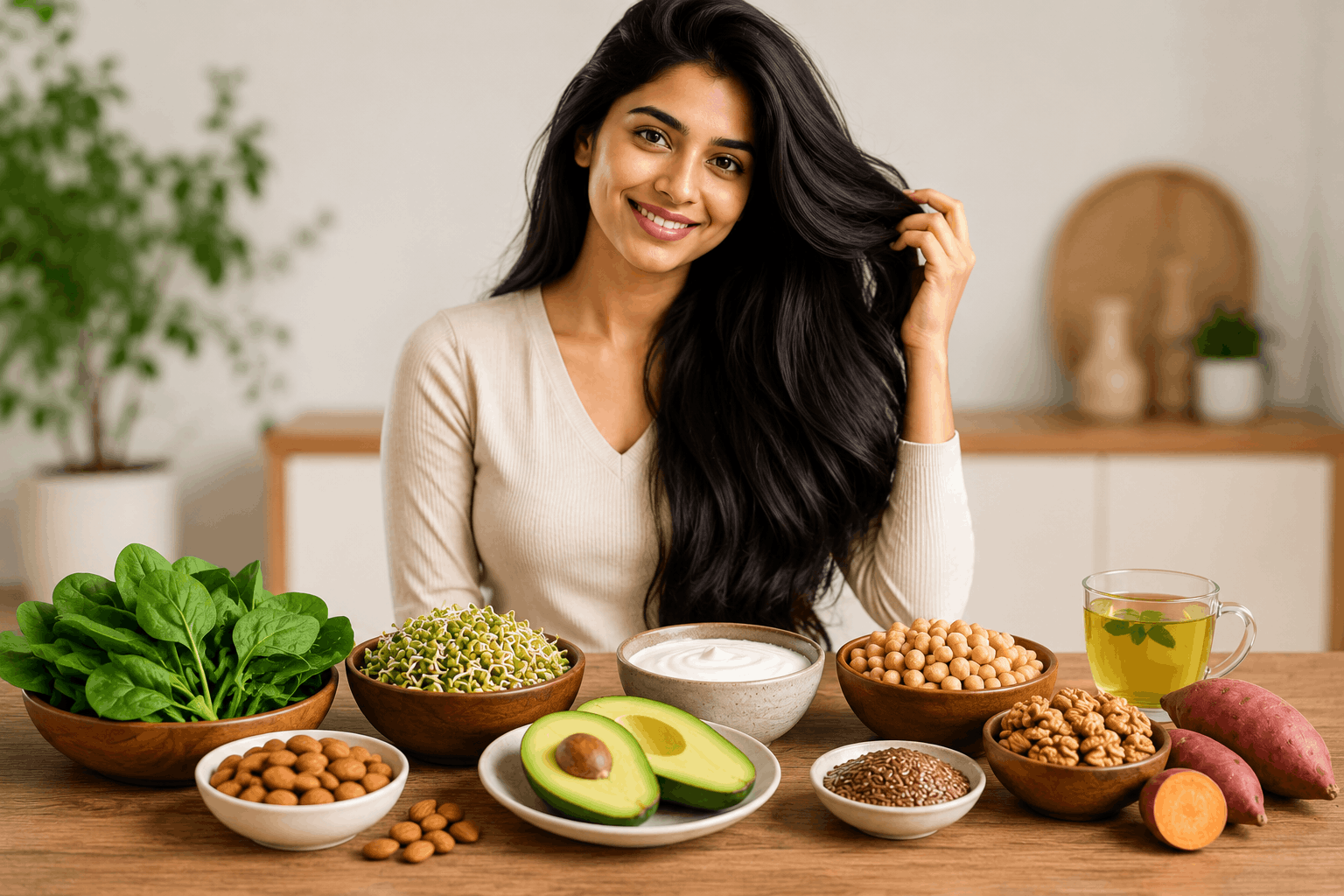
Admin Diet for hair growth is something most Indians never think about — until the hair fall gets impossible to ignore.
You wash your hair gently, use the best shampoo you can afford, apply oils your dad swore by — and still, your hair keeps thinning. Sound familiar?
Here is something most people completely overlook: no hair product in the world can fix what a poor diet breaks. Your hair is a direct reflection of what you eat. And if your plate is missing the right nutrients, your scalp will show it sooner than you think.
The good news? The right diet for hair growth is not expensive or complicated. In fact, the foods that your hair needs the most are probably sitting right in your kitchen — dal, eggs, methi seeds, amla, and more. You just need to know how to use them.
Let us break it all down, simply and practically.
First, Let’s Understand Why Hair Falls in the First Place
It’s not actually the dead cells coming out of your head, each hair comes from an active follicle and requires oxygen, nutrition and blood to function properly. If a follicle is deprived from those, it slows, constricts and stops generating hair.
Here’s what most people miss: your body is smart. When resources are limited, it sends nutrients to vital organs first — your heart, liver, brain. Hair? It’s last on that priority list. So the moment your nutrition dips, your hair is the first thing that suffers.
This is exactly why a solid diet for hair growth matters more than any oil massage or expensive shampoo.
The Nutrients Your Hair Is Literally Begging For
1: Protein — Because Your Hair Is Made of It
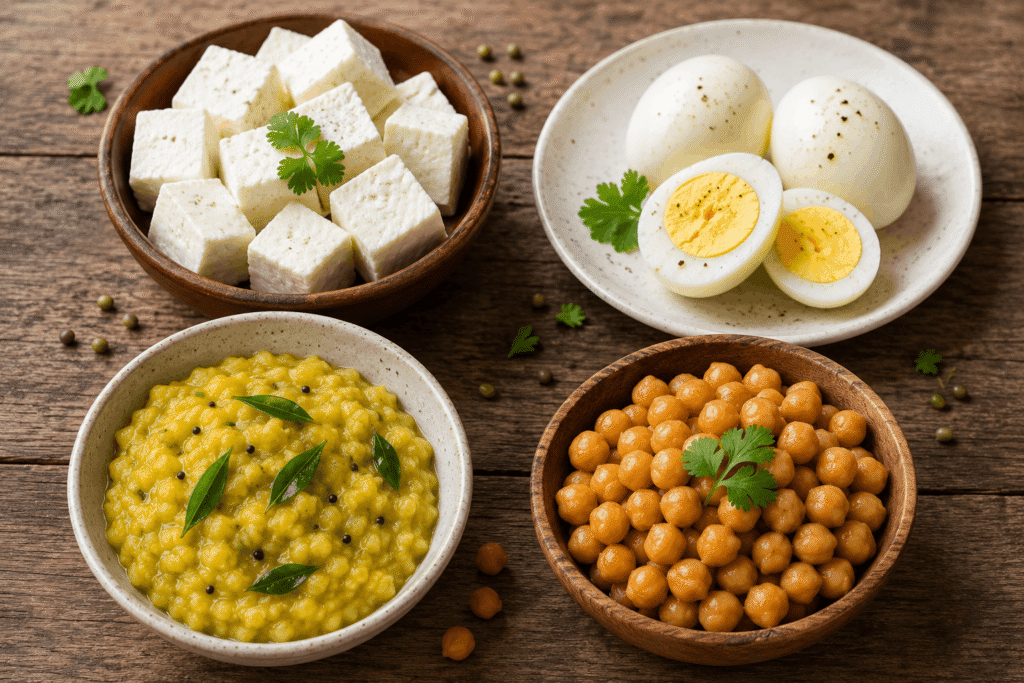
This sounds obvious, but most of us are still not eating enough protein. You’ve really not had a big enough portion in vegetarian Indian households like where two rotis, some sabzi, and maybe a small dahi bowl seems to be the full portion sizes.
Your hair is made primarily of the same protein that’s in fingernails (and the skin), a protein by the name of keratin. The building blocks for keratin, obviously come directly from the protein that you put into your diet. Simple as that.
Now I’m not saying you need to start eating chicken at every meal. There are brilliant vegetarian sources right in Indian cooking —
Personally, the sprouts of moong are the best! Soak them in water overnite, let them sprout for one day & then toss with chopped onion, tomato, lemon & a pinch of chaat masala. You’ve got a breakfast that your hair will genuinely thank you for.
Paneer, rajma, chana, soya chunks, thick curd — all of these are solid protein options. The goal is to include at least one good protein source in every single meal, not just dinner.
2: Iron — Especially If You’re a Woman in India
I cannot stress this enough. Iron deficiency is quietly behind so much of the hair loss that Indian women experience — especially after pregnancy, during heavy periods, or after following those brutal crash diets that promise quick weight loss.
When iron levels drop, your blood can’t carry enough oxygen to your scalp. Follicles go into a kind of hibernation mode. Hair stops growing. Then it starts falling.
The frustrating part? You can feel perfectly “fine” with low iron and still be losing hair like crazy. A simple blood test can tell you where your ferritin levels stand — and if you haven’t checked, please do.
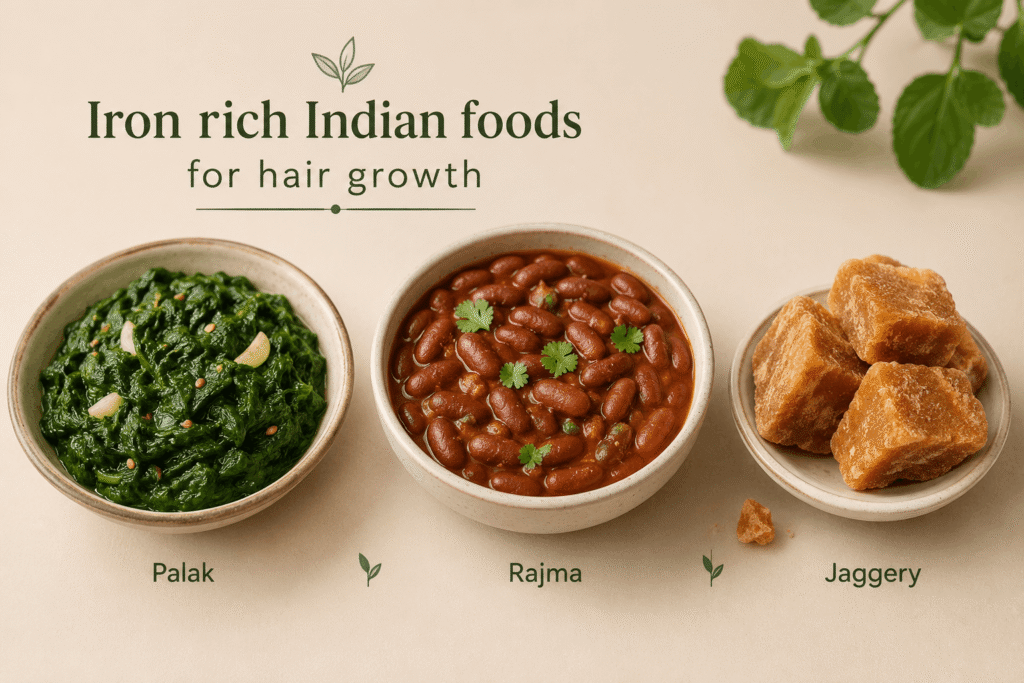
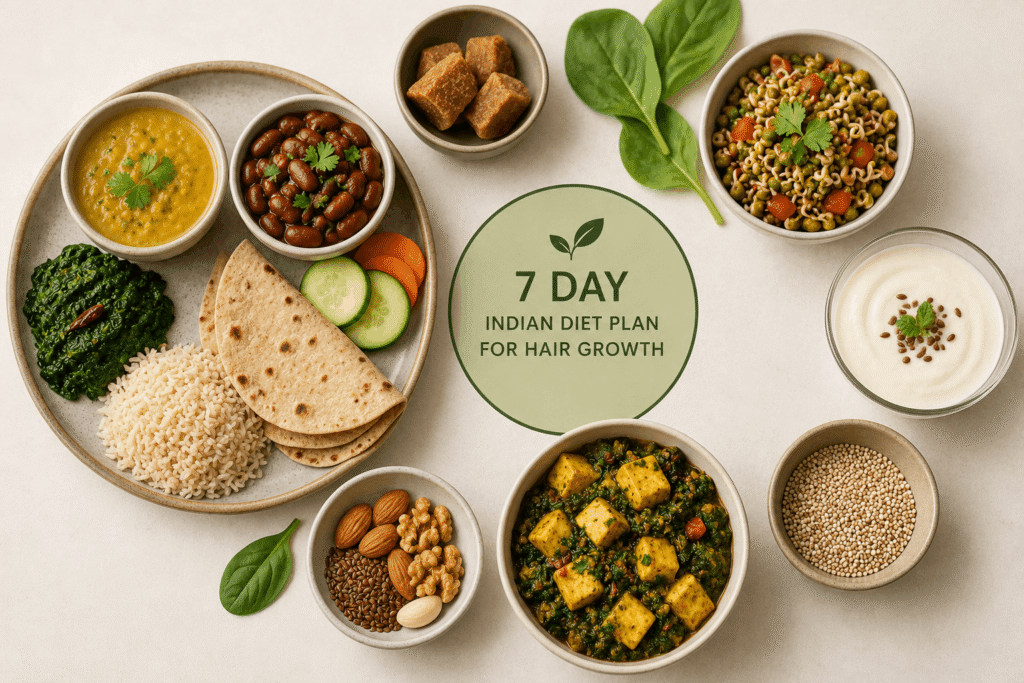
Now for the food part.Iron-rich options that also feature readily into Indian cooking include spinach (palak), fenugreek (methi), Kidney beans (rajma), Black chana, Sesame seeds (til) and Jaggery.
But here’s the trick nobody tells you — iron from plant sources doesn’t absorb well on its own. You need Vitamin C to pull it in. So squeeze lemon over your palak sabzi. Have a guava after your rajma lunch. That combination is genuinely powerful for hair health.
And, if you please, do not have your chai right after eating an iron rich food; the tannins (in tea) inhibit the absorption of iron.
Wait at least 45 minutes. I know that sounds painful — it was for me too — but your hair is worth the wait.
3: Amla — India’s Best Kept Hair Secret
If there’s one food I’d put at the top of any diet for hair growth list specifically for India, it’s amla.
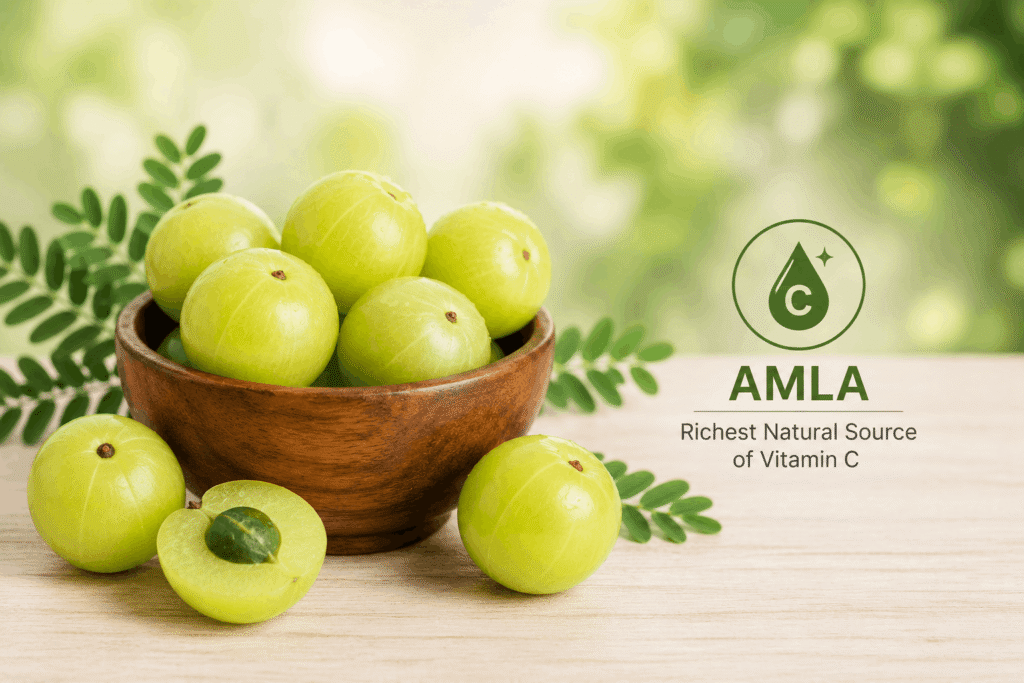
Amla (Indian gooseberry) is ridiculous in the best way. It has more Vitamin C than almost anything else you’ll find in a market. And Vitamin C does several things your hair needs — it helps absorb iron better, protects follicles from damage caused by pollution (which, if you live in any major Indian city, is a very real problem), and it supports collagen production that keeps your scalp tissue healthy.
Raw amla is bitter and takes some getting used to. But amla juice in warm water first thing in the morning is doable for most people. Amla murabba works too if you can find the version without too much added sugar. Even amla powder stirred into buttermilk is a decent option.
Whatever form works for you — just get it in regularly. This is one food where the traditional wisdom and the science are completely aligned.
4: Biotin — You Probably Don’t Need a Supplement
Walk into any pharmacy in India right now and you’ll find biotin tablets being marketed aggressively for hair growth. The truth is, most people who eat a halfway decent diet already have enough biotin.
Unless you have a specific deficiency or gut absorption issue, biotin supplements are largely unnecessary.
What you should focus on instead is getting biotin naturally through food — eggs (especially the yolk), almonds, walnuts, sweet potato, and oats. These fit beautifully into a daily diet plan without any additional expense.
5: Omega-3 Fatty Acids — For That Scalp You’re Ignoring
Most people think about hair strands when they think about hair problems. However your hair actually grows out of the scalp which you can call the soil of the hair needed as food.
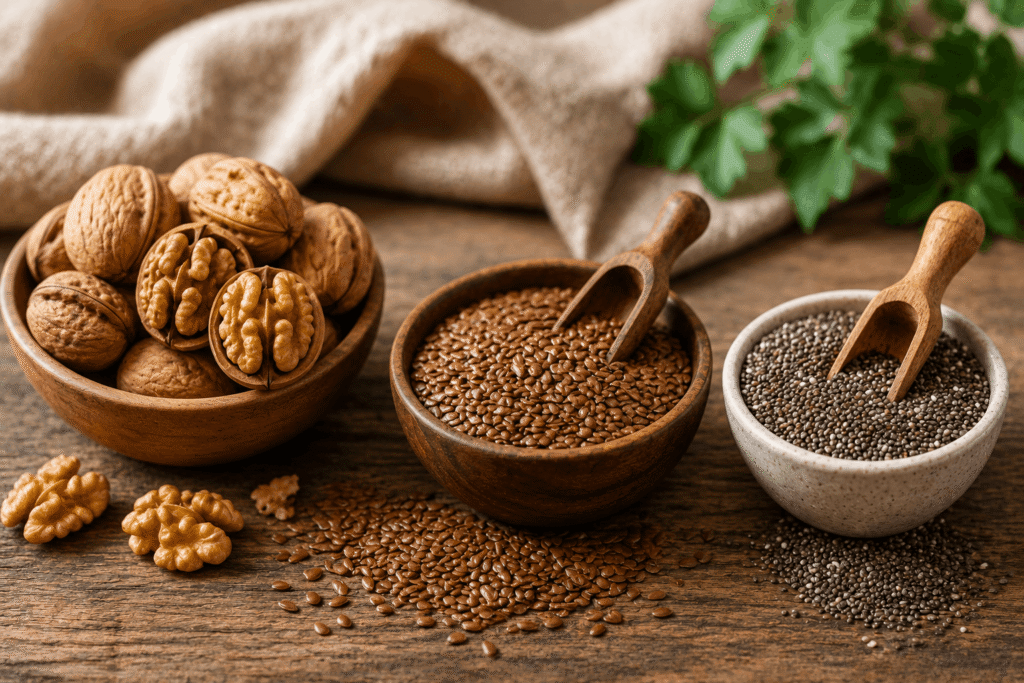
Omega-3 fatty acids reduce scalp inflammation, improve blood flow to follicles, and add natural shine and flexibility to hair. And most Indian vegetarian diets are seriously lacking in them.
The fix is simpler than you think. Add ground flaxseeds (also) to your roti atta.Have a few handfuls of walnuts a day, you don’t need to eat like a bunch, just 4 or 5 pieces should do you good. Also don’t forget to toss in some chia seeds in your nimbu pani or buttermilk! Easy right, those little things can make a big difference.
If fish are on your menu then there are many great options rich in omega-3 that won’t burn a hole in your pocket. These include rohu, katla, sardines and mackerel.
6: Zinc — The Quiet Contributor
Zinc probably isn’t a nutrient you consider on the same level as protein or iron, yet it’s crucial for a healthy head of hair. Zinc regulates your oil glands around hair follicles, aids in repairing your tissues, and assists with the creation of protein.
In addition, pumpkin seeds are probably the best bet when it comes to increasing the amount of zinc in your diet. They are lightly salted when roasted, which makes for an ideal snacking alternative. Also, certain dairy products such as milk and curd, milk, cashew nuts, and chickpeas are good sources of zinc.
7: Vitamin D — The Deficiency Nobody Sees Coming
I can actually recall the one piece of information that came as a complete shock to me when I first read it – a good many Indians in urban cities suffer from a deficiency of Vitamin D- although India is literally one of the countries which experiences sunshine in abundance!
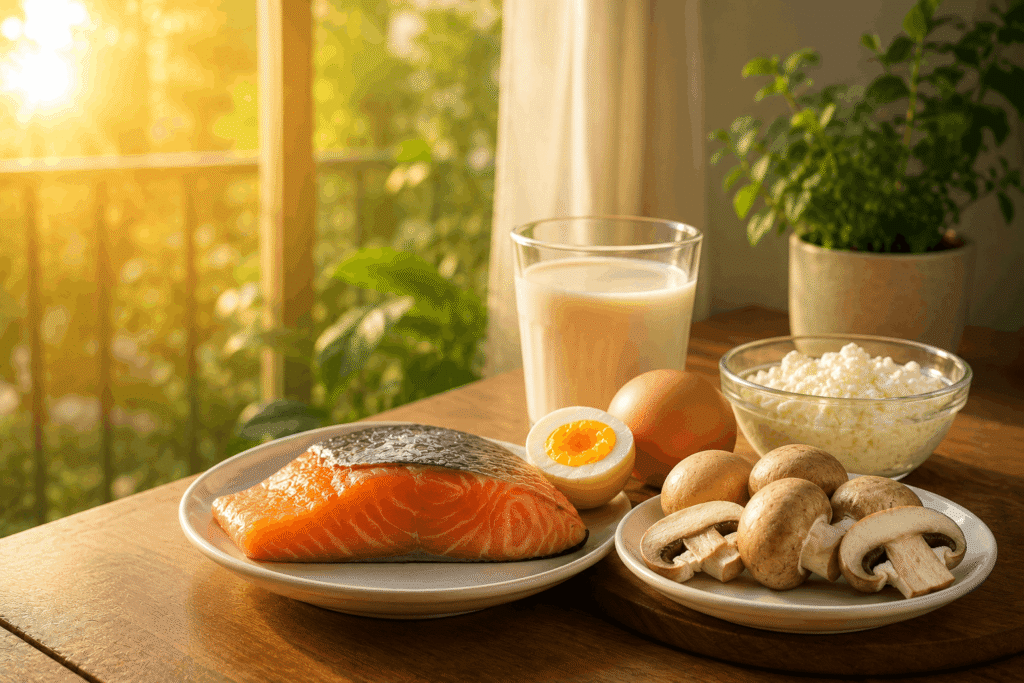
And why is that? Simple – we can hardly be bothered to see any of the sun during the day. By the time we’re out of the house, it’s pitch black – back to fluorescent light by the time we’re back home. Our skin never gets the sunlight it needs to produce Vitamin D naturally.
And Vitamin D receptors are found directly in hair follicles. Low Vitamin D = follicles that struggle to produce hair properly.
The solution has two parts. First, try to get 20 to 30 minutes of morning sunlight on your arms and legs — ideally before 10 AM when UV intensity is still manageable. Second, include dietary sources like eggs, fortified milk, and mushrooms that have been left in sunlight for a bit.
If you’ve been consistently losing hair and nothing seems to be working, please get a Vitamin D test along with your iron levels. This combination of deficiencies is incredibly common and incredibly treatable.
A Week of Eating for Your Hair — The Indian Way
You don’t need a complicated meal plan. Just small, consistent improvements to what you already eat.
Start your morning — with a glass of warm water and either fresh lemon juice or amla juice. Then have a protein-rich breakfast — two eggs in any form, or sprouted chaat, or thick poha made with peanuts and vegetables.
Mid-morning — have a small handful of mixed nuts — almonds, walnuts, a few pumpkin seeds. Keep it simple.
Lunch — should always include dal. Any dal, cooked any way you like. Add a green sabzi (methi or palak when possible), one bowl of curd, two rotis, and squeeze lemon generously over everything.
Evening snack — roasted chana, or a whole fruit like guava or amla.
Dinner — should be lighter. Khichdi with ghee is actually one of the most nutritious meals you can have for hair health — it combines protein, carbs, and healthy fats in a very digestible form. Or a simple meal of dal, roti, and a vegetable side works perfectly.
This isn’t a diet overhaul. It’s just eating more intentionally within the framework of food you already know and love.
The Habits That Cancel Out Even a Good Diet
You can eat all the right foods and still not see results if some common habits are working against you.
One biggie – meal Skipping meals. The hair follicles need an uninterrupted supply of all nutrients during the day time. Having just one big meal and fasting for the rest of the day would leave certain nutritional deficiencies that will put stress on the hair follicles.
Crash dieting is even worse. If you’ve ever lost weight rapidly and then noticed your hair falling out about two to three months later — that’s telogen effluvium. Your body went into stress mode during the crash diet and pushed a large number of follicles into the shedding phase. It’s extremely common and extremely avoidable.
Lots of sugar and packaged food puts your body in a state of mild inflammation, which makes follicle function a no no. But that does not mean never having a digestive biscuit ever again. It means biscuits shouldn’t be replacing meals.
And water — please drink enough of it. Hair strands themselves contain water. Chronic dehydration leads to brittle, weak hair that breaks easily. Eight to ten glasses a day is not a myth.
How Long Will It Take to See a Difference?
Real talk — it takes time.Hair can and does grow up to 2 inches in a month, but your follicles need time to react to the nutritional changes.
On the other hand, typical hair begins to shed less and less 6-8 weeks later and within 3-4 months, you see increased thickness & new hair. Full results — meaning genuinely healthier, thicker hair — come closer to 5 to 6 months.
Patience here is not optional. It’s the whole game.
When You Should See a Doctor
If you’ve genuinely cleaned up your diet for hair growth, stayed consistent for four to six months, and you’re still losing significant amounts of hair — please see a dermatologist.
Conditions like thyroid problems, PCOS, scalp infections, or autoimmune conditions like alopecia areata require medical treatment that food alone cannot fix. These are medical situations, not nutritional ones.
A good dermatologist will run a panel of blood tests and figure out exactly what’s going on. Diet is foundational — but sometimes the problem runs deeper.
The Bottom Line
You don’t need to buy expensive imported superfoods. You don’t need a cabinet full of supplements. You need dal, eggs, amla, palak, nuts, seeds, curd, lemon — and consistency.
The best diet plan for hair growth is one that’s sustainable, affordable, and fits into the way you already eat. Indian food, when eaten thoughtfully, has everything your hair needs to grow strong and stay that way.
Start with one change today. Add a lemon wedge to your lunch. Grab a handful of walnuts . Have a glass of amla juice early in the morning. Small changes make A HUGE impact.
Your hair didn’t start struggling overnight. It won’t recover overnight either. But it will recover — if you give it what it needs.
Disclaimer: This article is for educational purposes only and is not a substitute for professional medical advice. If you experience severe or persistent hair loss, consult a qualified dermatologist or healthcare provider.

 Admin
Admin
[…] I mean it literally repairs and rebuilds itself constantly, and it needs raw material to do that. Cream sits on top. Food becomes you, cell by cell. That’s the blunt […]