 Admin
Admin High Protein Indian Breakfast ideas are an excellent way to start your day with lasting energy, better muscle health, and balanced nutrition. In this article, you’ll discover easy, delicious, and protein-rich Indian breakfast recipes that are perfect for busy mornings.
Why Your Breakfast Decides Your Muscle Gains
You are hitting the gym. You are lifting heavy. You are going to bed at the right time. But if you are having plain chai and two Marie biscuits for breakfast, you are losing out on a ton of potential growth.
Muscle protein synthesis-your body’s way of repairing and building muscle fibers-is actually higher in the first several hours that you’re awake then at any other time of day. Journal of Nutrition studies show that breakfasting with 25-40g of protein elevates MPS much more significantly than taking that amount later in the day.
The exciting part? The Indian diet is actually one of the protein-richest diets globally Y. Dal, paneer, eggs, besan, sprouts, curd- dadi’s kitchen was a protein lab all along. You just need to access it intelligently.
How Much Protein Do You Actually Need at Breakfast?
Before diving into recipes, here’s the simple science you need:
- General active adults: 0.8–1.2g of protein per kg of body weight per day
- Muscle gain (resistance training): 1.6–2.2g per kg of body weight per day
- Ideal protein per meal: 30–40g for maximum muscle protein synthesis
Now, at 70kg training for muscle gain, that equates to between 112-154g of protein daily- and 30-40g of that should ideally come from your breakfast.
Now, lets achieve that, the desi way.
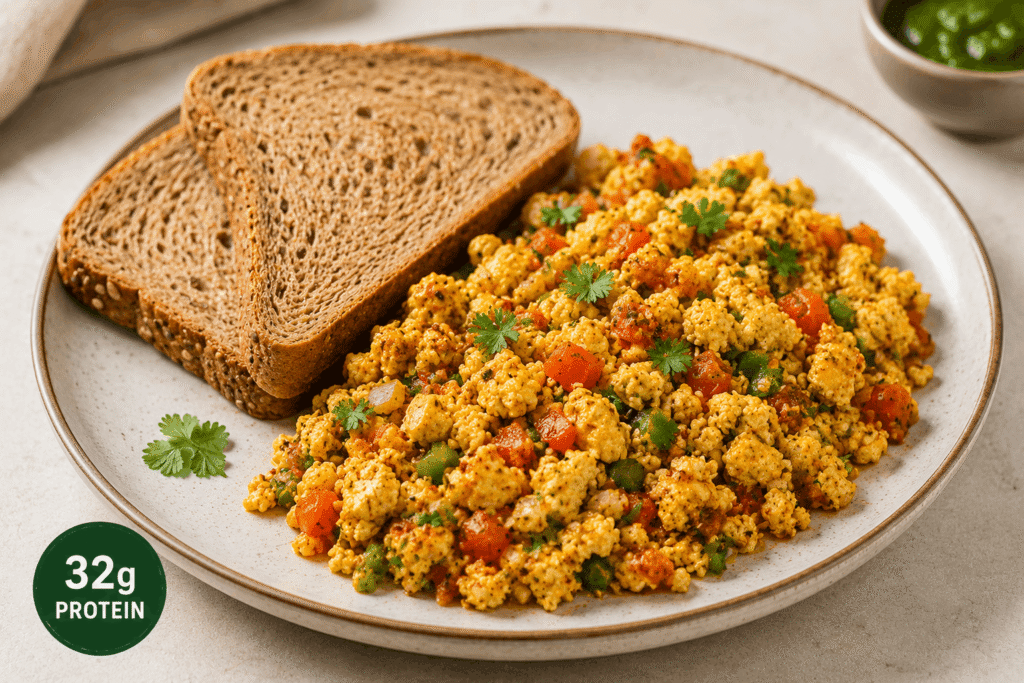
1. Paneer Bhurji with Multigrain Toast
Protein per serving: ~32g
Paneer reigns supreme in terms of Indian protein sources. 100 grams of Homemade Paneer packs roughly 18-20g of protein and is essentially a muscle-building miracle when scrambled with eggs and veggies.
Ingredients (1 serving):
- 100g paneer (crumbled)
- 2 whole eggs
- ½ onion, ½ tomato (finely chopped)
- 1 green chilli, cumin seeds, haldi, salt
- 2 slices multigrain bread
How to make it:Heat 1 tsp ghee and put in cumin seeds then fry the onions until golden. Put in the tomato and green chilli together with the spices. Add the paneer and crack in the eggs while mashing the paneer together with the eggs. Stir fry over a medium flame for 3-4 mins and serve with multi grain toast.
Pro Tip: Use low-fat paneer if you’re in a cutting phase. Full-fat paneer is ideal for a clean bulk.
Check Previous Blog: Healthy Indian Breakfast Recipes for Weight Loss
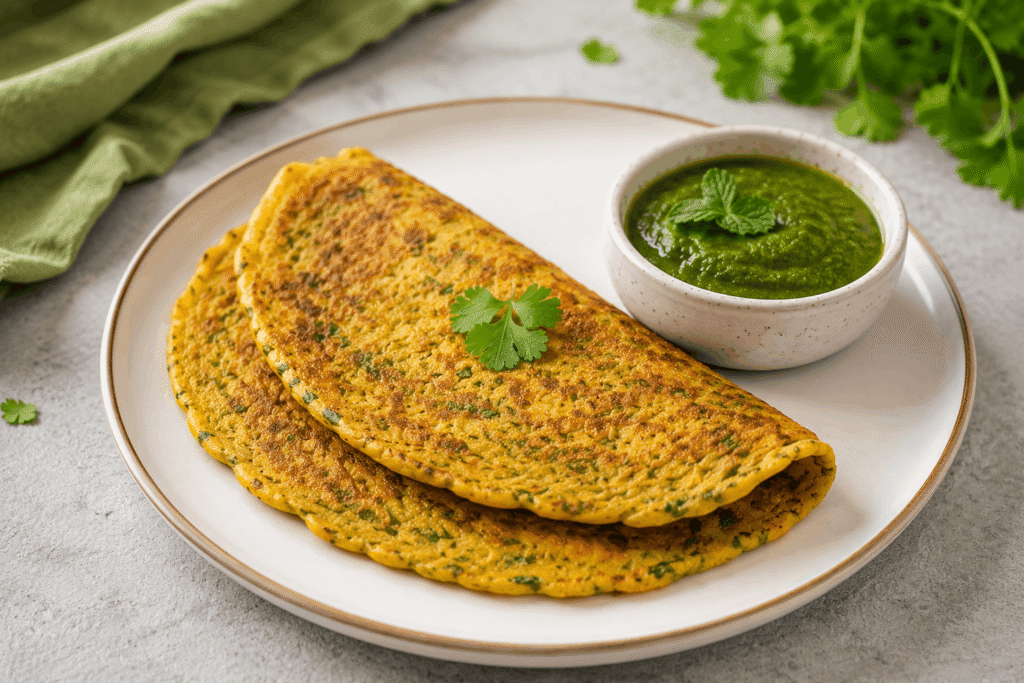
2. Moong Dal Chilla (Green Gram Pancakes)
Protein per serving (3 chillas): ~22–25g
Indian overlooked high protein breakfast is definitely moong dal chilla. It’s a gluten free, light on stomach and so versatile food item. Entire green moong is a whole plant based protein as it provides all essential amino acids when served with curd dip.
Ingredients:
- 1 cup whole moong dal (soaked overnight)
- 1 inch ginger, 2 green chillies
- ½ cup chopped spinach, onion, coriander
- Salt and ajwain to taste
- Greek yogurt dip on the side
How to make it: the blender, combine moong dal, ginger, green chillies to a thick batter. Add in the vegetables. Spread a ladle full on a non-stick tawa and flatten into a circular shape Grill over medium heat 2 minutes from both side. Served with a bowl of greek yogurt with a spoon of cumin and a pinch of black salt
Why it works for muscle gain: This mix of moong (slow release protein) + Greek yogurt (casein + whey) will cause slow release of amino acids for up to 4-5 hours after breakfast.
3. Egg White Omelette with Besan Crust
Protein per serving: ~28–30g
I feel a large percentage of Indians already eat eggs, so what we need to do is optimize them for protein. This recipe uses 5 egg whites + 2 full eggs (these provide the micronutrients within the yolk without too much fat), cooked inside a fluffy besan (chickpea flour) batter – an additional 5-6 grams of plant protein.
Ingredients:
- 5 egg whites + 2 whole eggs
- 2 tbsp besan
- Chopped capsicum, onion, tomato, coriander
- Chaat masala, red chilli powder, salt
- 1 tsp olive oil or ghee
How to make it:Whisk the eggs and whites together. Add the besan and spices to make slightly thick batter. Heat oil in a pan and add the batter, add the vegetables on top, fold and cook on both the sides till golden brown. Serve with a small bowl of hung curd.
mall bowMacro Snapshot:
High Protein Indian Breakfast
| Component | Protein |
| 5 Egg Whites | ~18g |
| 2 Whole Eggs | ~12g |
| Besan (2 tbsp) | ~5g |
| Hung Curd (50g) | ~6g |
| Total | ~41g |
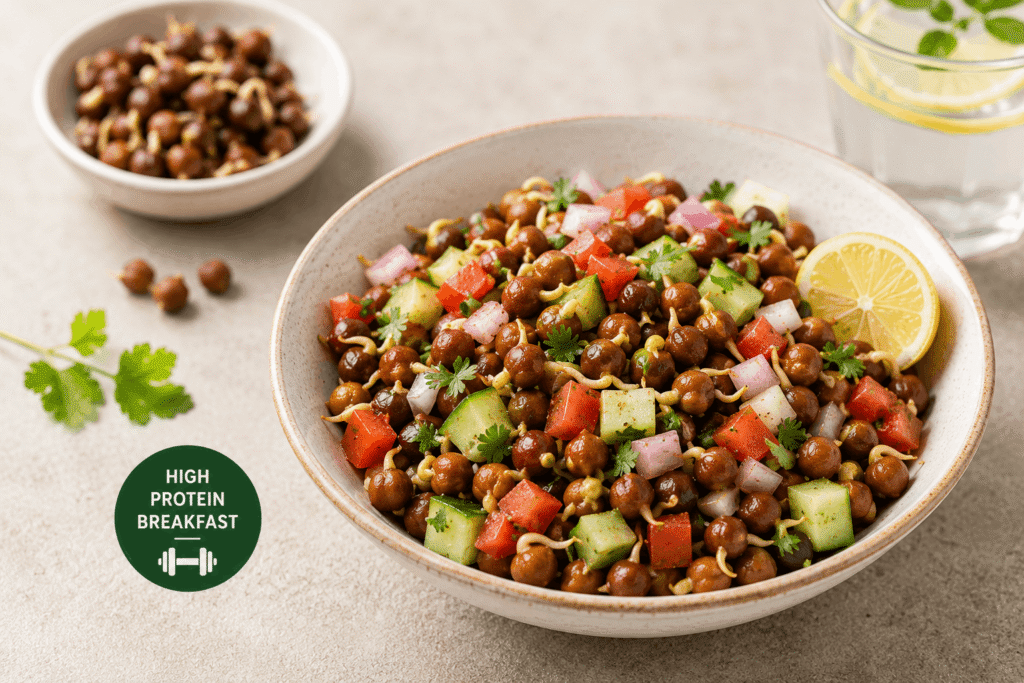
4. Sprouted Chana Chaat Breakfast Bowl
Protein per serving: ~20–24g
Another desi superpower food that the gym-freak is abusing: Sprouts. When you sprout either chickpeas or moong the proteins become 20-30% more bio-available than it’s cooked counterparts as they destroy anti-nutrients like phytic acid.
Ingredients:
- 1 cup sprouted kala chana or white chana
- ½ cup boiled green moong sprouts
- Chopped onion, tomato, cucumber
- Lemon juice, chaat masala, rock salt, coriander
- 2 boiled eggs on the side
How to make it: Mix sprouts of chana and moong. Mix chopped vegetables. Sprinkle lemon juice generously. Sprinkle chaat masala and rock salt. Add chopped coriander on the top. Eat with two boiled eggs to get complete amino acid.
Gym TipI cook up a batch of sprouts on a Sunday and they can keep in the fridge for 3-4 days-zero effort needed on Sunday morning!
Check Previous Blog: Healthy Fast Food Recipes You Can Make at Home
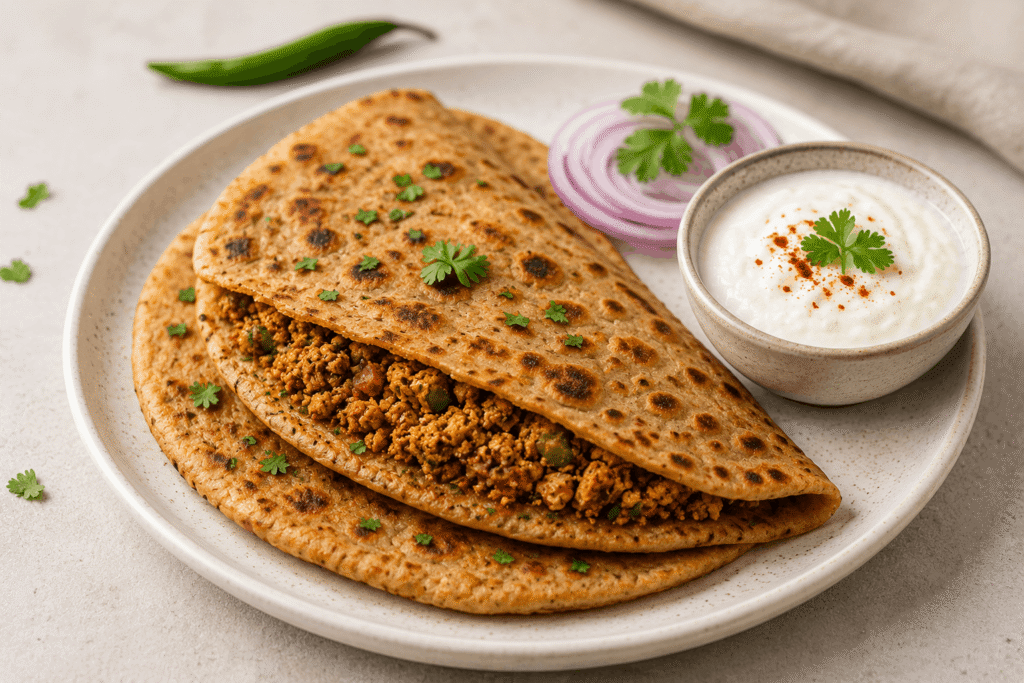
5. Soya Keema Paratha
Protein per serving (2 parathas): ~30g
The cheapest and most under-valued protein source in India – soya granules (nutrela). 100g dry weight of soya granules has about 52g of protein – greater than that found in chicken. Coupled with a whole wheat paratha, this makes for a protein and fibre-rich meal which is sure to keep you satisfied for 4+ hours.
Ingredients:
- ½ cup soya granules (soaked and squeezed)
- 1 onion, 2 green chillies (finely chopped)
- Garam masala, jeera powder, coriander, salt
- 1 cup whole wheat atta for paratha dough
- 1 tsp ghee per paratha
How to make it:Saut the soaked soya granules with onion, chillies and spices until aromatic and dry. Stuff this mixture into whole wheat paratha dough balls and roll it out. Cook on the tawa with ghee until golden brown and serve with a glass of plain lassi or a bowl of low fat curd.
Cost Analysis:At around 25-35 for a serving, it is one of the cheapest protein-rich breakfast options to be found in India.
6. Ragi Uttapam with Peanut Chutney
Protein per serving: ~18–22g
This carbohydrate rich grain, Ragi (finger millet) is a powerhouse of calcium & amino acids. What’s even better is that it goes hand in hand with a peanut chutney which is a brilliant protein source and loved in South India. A fantastic choice for athletes who need both energy providing carbs and muscle rebuilding proteins.
Ingredients:
- 1 cup ragi flour
- ½ cup urad dal (soaked and ground, or use ready idli batter)
- Toppings: onion, tomato, capsicum, green chillies, coriander
- For chutney: ½ cup roasted peanuts, coconut, green chilli, lemon, salt
How to make it:Mix the ragi flour in urad dal batter. Mix salt well and set aside for 20 minutes. Pour thick rounds on the hot tawa and sprinkle the veggies on top.Press the veggies onto the rounds. Cover and cook for 3 minutes. Flip and cook for 2 more minutes. Serve hot with a smooth groundnut chutney.
Protein Breakdown:
- Ragi + Urad dal uttapam: ~12–14g
- Peanut chutney (2 tbsp): ~6–8g
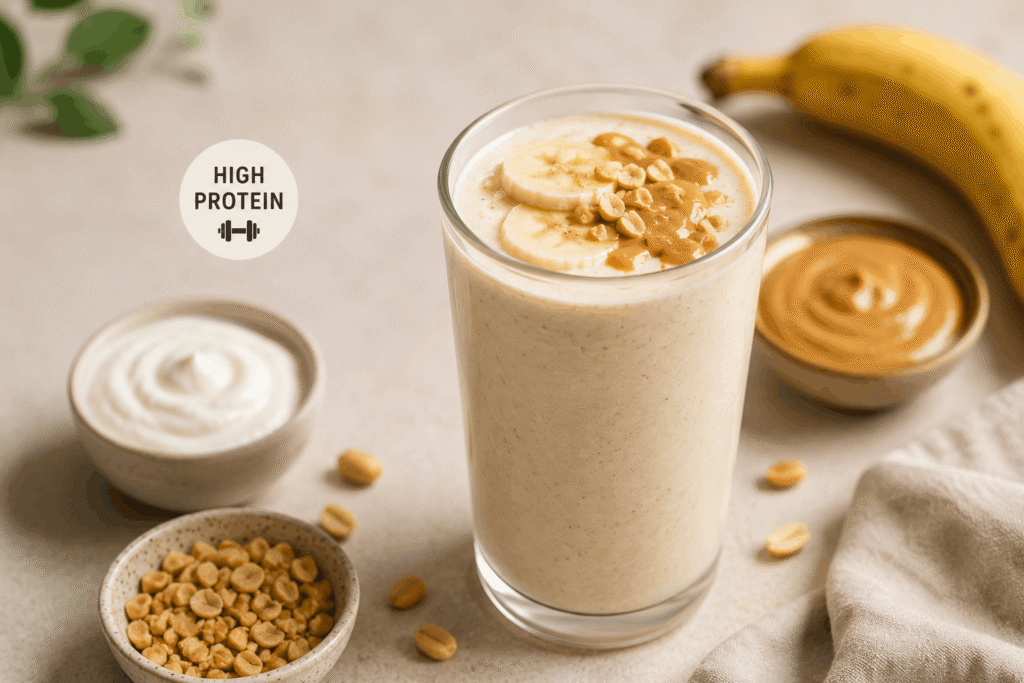
7. Greek Yogurt Lassi with Protein Boost
Protein per serving: ~25–28g
You don’t always need to cook to get your high protein fix, when in a hurry this desi lassi upgrade will be serving up some major protein under 3 minutes.
Ingredients:
- 250g Greek yogurt (or hung curd)
- 1 scoop whey protein (vanilla or unflavoured) — optional but effective
- 1 tbsp peanut butter or almond butter
- 1 banana or ½ cup mango (seasonal)
- ¼ tsp cardamom, a few strands of kesar
- Ice and water to blend
How to make it:Combine everything until smooth, drink immediately. That’s your muscle recovery breakfast in a glass.
Why Greek Yogurt over Regular Curd? It has nearly twice the amount of protein compared to the regular dahi (10g/100g compared to 5g/100g).This is due to removal of excess whey water through straining. You can buy it at any supermarket or even make it at home by straining the regular dahi in a muslin cloth overnight.
Check Previous Blog :Healthy Recipes Using Curd: 10 Nutritious and Delicious Ideas for Every Indian Kitchen
8. Masala Tofu Scramble (Vegan Option)
Protein per serving: ~24–28g
As an alternative for both paneer and eggs,firm tofuis a fantastic choice for anyone that is dairy-free or vegan. It is quite plain, but does take Indian spices very well, and 100g of firm tofu provides around 8-10g of complete plant-based protein
Ingredients:
- 200g firm tofu (pressed and crumbled)
- ½ onion, ½ tomato, 1 capsicum (chopped)
- ½ tsp each: haldi, cumin, coriander powder, red chilli
- 2 tsp nutritional yeast (adds B12 and a cheesy flavour)
- Salt, lemon juice, fresh coriander
- 2 slices multigrain bread
How to make it: Squeeze/wring water out of the tofu using kitchen towels, then crumble into hot pan with 1tsp oil. Add all the vegetables & all the spices. . On a high flame, toss everything for 5-6 minutes. Sprinkle in the nutritional yeast, squeeze lemon on it and sprinkle fresh coriander.Serve with multi grain bread.
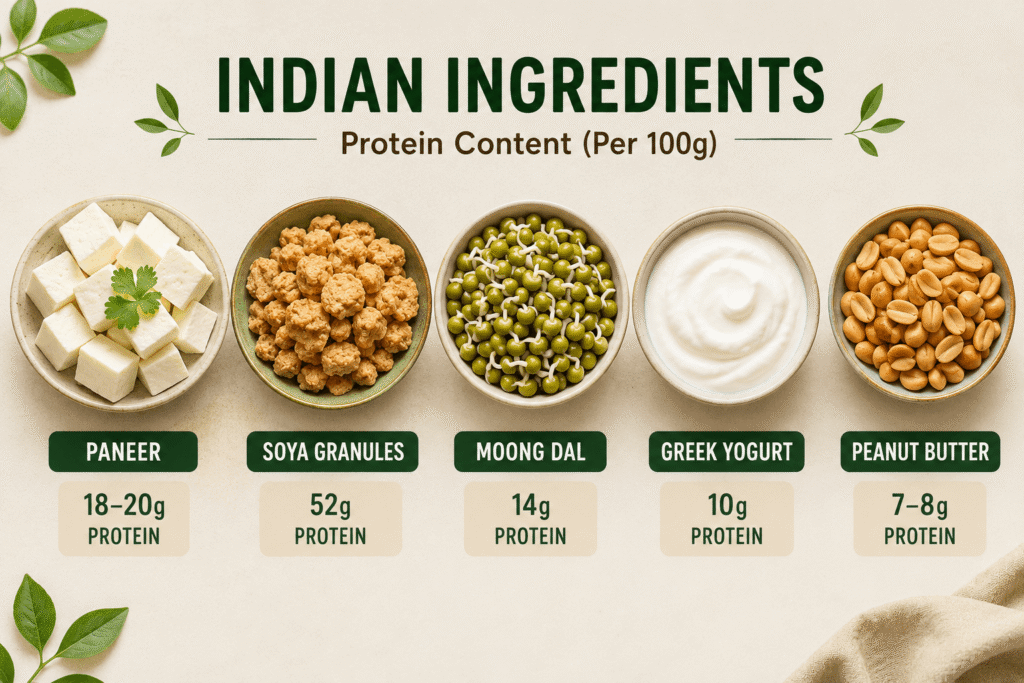
Quick Protein Reference Table for Indian Ingredients
| Ingredient | Serving Size | Approximate Protein |
| Paneer (homemade) | 100g | 18–20g |
| Whole Eggs | 1 egg | 6g |
| Egg White | 1 white | 3.5g |
| Moong Dal (cooked) | 1 cup | 14g |
| Chana Dal (cooked) | 1 cup | 15g |
| Soya Granules (dry) | 100g | 52g |
| Greek Yogurt | 100g | 10g |
| Firm Tofu | 100g | 8–10g |
| Peanut Butter | 2 tbsp | 7–8g |
| Ragi | 100g | 7g |
3 Common Mistakes Indians Make with Protein at Breakfast
Mistake 1: Relying only on carbs.The single poha or upma breakfast isn’t a muscle-growing breakfast. That’s fuel food. Wonderful, but not enough. Never miss your protein pairing
Mistake 2: Skipping breakfast entirely.Intermittent fasting definitely has its place, but for early morning trainers where there is zero food intake to ensure muscle break-down does not occur without refueling at least have a protein shake/lassi with in 30 minutes after training.
Mistake 3: Underestimating vegetarian proteinsVegetarian Indians, in particular, are of the mindset that they cannot gain muscle mass. This could not be further from the truth. You can quite easily get upwards of 150g protein per day from paneer, dal, soya, sprouts, and Greek yogurt – you just need to be mindful.
Final Word: Build Muscle with Flavour, Not Just Function
The biggest myth of Indian fitness is ‘healthy food means boiled chicken and bland oat meal for life.’ This is just not right and not for keeps. The spice that is used in every recipe that this list is offering you is one that you’d surely have in your pantry and one that’s available at your corner kirana store and a taste that you are fond of. Muscle gain does not mean you must forsake Indian food. It means you must optimize it. Start with two or three from this list. Master them. Log your protein with a free app like HealthifyMe or MyFitnessPal. In 4-6 weeks of consistent high protein breakfasts alongside progressive training, you’ll begin to notice a change in your strength, your recovery and in your physique. Your gains are just one breakfast away, make it count.
FAQs
Q: Can I build muscle on a vegetarian Indian diet? Sure. Paneer, soya, dal, eggs (if lacto-ovo), and Greek Yogurt is more than enough protein for you to gain muscle.
Q: What is the best high protein breakfast for muscle gain in India? Combining a Paneer + Egg Bhurji with Moong Dal Chilla with the Greek Yogurt dip would give you 2 of the quickest muscle optimised and protein rich Indian breakfast options you could ask for. .
Q: How much protein should I eat in the morning for muscle gain? Eat 30-40g of protein at breakfast. The range of protein shown to maximize muscle protein synthesis is currently 30-40g in sports nutrition literature.
Q: Is soya good for muscle building?Yes. Soya is a fully complete plant protein source providing all the essential amino acids. It’s the highest protein plant food available and used by vegetarian athletes all over the world.

 Admin
Admin
[…] that involves eating oats morning, noon, and night for eternity. You require a different kind of healthy Indian food, specifically under 300 calories and very high in protein. The meal should be comfortingly desi, yet […]
[…] is exactly why a solid diet for hair growth matters more than any oil massage or expensive […]
[…] in no way means Indian food is […]
[…] up and your knees pointing in the direction of your toes. Push back up until you are fully standing. The bodyweight squat will tone your thighs, glutes and core. This 30-second exercise will probably be the hardest for a […]