 Admin
Admin The average “healthy food near me” article targets those with access to a Whole Foods, a blender that costs more than a month’s worth of groceries, and Sunday afternoon-free time for meal prep while listening to podcasts.
If you have ever Googled “healthy food near me” during lunch, looked through lists of expensive salad bowls rated 3.1 stars, closed your tab and just ordered a butter chicken – this article is for you.
We’re going to talk about real healthy food, the kind that’s applicable in a Bengaluru PG, a Delhi 2-burner flat or even a Chennai 10-minute office lunch break. No fancy ingredients or unpronounceable superfoods. Just good for your food that actually tastes of something.
First, Let’s Unlearn What “Healthy Food” Supposedly Means
At some point along the way “healthy food” became synonymous with expensive, tasteless and vaguely Western. Overnight oats. Acai bowls. This thing is called a grain bowl that costs 450 and leaves you starving at 3pm.
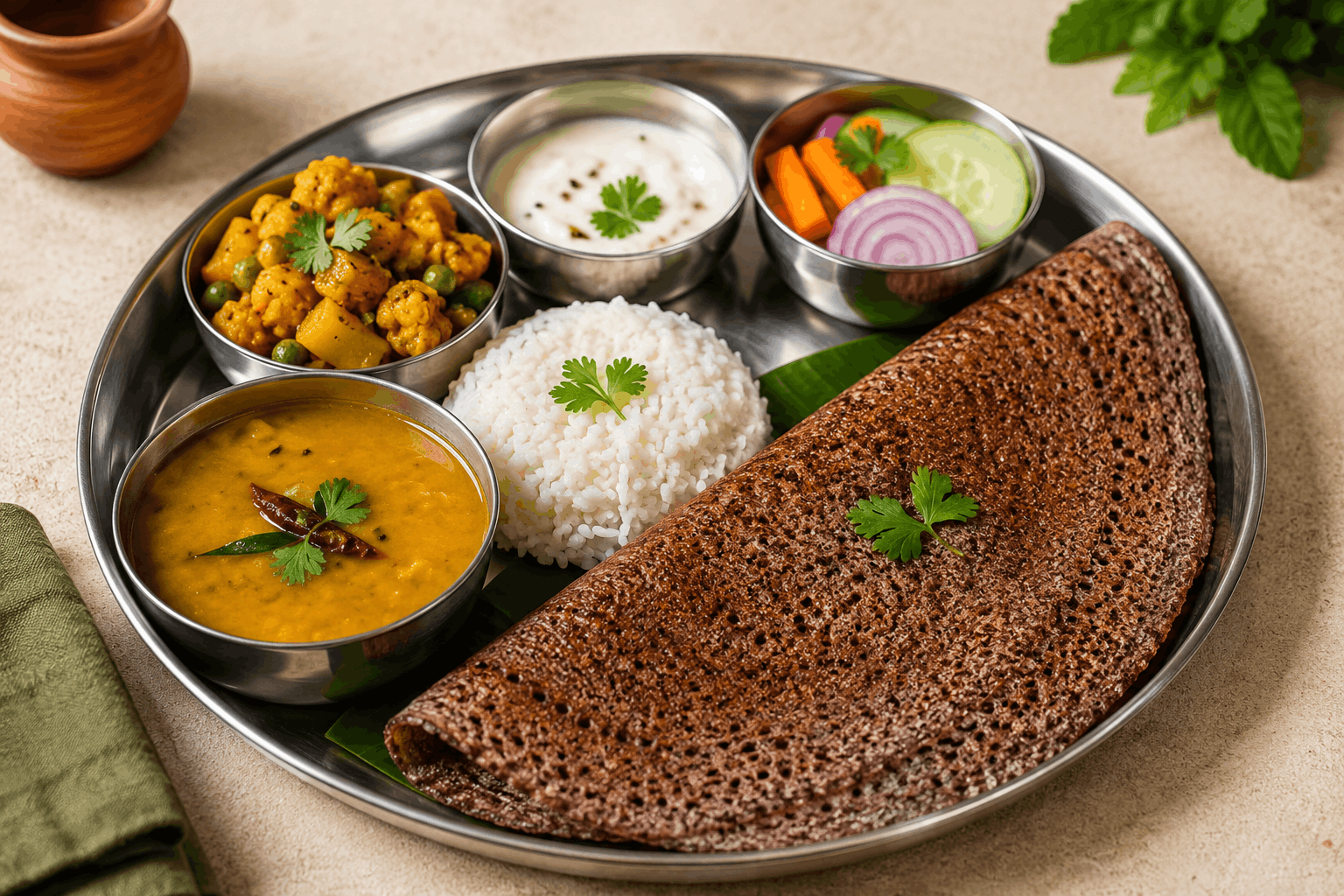
One thing that no one seems to say enough: authentic Indian food (i.e., the food your nani made, the dal your mom is still adamant on making every single day) is hands down some of the most nutritionally dense food available.
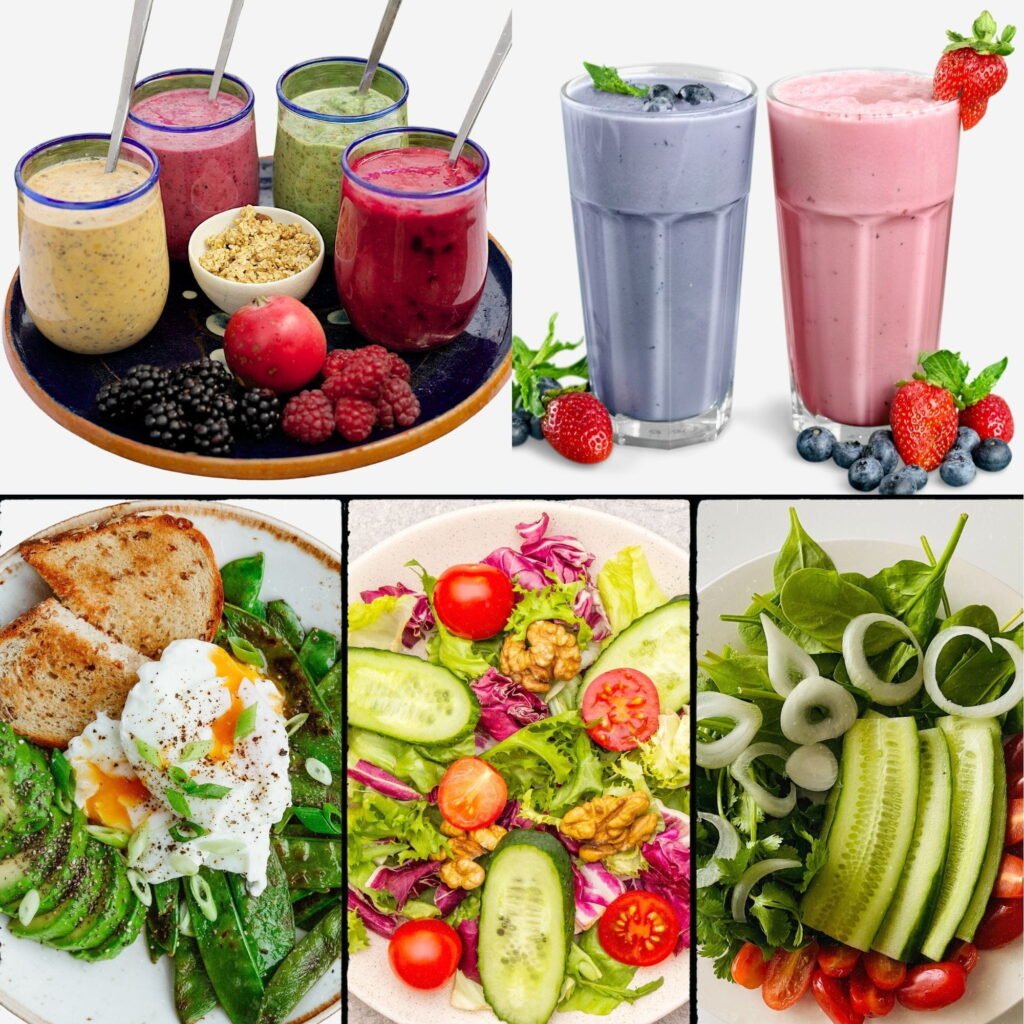
Moong dal has more bio-available protein than most protein bars. Ragi contains 4 times more calcium than milk does. Amla has 20x more vitamin C than an orange does!! There have been studies all around the world on turmeric and its inflammation-fighting abilities- and we just keep throwing it in our cooking and haven’t once thought to ask why.
The answer had been hiding in our kitchens all along and we had been trekking off to distant lands to find the solution! Before we start Googling ‘healthy restaurants near me’, why don’t we take a look at what healthy actually is once you take out all the marketing fluff.
Check Previous Blog: Healthy Recipes Using Curd: 10 Nutritious and
Your local sabzi mandi is doing more for your health than any café
This may seem simple, but with urban living now predominantly deliveries, city-dwellers have gradually stopped venturing to the neighborhood vegetable market. While undeniably convenient, you lose out on identifying what is in season, what is local. Seasonality means food that is more affordable, fresher, and definitely far more nutritious than cold-stored and cross-state delivery. During winters, maximize onsarson, methi and gajar. Lauki and tinda are summer’s best friends-underrated, exceptionally low on calories and digestion-friendly. During the monsoons, more dal and more cooked-raw vegetables carry higher bacterial load (old-age wisdom that’s medially sound).
Healthy Indian Recipes You Can Actually Make on a Weeknight
Below are five dishes that will take you under 30 minutes, will cost very little, and will fill you. Not in the marketing sense “healthy”, but in the real sense.
Masoor Dal With a Tadka of Ghee and Whole Jeera
And why masoor? It’s the quick-cooking kind, doesn’t require soaking and 100g gives about 9g protein and ample iron and folate. The ghee in the tadka isn’t evil. The little bit of good fat present is actually beneficial in enabling your body to absorb fat-soluble nutrients in dal.
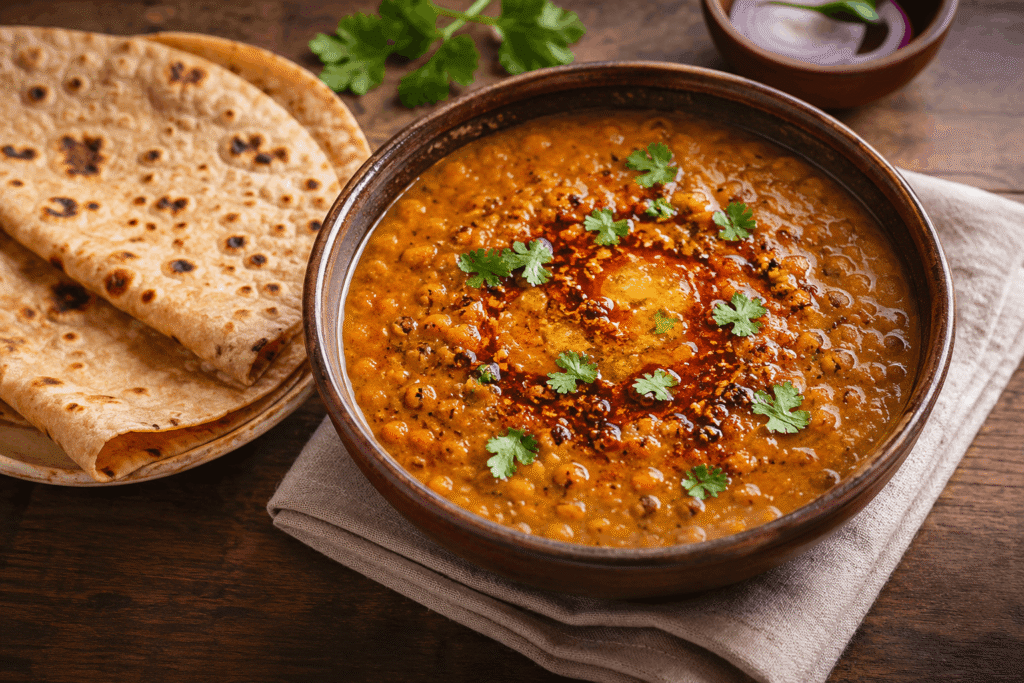
Pressure cook 1 cup of masoor dal with chopped tomato, a pinch of haldi, salt & ginger (2 whistles). Heat 1 teaspoon ghee in a small pan, add whole jeera and one dried red chilli, once it starts sizzling, pour this over the dal.
Check Previous Blog: Healthy Food Franchise in India: Complete Guide
Ragi Dosa — the Breakfast That Quietly Builds Bones
Per 100 grams, ragi (finger millet) has more calcium than milk. That one fact should tell all Indian households to keep ragi flour in their kitchen. It’s available in all kirana stores and it’s peanuts.
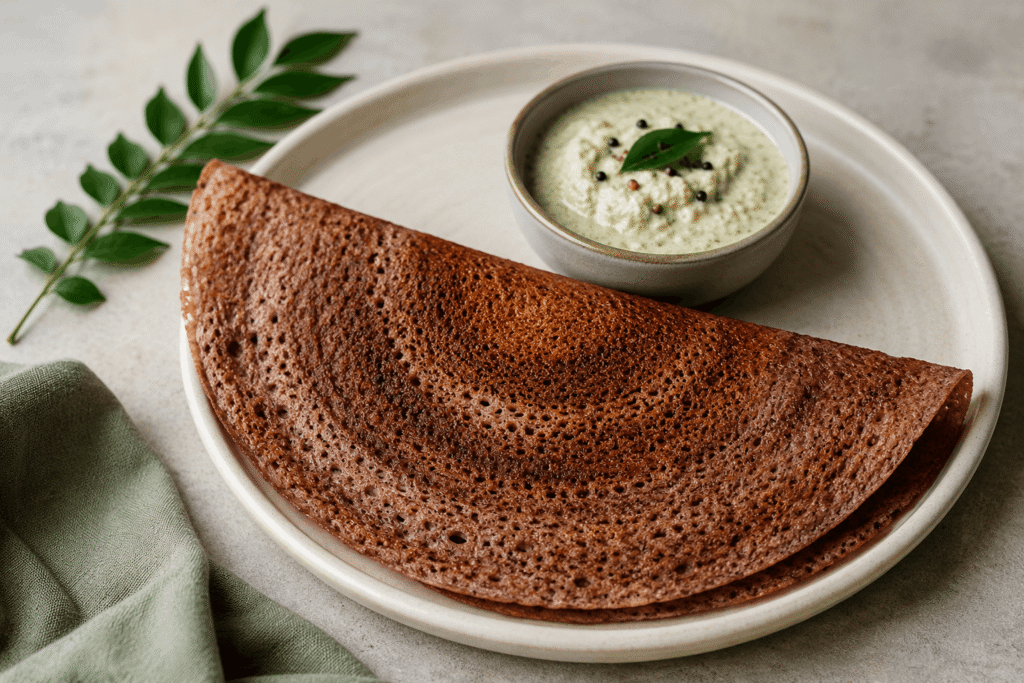
Whisk two cups of ragi flour with half a cup of sour curd, water, salt, green chilies (finely chopped) and curry leaves (finely chopped). The batter should be thin;thinner than your regular dosa batter. Pour this onto a hot non-stick tawa and flatten it out. Cook on medium heat till the edges lift off. Serve with coconut chutney or just pickle. Earthy taste and nut-like after taste. Simply heavenly.
Moong Dal Chilla — A Protein Pancake With No Pretension
Wash yellow moong dal and soak for 4 hours, strain and make a batter with ginger, green chilly and a little bit of ajwain. You can add a grated bottle gourd or spinach if you have it. Cook on a nonstick pan with minimum oil. This resembles besan chilla, but is high in protein and soft and easily digestible.
Eight grams of protein per chilla. Eat two with mint chutney and you have a breakfast that holds you for hours.
Light Palak Paneer — Without the Cream
Nearly every restaurant version is half cream. You can make it yourself and avoid that. Blanche a large bunch of spinach, then puree. Saute onion with a teaspoon of mustard oil and some ginger-garlic paste, throw in the spinach, a bit of garam masala and coriander powder, cube some paneer and drop in. Cream is not needed here as if cooked correctly, the taste doesn’t call for it.
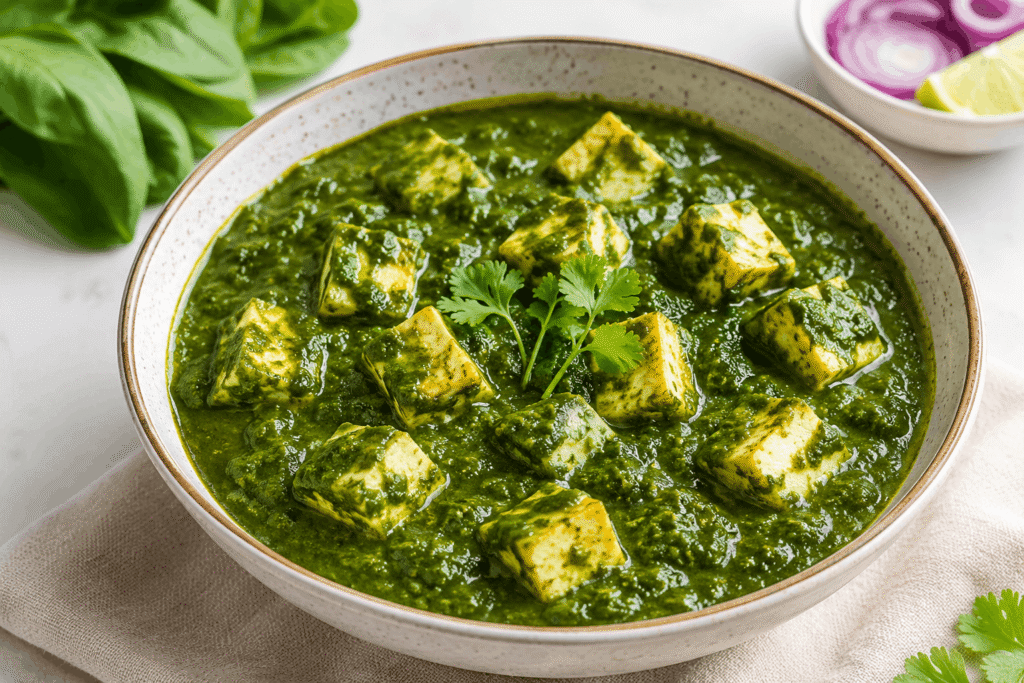
The iron is better absorbed with Vitamin C as from the tomato sauce. Your body can actually use this combination without you needing to do anything extra.
Haldi Doodh — India’s Original Functional Drink
Every Indian grandma already had this recipe (before wellness brands decided to sell $800 ‘golden milk latte kits’). It’s really as simple as; milk that’s warm, a teaspoon of turmeric powder, a smidge (this boosts curcumin bioavailability by 2000% (and no, that’s not a typo)), of black pepper, a bit of cinnamon, and some honey or jaggery.
Drink at night, sleep better, that’s all.
Indian Superfoods That Cost Almost Nothing
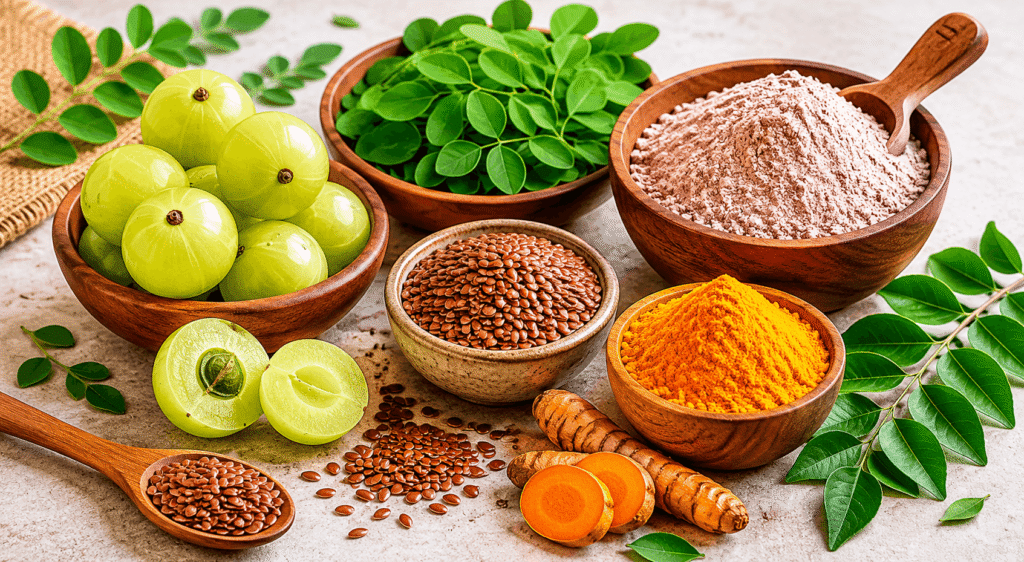
The word “superfood” has been hijacked by the wellness industry to sell expensive imports. Here’s India’s actual superfood list — all available at your local market for a fraction of what you’d pay for exotic alternatives:
Amla is 30-50 per kg, almost the highest Vitamin C on earth, eaten with salt, or chutney and juice form.
Moringa leaves(drumstick tree leaves) are full of iron, calcium and all nine necessary amino acids. If you live in South India, it is growing in your neighbour’s back garden, stick it in sambar or sauté it like other greens.
SattuIs the roasted chana flour. Mix two tablespoons with cold water, lemon, some black salt, and roasted jeera. A whole meal drink consumed by labourers from Bihar & UP for centuries. Rich in protein, fibre, intensely cooling in the summer.
Flaxseeds (alsi)They are very cheap, have a long shelf-life, are high in Omega-3 and just ground and mixed into your roti dough. They are undetectable.
Curry leavesGet discarded by folks who don’t know. They are loaded with iron and b vitamins;eat them don’t just move them to the side of your plate
Eating Clean When You’re Broke: The Real Budget Healthy Eating Guide
The moment you start replacing it with packaged “health” foods, your cost triples and your actual nutrition often decreases.
Buy whole spices over masala packets. A packet of whole jeera costs ₹15 and lasts two months. Whole spices have higher essential oil content than the powdered, packaged versions that have been sitting in a warehouse.
Make your own curd. A litre of full-fat milk gives you nearly a litre of dahi. Homemade dahi has live probiotic cultures that packaged curd often doesn’t, depending on how long it’s sat on the shelf.
Stop buying “multigrain” biscuits and “health” drinks. Read the label. Most are loaded with sugar, palm oil, and refined flour with a few token oats thrown in to justify the health claim.
Questions People Actually Ask (Answered Directly)
What’s the healthiest thing to order from Zomato or Swiggy in India?
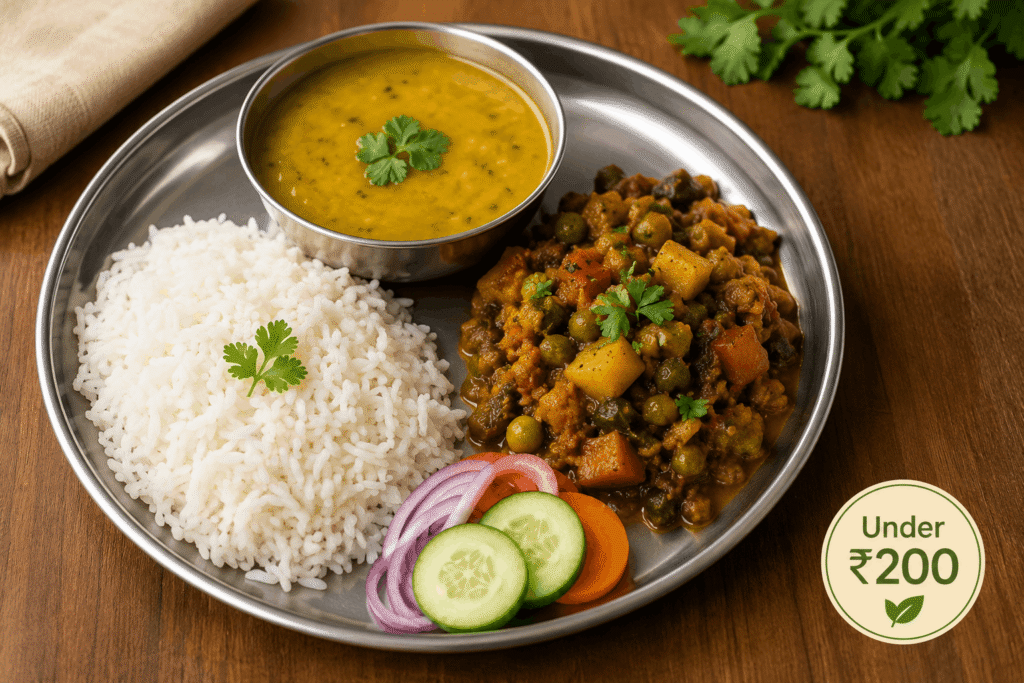
Dal-chawal from a tiffin service, idli-sambar from a South Indian restaurant, or grilled tandoori chicken without the cream-heavy gravies. Avoid anything described as “rich,” “creamy,” or “loaded.” Those words mean oil and calories.
Which Indian food is genuinely good for weight loss?
Khichdi, moong dal soup, lauki sabzi, poha, and buttermilk. Not because they’re trendy — because they’re low in calories, high in fiber, and genuinely filling. You won’t feel deprived eating them.
How do I find a healthy tiffin service near me?
Ask in your building or colony WhatsApp group first. Otherwise search “home tiffin service [your city/area]” on Google Maps or Instagram. Local women-run tiffin services often don’t advertise on Zomato but have years of loyal customers.
Is Indian street food ever healthy?
Some of it genuinely is. Roasted corn, fresh fruit chaat, plain idli from a clean stall, sugarcane juice without added ice, boiled egg bhurji — all reasonable options. Deep-fried stuff like pakoras and samosas are fine occasionally. The problem is “occasionally” turning into “every day.”
Can I eat healthy without spending a lot of money?
Oh yes, definitely. The lowest cost foods in India – lentils, grains, seasonal vegetables, curds, eggs- are also some of the healthiest. Healthy food has always been economical in India; the costs shot up with the inclusion of marketing.
One Last Thought
The irony of ‘healthy food near me’ search is that for most Indians, the most healthy food in the world is near you – in your own kitchen, in your mandi, in your mother’s cooking, in a food tradition that figured out a balanced diet long before you ever knew what a “superfood” was. You don’t have to change your entire diet. You just have to trust back what you already know. Eat home-cooked food more. Eat more. Pick up a packet of ragi. Eat the curry leaves. That is it really. Everything else is noise.

 Admin
Admin
[…] Healthy Food […]
[…] isn’t happening — work runs late, you’re tired, whatever. If you’re searchingHealthy Food Near Me? Here’s a quick filter:vSeek grilled/steamed instead of fried, prompt the kitchen to keep the […]
[…] eat an awful amount of rice and roti. We sit in offices for 9 to 10 hours. We are stressed out all the time – with our jobs, our […]
[…] Check Previous Blog: Healthy Food Near Me? Here’s What Nobody […]
[…] Check Previous Blog: Healthy Food Near Me? Here’s What Nobody […]