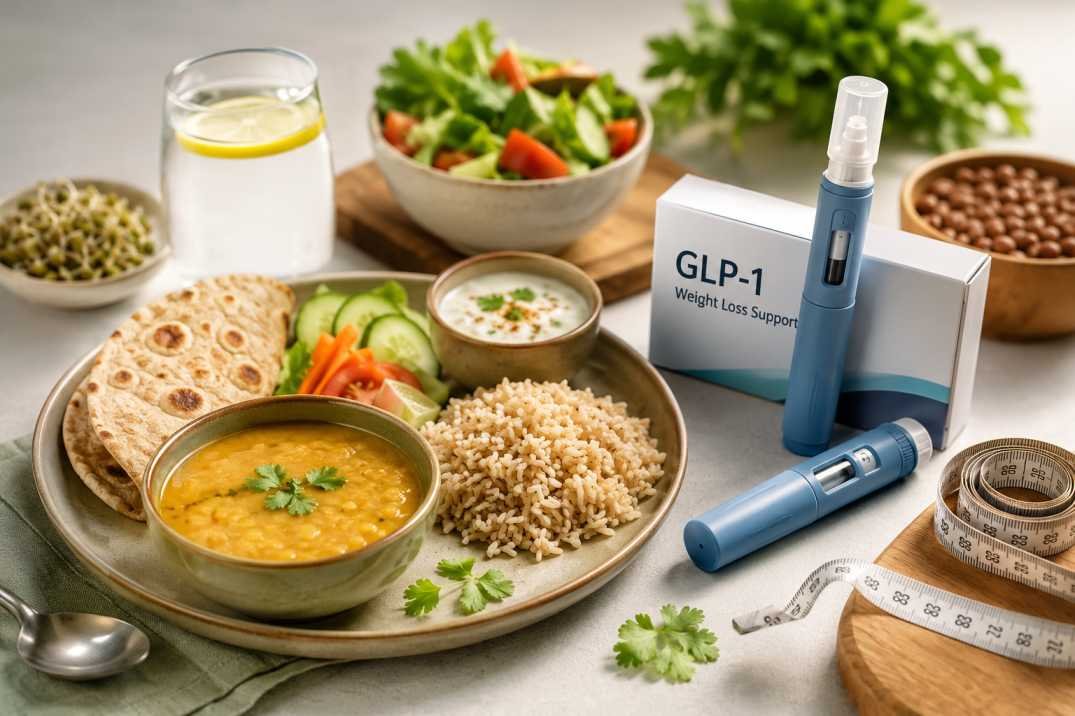
 Admin
Admin A cousin messaged me last month asking if she should “just get on Ozempic” before her brother’s wedding. That’s where we are in 2026 — a medicine that was a niche diabetes drug three years ago is now dinner-table conversation in Indian families. The patent for Semaglutide is up in India by March 2026. Then came generic drugs at a fraction of the cost. And then the drug that cost almost as much as a ticket on a flight became more approachable for almost everyone.
But here’s what almost nobody talks about: the injection is the easy part. The GLP-1 diet is where people either succeed quietly or struggle publicly. Doctors spend maybe five minutes on nutrition during a consultation that’s mostly about dosing and side effects. So let’s actually get into what an Ozempic diet — or a semaglutide diet plan more broadly — looks like in practice, because it’s more specific, and more manageable, than the vague “eat less” advice floating around.
What GLP-1 Drugs Actually Are (Without the Jargon)
How they work The process works because Ozempic (semaglutide for diabetes) and Wegovy (semaglutide for weight loss) – as well as Monjaro (tirzepatide) – act on a naturally occurring gut hormone triggered by your stomach when you eat. It’s a hormone that slows digestion, tells your brain you’re full sooner, and silences that never-ending internal “food voice” – the one that’s perpetually strategizing your next bite or snack.
In India, Ozempic is approved for type-2 diabetes management; Wegovy is the version approved for weight management. Using either off-label purely for weight loss is a decision between a person and their doctor, not something to self-start. After the patent expiry, generic semaglutide brands from Indian manufacturers brought monthly costs down sharply compared to the original branded price — but cost, dosing, and suitability all still need a doctor’s involvement, not a pharmacy counter decision. Diet for Glowing Skin
The GLP-1 Diet Side Nobody Prepares You For
1. Your stomach capacity shrinks — fast
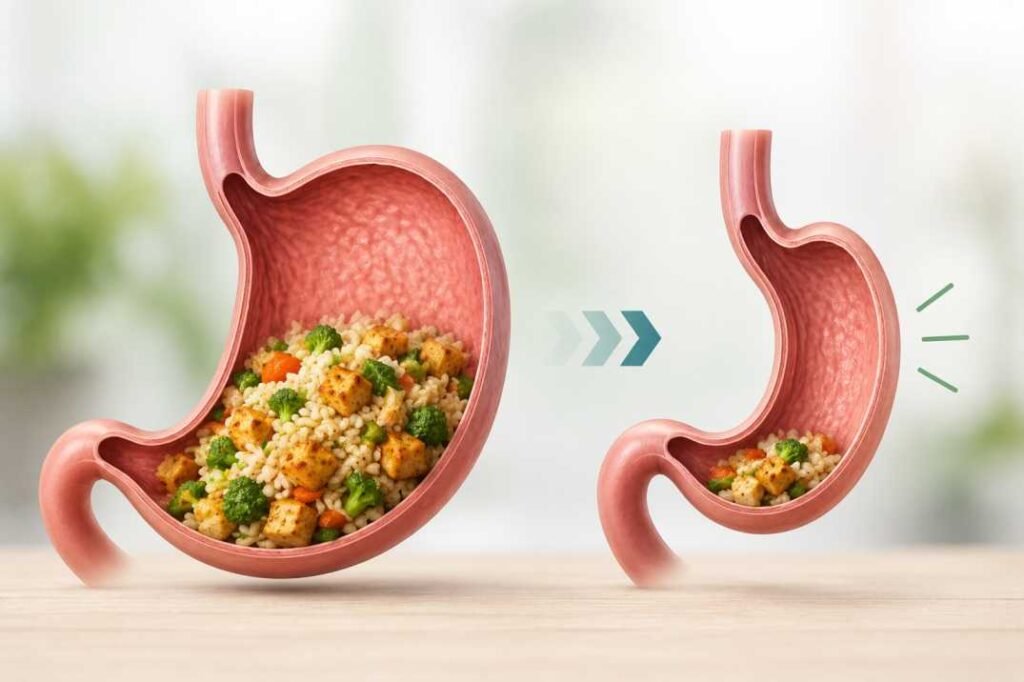
Because food sits in your stomach longer, you’ll feel full on portions that would’ve barely counted as a starter before. This sounds great until you realize a small bowl of rice and dal might be all you can manage in one sitting — which means every bite has to count nutritionally. There’s no more room for empty-calorie eating. 15 Vitamin C Rich Foods
2. Protein becomes non-negotiable, not optional
This is easily the #1 ozempic diet mistake I see people make. With such drastically less calories your body is forced to start using muscles for energy unless you are making an extra effort to prioritize protein. Losing weight that’s mostly muscle, not fat, is a real and common outcome on GLP-1 drugs — and it’s largely preventable with intentional eating, not the medicine’s fault.
Aim to put a protein source at the front of every small meal, not as an afterthought: a boiled egg, a cube of paneer, a spoon of dal that’s actually thick, a small bowl of curd. On a reduced appetite, protein has to be the first thing on the plate, because if you fill up on rice or roti first, there’s no room left for it. Healthy Lifestyle
3. Fibre and water intake need active attention
Slower digestion plus lower food volume is a common recipe for constipation on these medications. This isn’t a minor inconvenience — it’s one of the top reasons people report discomfort. Vegetables, a spoon of soaked chia or sabja seeds, fruit with the skin on, and consistent water intake through the day matter more here than they normally would. Protein-Rich Foods
4. Nausea changes what “eating well” looks like
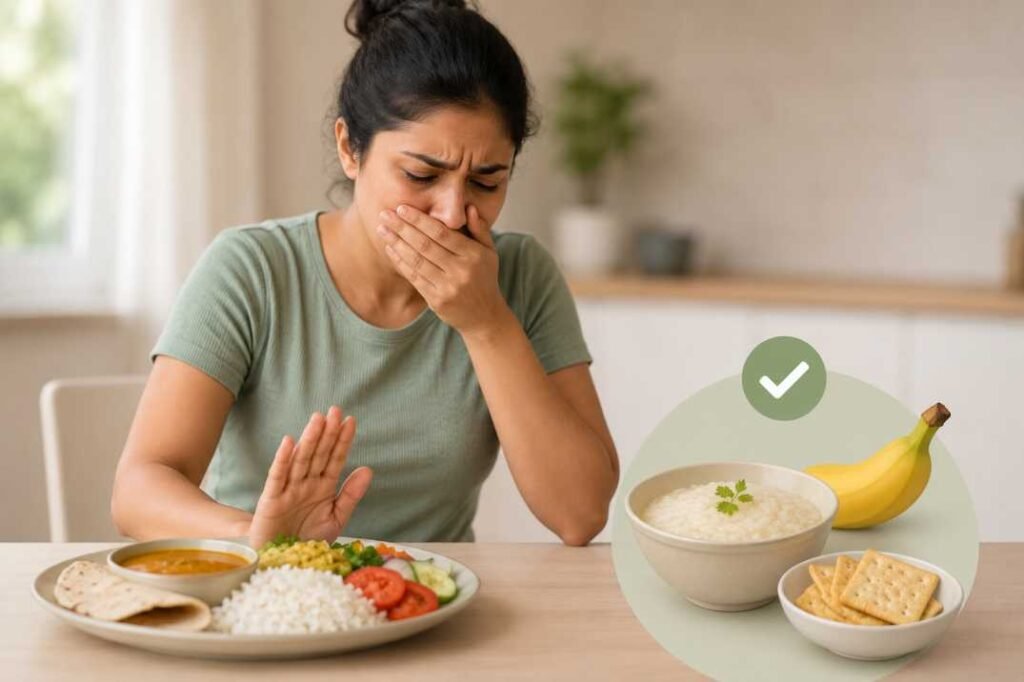
Oily, heavy, or very spicy food is far more likely to trigger nausea on GLP-1 drugs than it used to. This is your body being honest with you — rich restaurant-style gravies, deep-fried snacks, and very sugary desserts tend to sit badly. Lighter preparations — steamed, grilled, or simply cooked with less oil — aren’t a diet trend here, they’re a practical necessity.
5. Micronutrients can quietly slip
Eating a fraction of your old food volume means you’re also getting a fraction of your old vitamin and mineral intake, unless you’re deliberate about variety. Iron, vitamin B12, and calcium are the ones worth watching for vegetarians in particular — this is a conversation to have with your doctor, especially if bloodwork is being tracked anyway.
6. Muscle preservation needs movement, not just protein
Diet alone can’t fully protect muscle during rapid weight loss. 2-3 resistance-based sessions per week – whether this be body weight strength, light weights, or resistance bands are also extremely beneficial in retaining muscle mass together with protein. You don’t have to invest in a gym membership. Consistency is more crucial than heavy resistance.
Common GLP-1 Side Effects and What Actually Helps
| Problem | Why It Happens | What Helps |
| Nausea | Slower digestion | Smaller, more frequent meals; avoid oily/heavy food |
| Constipation | Lower fibre and food volume | More fibre, more water, gentle movement |
| Bloating | Slower stomach emptying | Eat slowly; avoid carbonated drinks |
| Low energy | Insufficient protein or calories | Protein-forward small meals through the day |
| Muscle loss | Inadequate protein intake | Protein target + resistance training |
Best Indian Diet for GLP-1 Weight Loss Drugs — What an Actual Day Could Look Like
Disclaimer: This isn’t an official recipe, hunger and tolerance levels are completely personal, and a professional should tell you how many portions to have but the physical shape of your meal is a key structural habit that helps.
- Early morning: A small glass of water, maybe with a splash of lemon
- Breakfast: One egg or a small bowl of moong dal chilla — small, protein-forward, not carb-heavy
- Mid-morning: A few soaked almonds or a small bowl of curd
- Lunch: A thick dal or a small piece of paneer/fish, one vegetable sabzi, a small portion of rice or roti — protein first, carbs last
- Evening: Herbal tea or a small fruit, if there’s room
- Dinner: Something light — a vegetable soup with a boiled egg, or dal and a small salad
Notice there’s no snacking gap for biscuits or chips in there — not because they’re “banned,” but because on a GLP-1 meal plan, there’s genuinely limited stomach room, and it’s worth spending it on food that does something for you.
High-Protein Foods for Ozempic Users (Grocery List)
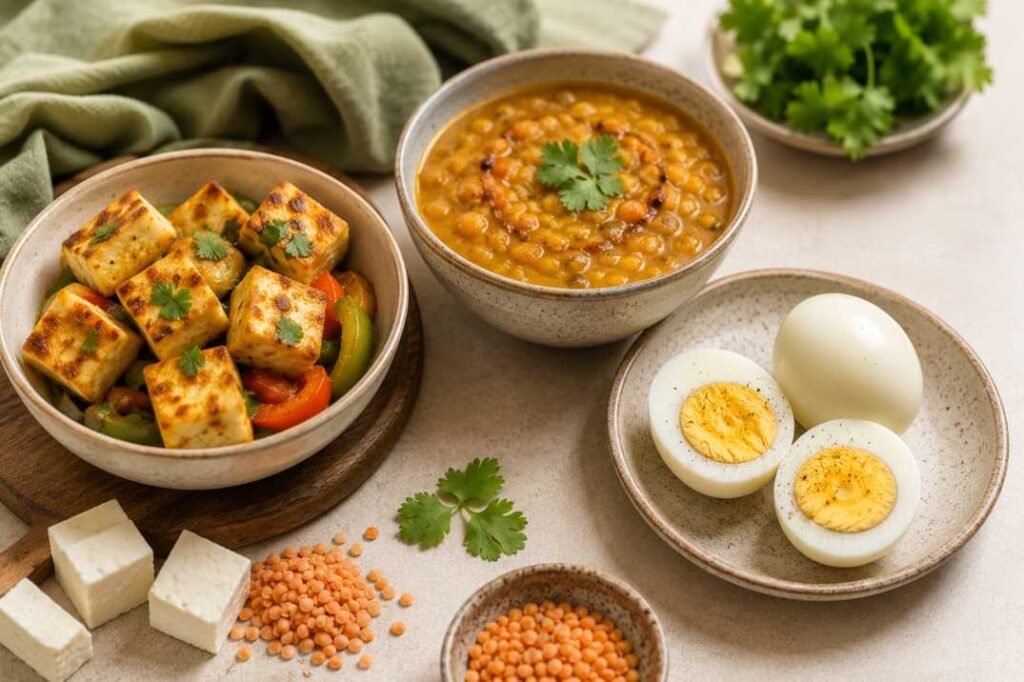
A simple list to keep on hand for planning small, protein-first meals:
Protein
- Eggs
- Paneer
- Greek yogurt or hung curd
- Chicken or fish
- Tofu and soya chunks
- Dal and legumes (moong, chana, rajma)
Fibre
- Spinach and other leafy greens
- Carrots, broccoli, or any seasonal vegetable
- Apples and pears (with skin)
- Chia or sabja seeds
Healthy fats
- Almonds and walnuts (small portions)
- A drizzle of olive oil or ghee, used lightly
Foods to Avoid or Limit on Semaglutide
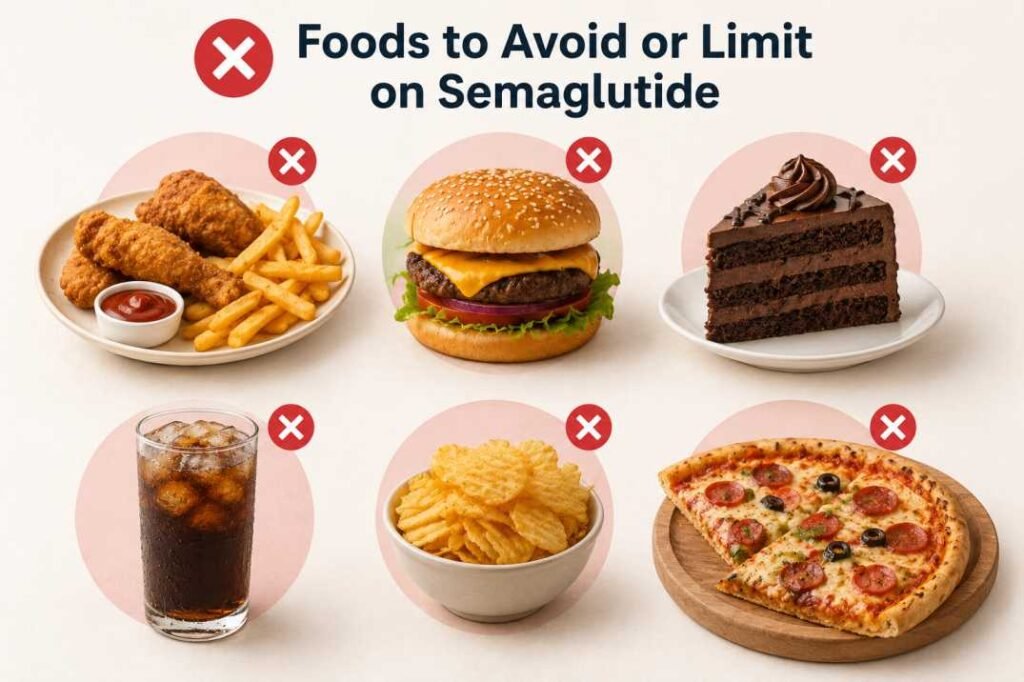
- Deep-fried foods and heavy, oil-slicked gravies
- Sugary drinks and desserts
- Large restaurant-style portions eaten quickly
- Alcohol, unless your doctor has specifically discussed it with you
- Very spicy meals, if they tend to worsen nausea
- Carbonated drinks, which can add to bloating
Mistakes People Are Making Without Realizing
- Skipping meals because “I’m just not hungry.” Reduced appetite isn’t permission to skip protein — it’s a reason to make every small meal deliberate.
- Not adjusting fibre and water intake. Constipation catches people off guard because nobody warns them proactively.
- Assuming any food volume drop equals “working.” Losing weight fast without protein focus often means losing muscle, which shows up later as fatigue and a slower metabolism.
- Going back to old portion sizes too soon. if the medication is paused or stopped — the stomach’s changed capacity can lead to real discomfort if old eating habits resume abruptly.
- Treating it as a standalone fix. Every clinical source is consistent on this: these medications work with diet and activity changes, not instead of them.
- GLP-1
Who Should Actually Be Having This Conversation With a Doctor

Anyone considering or currently on a GLP-1 medication for weight management should be doing so under medical supervision — this includes baseline health checks, dose planning, and monitoring for side effects. This is true regardless of whether you’re using a branded or generic version. This article is meant to fill the nutrition gap in that process, not to replace the medical one.
FAQs
Q: Do I need a dietitian if I’m on Ozempic or a generic semaglutide?
Not mandatory, but genuinely useful — especially in the first few months, when appetite changes are the most unpredictable and protein targets are easiest to miss.
Q: Why do I feel full so fast even on small portions?
That’s the medication working as designed — it slows gastric emptying. The goal is to make those smaller portions nutritionally dense, not to fight the fullness.
Q: Can I still eat Indian food normally on GLP-1 drugs?
Mostly, yeah but it depends – stick to dal, sabzis, steamed and grilled proteins and more simply prepared versions. The most likely foods to give you gas are the ones high in fat or that have been fried a lot.
Q: Is muscle loss inevitable on these medications?
No — it’s a risk that’s largely manageable with consistent protein intake and, where possible, some strength-focused movement, not an unavoidable side effect.
Q: How much protein do I actually need on a GLP-1 meal plan?
Commonly accepted initial range of around 1.0 – 1.5 g/kg ideal body weight/day, should be individualized by the doctor or dietitian to suit your individual circumstances.
Further Reading
For readers who want to go deeper into the clinical side of GLP-1 medications and nutrition, these are credible starting points:
- American Diabetes Association (diabetes.org) — general GLP-1 and diabetes management guidance
- NIDDK / National Institute of Diabetes and Digestive and Kidney Diseases (niddk.nih.gov) — obesity and diabetes medication overviews
- NHS (nhs.uk) — patient-facing guidance on weight-loss medications
- Indian Council of Medical Research (icmr.gov.in) — Indian dietary reference values

 Admin
Admin
[…] There’s no soup-only day here, no “detox water,” no skipping roti forever.It’s just 7 days of authentic Indian foods, put together to make sure that you’re adequately fed to make it through, losing at a pace your body can take, as well as not white-knuckling it by Wednesday. GLP-1 Weight Loss Drugs in India […]