 Admin
Admin High-protein Indian breakfast ideas under 300 calories are exactly what most of us need but rarely plan for. Be honest — what did you eat this morning? If it was two slices of toast, a rushed cup of chai, or last night’s leftover roti eaten while looking for your office ID card, you’re not alone. Most of us in India treat breakfast as an afterthought, something to grab between getting ready and running for the bus.
But here’s the thing. That “quick” breakfast is usually all carbs and almost no protein, which is exactly why you’re starving again by 11 am and eyeing the office vending machine. I’ve been there — reaching for biscuits because my 8 am poha wore off by mid-morning.
The solution is nowhere near a radical overnight transformation that involves eating oats morning, noon, and night for eternity. You require a different kind of healthy Indian food, specifically under 300 calories and very high in protein. The meal should be comfortingly desi, yet equipped to fill you up till dinner – Indian food is surprisingly adept at just that, we’ve got dhal, eggs, sprouts, besan and paneer to play with, we’re just choosing to eat it a different way than we normally do.
Why Bother With Protein at Breakfast?
Consider what a regular Indian would eat at breakfast – butter parathas, poori-bhaji, or simple butter and jam toast. Healthy – maybe. High-carb – definitely. Which is also your trigger, because fast carbohydrates get digested quickly, leading to a quick dip and a spike in blood sugars, leaving you starving long before lunch.
It’s just not that protein. It is also far more difficult to digest by our bodies, which means that the food stays with the food longer, keeping the blood sugar levels from crashing and keeping you full through lunch. If weight loss, muscle gain, a decrease of afternoon samosas-or just overall, sustained energy-is your goal, this one simple decision to include real protein in the morning will have more impact than practically any other nutritional tip on the internet.
A Quick Note on the Numbers Below
A brief word of caution before you carry on down the page: everything here for protein and calories is a near exact science – derived from typical home cooking, with very little added fat (one teaspoon per portion, and nothing is fried); it is not to be mistaken for laboratory specifications. All the ingredients listed are likely already in most kitchens – nothing there is protein powder, nothing is imported from a supplier in a trendy part of the world.
Makhana Nutritional Value Per 100g
1. Moong Dal Chilla with Mint Chutney
The one dish from the list. The moong dal chilla is a savory pancake, made from soaked green lentils into a batter, mixed with onions, green chilies, cumin seeds, little coriander. Bake 2 on the tawa, a few drops of oil, and you are sorted out to about 220 calories and 14 grams protein.
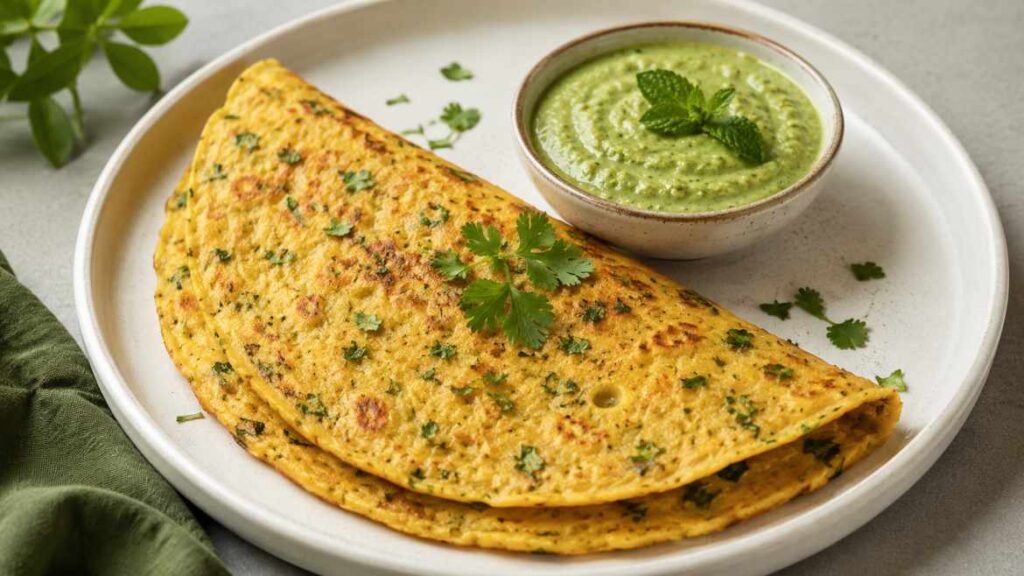
The thing I love about chilla is how forgiving they are. Grate a carrot into it, chopped spinach, and you’ve got fibre for free. Leave off the fried accompaniment, choose mint or coriander chutney over anything with an oil burden and it’s also gluten-free which can be nice if wheat disagrees.
2. Egg Bhurji with Half a Multigrain Roti
Egg bhurji — that spiced, Indian-style scramble with onion and tomato — is one of those dishes almost every household already knows how to make. Which makes it an easy win here.
Two eggs alone give you around 12-13 grams of protein. Cook the bhurji in a teaspoon of oil (not the usual generous glug), skip butter on the roti, and stick to half a roti instead of a full one, and the whole plate comes to about 260 calories with roughly 18 grams of protein — the highest protein count on this entire list, honestly.
Prefer vegetarian? Paneer bhurji, made the exact same way, gets you close, though it runs a touch higher on calories since paneer carries more fat than egg white.
3. Sprouts Salad with Peanuts and a Squeeze of Lemon
Not everything warrants cooking on a stove. When you’re truly out of time to cook, a simple bowl of sprouts – like sprouted moong or matki with chopped onions, tomatoes, cucumbers, roasted peanuts, and an extra generous squeeze of lemon is quick enough for a five-minute snack.
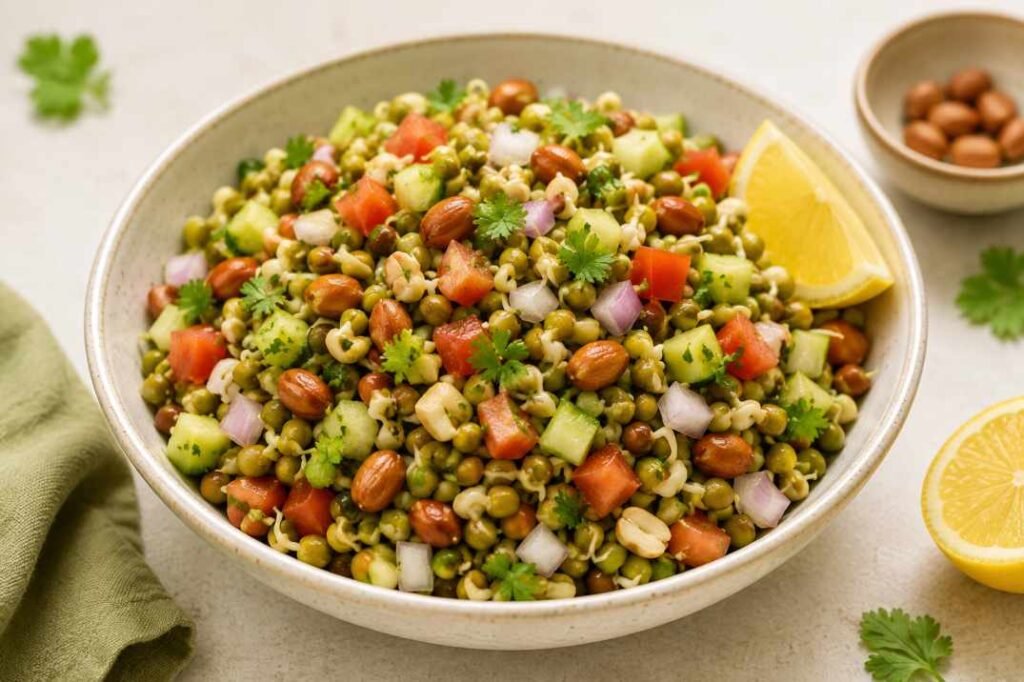
One bowl is about 150g and is a rough 180 calories and 13g of protein. Sprouting actually allows the protein in the lentils to be absorbed much better than if not sprouted, so it is genuinely an easy option to make as opposed to being plain old lazy. Be certain the peanuts used for crunch are roasted, not fried though – or you might silently add many more calories than you expected!
4. Besan Cheela Stuffed with Paneer
Plain old gram flour, aka besan, is perhaps one of the most un-hyped protein providers that lie tucked away in Indian kitchens. Whip up a cheela (batter logic similar to moong dal chilla) stuff it with a little lightly spiced, crumbled paneer and we have something that feels decadent, but is really not.
Keep the paneer stuffing to around 30 grams, go easy on the oil, and you’re at roughly 240 calories with 15 grams of protein per cheela. The best part is how easy this is to switch up — swap the stuffing for grated vegetables one day, paneer the next, and you’ll never get bored of it.
5. Idli with Sambar — Minus the Coconut Chutney
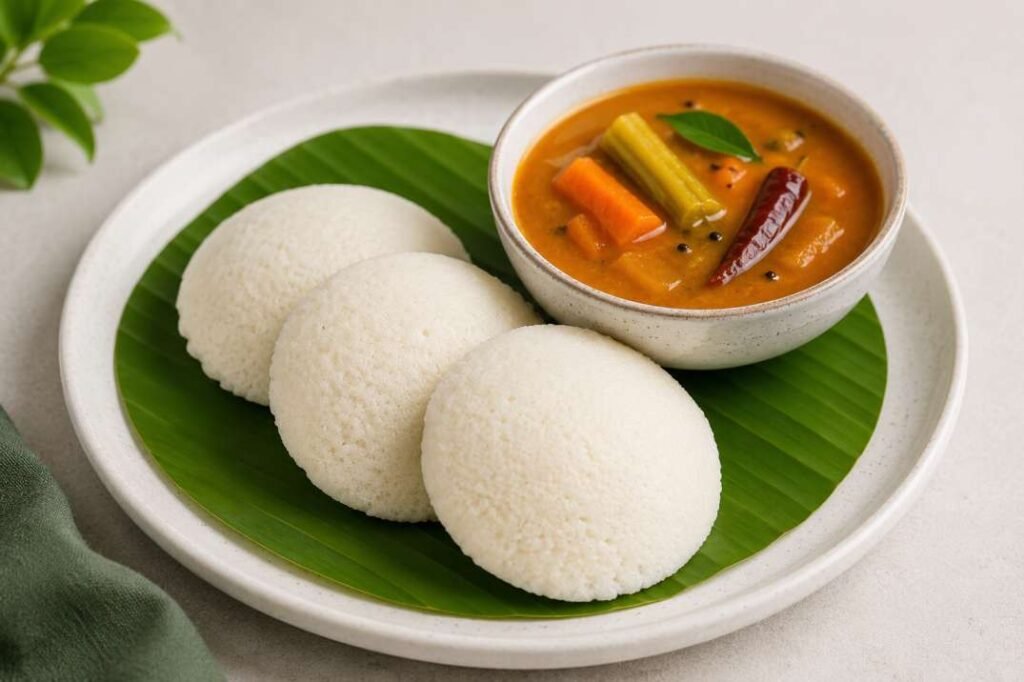
South Indian breakfasts get unfairly labelled as “just carbs,” which isn’t entirely fair. Three medium idlis with a bowl of sambar actually lands around 250 calories and 12 grams of protein, mostly thanks to the lentils in the sambar and the fermentation process idli batter goes through — which, interestingly, also makes the protein easier to digest.
However, the main problem is coconut chutney. I know, I know it’s yum-you can’t argue with that, but it’s so rich in oil and saturated coconut fat that it can secretly add twice the number of calories to your day. Make this an exception rather than the rule. Don’t feel like this should be ruled out for weekend meals, but maybe during a busy week it could be avoided.
6. Oats-Moong Dal Chilla (a Fusion That Actually Works)
When the thought of having plain oatmeal can leave you looking for excuses to skip breakfast, this blended version will make you rethink! Puree rolled oats with the pre-soaked moong dal, mix some chopped vegetables into it and cook it like any other chilla.
2 of these is ~230 calories and 14g of protein. Adding oats in there also add soluble fibre, helping to further slow things down – which can be good for people monitoring cholesterol and/or blood sugar – and the moong dal ensure you are at least getting good protein counts in the recipe. This sounds dull written down but can actually taste really nice.
7. Hung Curd Bowl with Roasted Chana
This one borrows a bit from the whole “Greek yogurt bowl” trend, except it’s fully Indian. Hung curd — regular curd strained overnight through a muslin cloth to remove the whey — has a noticeably higher protein concentration than the curd you’d normally spoon over dal.
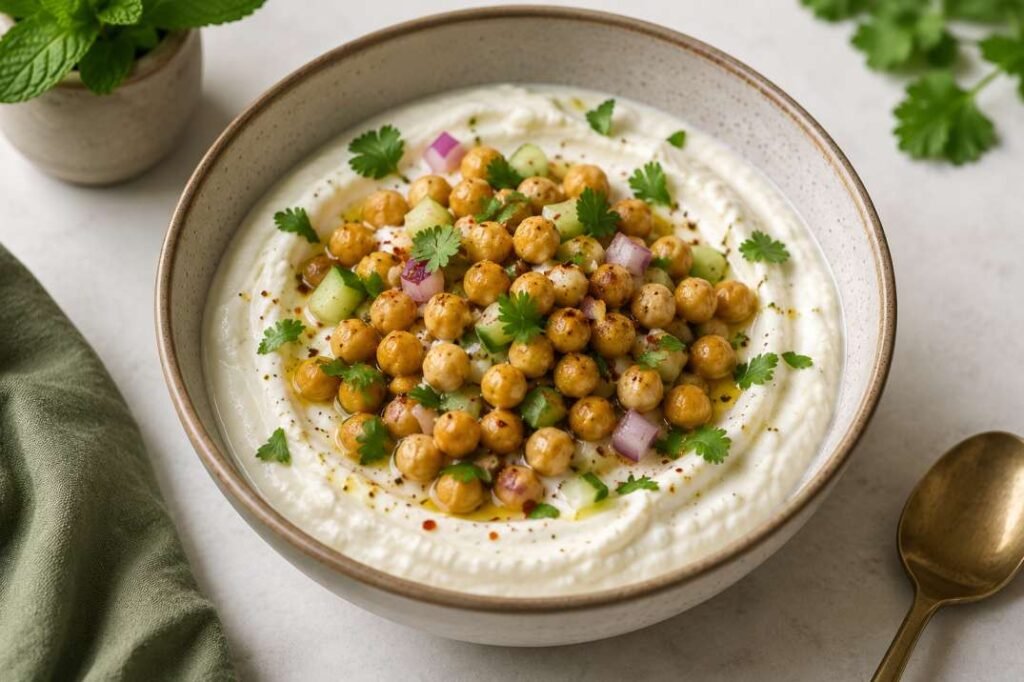
Take 150g hung curd (hung over night), add 2 tablespoons roasted chana instead of sugar/granola and add a tiny pinch of roasted cumin and black salt. Cooling and highly protein rich – it’s close to 210 calories and 16 g protein! No cooking needed, just patience the previous night.
Quick Comparison Table
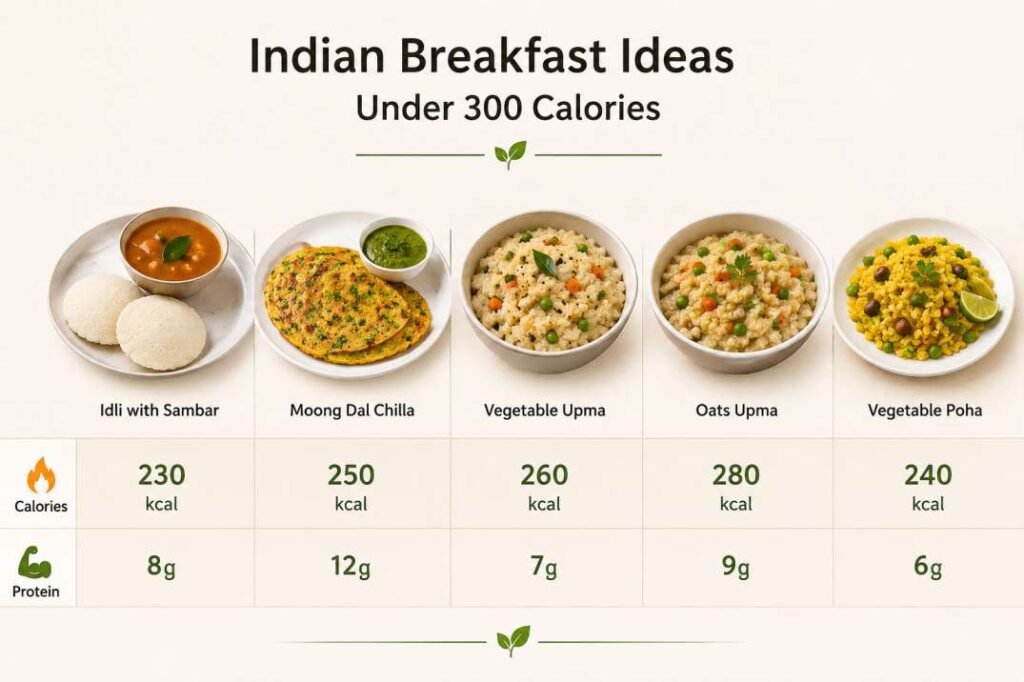
| Breakfast Idea | Approx. Calories | Approx. Protein |
| Moong Dal Chilla with Mint Chutney | 220 kcal | 14g |
| Egg Bhurji with Half Multigrain Roti | 260 kcal | 18g |
| Sprouts Salad with Peanuts | 180 kcal | 13g |
| Besan Cheela Stuffed with Paneer | 240 kcal | 15g |
| Idli with Sambar (no chutney) | 250 kcal | 12g |
| Oats-Moong Dal Fusion Chilla | 230 kcal | 14g |
| Hung Curd Bowl with Roasted Chana | 210 kcal | 16g |
Small Swaps That Add Protein Without Adding Much Else
But what if you’re not quite ready to transform your entire morning meal? Totally get it. A few simple swaps can bring what’s on your plate closer to a high-protein, Indian-style, 300-calorie breakfast without the need for even a new recipe:
- Swap regular curd for hung curd in your raita — same taste, meaningfully more protein.
- Stir a spoon of roasted chana or peanuts into your poha or upma instead of piling on fried garnish.
- Use crumbled paneer or tofu in paratha stuffing alongside (or instead of) potato.
- Trade one regular roti for a besan or moong dal chilla a couple of times a week.
- Add a boiled egg or an egg white on the side of whatever you’re already eating — you don’t need to reinvent the whole meal.
Where People Usually Go Wrong
Even with the right ingredients, a few habits sneak the calorie count up without you noticing:
- Going heavy on ghee or oil “just for taste” — this alone can double the calories in an otherwise healthy dish.
- Washing it all down with sugary tea or coffee, which adds calories but nothing useful.
- Leaning too hard on chutneys and pickles, both of which are usually oil-and-salt bombs.
- Leaving vegetables out of chillas and bhurji, which cuts down on fibre and makes the meal less filling than it should be.
None of these are dramatic mistakes. But fix even two or three of them, and you’ll notice the difference by lunchtime.
Frequently Asked Questions
What’s the best high-protein Indian breakfast under 300 calories for weight loss?
Moong dal chilla and the sprouts salad tend to work best here — both pack in protein and fibre while staying low on fat, so you stay full without going over your calorie budget.
Can vegetarians actually get enough protein at breakfast?
Yes, easily. Lentils, paneer, hung curd, sprouts, and besan are all strong protein sources, and several of them — like egg bhurji’s paneer counterpart — can match or beat egg-based options in protein content.
How much protein should an Indian breakfast realistically have?
Somewhere around 15-20 grams is where you want to be aiming, and every course here hits that mark.
Are idli and dosa actually high-protein, or just hyped up?
At their best, they’re still only moderate – pretty much rice flour and lentil batter, which is carb rich to begin with. Eating idli with just sambhar, and avoiding the coconut chutney, at least makes it a moderately high protein rather than carb-dominant meal.
Is it fine to eat the same high-protein breakfast every single day?
Every once in a while, yeah. But mixing it up with a few choices – maybe chilla Monday, egg bhurji Tuesday, a curd bowl Thursday – staves off monotony and offers more nutrients than you ever would with just one option. High-Protein Indian Breakfast Ideas Under 300 Calories
Final Thoughts
Eating a high-protein Indian breakfast under 300 calories doesn’t mean giving up the food you grew up eating. It just means cooking it a little differently — less oil, smarter portions, a bit more intention. Indian cuisine already hands us everything we need for this: lentils, paneer, eggs, curd, besan. Nothing exotic, nothing you need to order online.
Pick one or two ideas from this list and try them this week. See what actually fits into your morning without feeling like a chore. That’s really all it takes — small, repeatable changes to the first meal of your day tend to add up to a lot more than people expect.

 Admin
Admin