 Admin
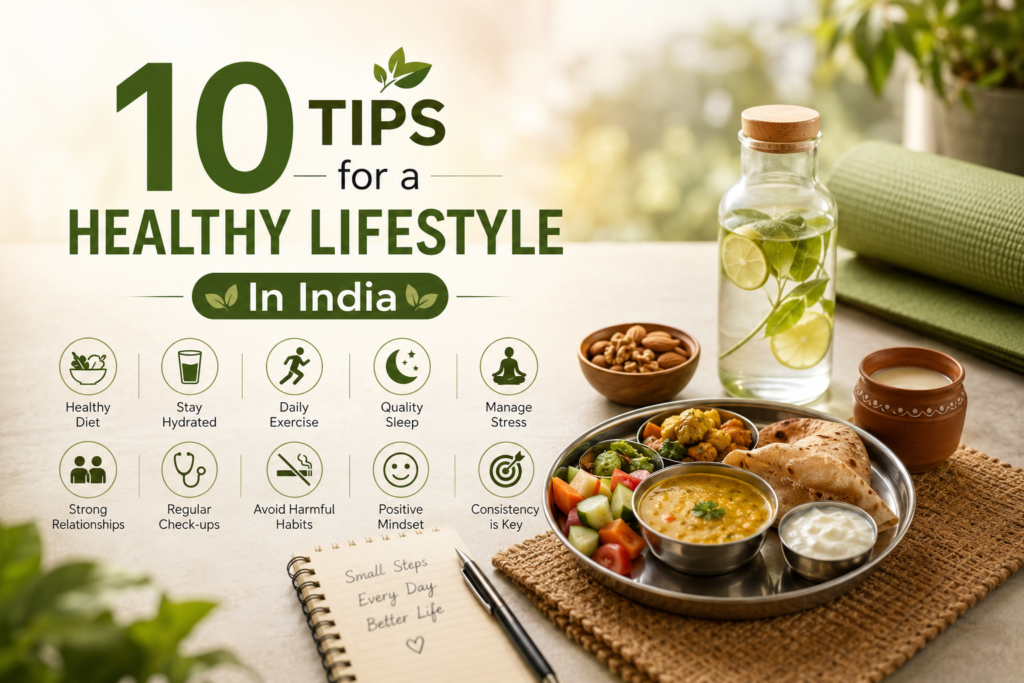
Admin A healthy lifestyle in India combines traditional wellness wisdom with modern habits—balanced nutrition using local ingredients, consistent physical activity, quality sleep, stress management, and mindful daily rituals. These ten evidence-based tips are tailored for Indian audiences, considering our climate, dietary preferences, work culture, and Ayurvedic heritage.
Why Healthy Living Matters More Than Ever for Indians
India is witnessing a quiet wellness revolution. According to the TOI Habit Index, 35% of Indians prioritized physical fitness in 2025, while 22% focused on mental health and stress relief. Interestingly, the research reveals that Indians aren’t chasing perfection—they’re choosing habits that fit realistically into their lives. This shift reflects a growing understanding that wellness is not about extreme transformations but about sustainable, everyday choices that compound over time.
But here’s the reality: our modern lifestyle presents unique challenges. Long work hours, rising pollution levels, processed food accessibility, and the constant juggle between tradition and modernity make healthy living complex. Urban Indians face a triple burden—communicable diseases, non-communicable lifestyle diseases, and mental health challenges—all simultaneously. The air quality in major cities like Delhi, Mumbai, and Bangalore regularly crosses hazardous levels, making respiratory health a constant concern. Meanwhile, the convenience of food delivery apps and desk-bound jobs has created a sedentary culture that our grandparents would find unrecognizable.
1. Build Your Plate Around Local, Seasonal Foods
India’s regional cuisines are naturally balanced and nutritionally rich, yet we’ve somehow convinced ourselves that health requires expensive imported “superfoods” like quinoa, kale, or avocados. The truth is far simpler and more affordable: your grandmother’s kitchen already contains everything you need for optimal health.
South Indian meals naturally combine rice with protein-rich lentils and fiber-packed vegetables. North Indian thalis offer a balanced combination of roti, dal, sabzi, and curd. The problem isn’t our traditional foods—it’s the modern modifications we’ve made to them. We’ve replaced hand-pounded rice with polished white rice, cold-pressed oils with refined vegetable oils, and home-cooked meals with restaurant takeaways and processed snacks.
The solution lies in returning to the fundamentals of Indian eating while applying modern nutritional science. The 50-25-25 rule offers a simple framework: fill 50% of your plate with vegetables (sabzi or salad), 25% with protein sources like dal, paneer, eggs, fish, or chicken, and 25% with whole grains such as brown rice, millets, or whole wheat roti. This approach ensures you’re getting adequate fiber, protein, and complex carbohydrates without overcomplicating meal planning.

Millets deserve special attention here. The United Nations declared 2023 the International Year of Millets, and for good reason. Ragi, jowar, bajra, and foxtail millet are gluten-free, fiber-rich, and perfectly suited to Indian climates and agricultural conditions. Ragi, for instance, contains ten times more calcium than wheat and is excellent for bone health—particularly important for Indian women who are prone to osteoporosis. Jowar is rich in antioxidants and helps regulate blood sugar, making it ideal for prediabetic individuals. These ancient grains are making a comeback not because they’re trendy, but because they’re genuinely superior to refined grains.
Traditional fats also need rehabilitation in the Indian diet. Cold-pressed mustard oil, coconut oil, and ghee have been demonized by the food industry in favor of cheap refined oils, but research increasingly supports their health benefits when used in moderation. Mustard oil is rich in monounsaturated fatty acids and has anti-inflammatory properties. Coconut oil contains medium-chain triglycerides that support metabolism. Ghee provides butyrate, a short-chain fatty acid that nourishes gut cells and reduces inflammation. The key is moderation—one to two teaspoons per meal is sufficient.
2. Move Daily—Don’t Wait for Gym Motivation
The fitness industry has sold us a dangerous myth: that health requires expensive gym memberships, fancy equipment, and hours of intense exercise. This couldn’t be further from the truth, especially in the Indian context where gym culture is still limited to urban centers and higher income brackets.
The TOI Habit Index reveals that 26% of Indians focusing on weight management do regular workouts, but the bigger opportunity lies in daily movement for everyone else. The reality is that consistent, moderate daily activity often outperforms irregular intense workouts. A person who walks 30 minutes daily will be healthier than someone who does a brutal gym session once a week and remains sedentary otherwise.
India offers unique opportunities for daily movement that developed countries lack. Our cities are walkable (even if chaotic). Our homes require physical maintenance. Our public spaces, from parks to temple complexes, encourage walking. The key is recognizing these opportunities and intentionally incorporating them into our routines.
Morning walks are perhaps the most accessible and beneficial form of exercise for Indians. Walking between 6-8 AM provides multiple advantages: pollution levels are at their lowest, temperatures are comfortable, and exposure to morning sunlight helps regulate your circadian rhythm and vitamin D production. For those in polluted cities like Delhi, early morning walks are particularly crucial—PM2.5 levels can be 30-40% lower at 6 AM compared to 9 AM. A 20-30 minute brisk walk elevates heart rate, improves circulation, and sets a positive metabolic tone for the entire day.
Household chores represent an underappreciated form of exercise in Indian homes. Sweeping, mopping, cooking, and washing clothes involve significant physical movement. A 70-kg person burns approximately 150-200 calories per hour of household work. More importantly, these activities engage multiple muscle groups and improve functional fitness—the kind of strength and flexibility you actually need for daily life. Rather than viewing chores as burdens, reframe them as movement opportunities.
Yoga deserves its reputation as India’s gift to global wellness, but you don’t need an expensive studio membership to practice it. YouTube channels offer free, high-quality yoga sessions ranging from 10-minute morning stretches to hour-long practices. Even 15 minutes of surya namaskars (sun salutations) engages the entire body, improves flexibility, and calms the mind. The beauty of yoga is its scalability—whether you’re a beginner or advanced practitioner, there’s always a level that challenges you appropriately.
Post-meal walks are a particularly valuable habit given India’s diabetes epidemic. A 10-minute walk after lunch and dinner improves digestion, reduces blood sugar spikes, and enhances insulin sensitivity. Research shows that a 15-minute post-meal walk can reduce blood sugar rise by up to 30%. In a country where over 77 million adults have diabetes and another 25 million are prediabetic, this simple habit could be genuinely life-saving.

3. Prioritize Sleep as Non-Negotiable Recovery
In Indian culture, late nights are often normalized and even celebrated. Whether it’s for work deadlines, socializing, binge-watching web series, or endless scrolling through social media, sleep is treated as expendable. “I’ll sleep when I’m dead” might sound ambitious, but it’s actually a recipe for accelerated aging, cognitive decline, and chronic disease.
Sleep is not passive rest—it’s active recovery. During deep sleep, your brain consolidates memories and clears toxic waste proteins through the glymphatic system. Your body repairs muscle tissue, regulates hormones, and strengthens immune function. Growth hormone, essential for tissue repair and metabolism, is primarily released during deep sleep. Cortisol, the stress hormone, follows a natural rhythm that requires adequate sleep to maintain balance.
The consequences of sleep deprivation are severe and well-documented. After just one night of poor sleep, insulin sensitivity drops by up to 25%, increasing diabetes risk. Chronic sleep deprivation is linked to weight gain (particularly abdominal fat), weakened immunity, elevated blood pressure, impaired judgment, and increased risk of accidents. In India, where road accidents claim over 150,000 lives annually, drowsy driving is a significant but underreported contributor.
Creating a sleep-friendly routine in the Indian context requires addressing specific challenges. Our climate demands attention to bedroom environment—cotton bedsheets are essential for Indian summers, and air conditioning or proper ventilation is necessary in humid regions. Our cultural norms around late dinners need adjustment—finishing your last meal at least 2-3 hours before sleeping allows digestion to complete and prevents acid reflux, which affects nearly 20% of urban Indians.
4. Master Stress Through Breath and Mindfulness
Mental health in India has long been stigmatized, but the tide is finally turning. The TOI Habit Index found that 22% of Indians prioritized mental health and stress relief in 2025, with 45% of them turning to meditation and mindfulness practices. In a culture where long work hours are worn like badges of honor, this shift represents a profound and necessary evolution in our collective consciousness.

Stress is not merely a mental state—it’s a physiological response that affects every system in your body. When you’re stressed, your body releases cortisol and adrenaline, preparing you for a “fight or flight” response. This was useful when our ancestors faced predators, but in modern life, chronic stress keeps these hormones elevated constantly. The result? Elevated blood sugar, suppressed immunity, impaired digestion, and increased abdominal fat storage. In India, where work culture often demands 50-60 hour weeks and constant availability through smartphones, chronic stress has become endemic.
The good news is that India has an ancient, proven toolkit for stress management: pranayama and meditation. These practices, refined over thousands of years, are now validated by modern neuroscience. Studies show that regular meditation literally changes brain structure—increasing gray matter in regions associated with emotional regulation and decreasing activity in the amygdala, the brain’s fear center.
Your 30-Day Healthy Lifestyle Action Plan
Transforming your health doesn’t require a dramatic overnight change. Research consistently shows that small, incremental changes are more sustainable than radical overhauls. This 30-day plan helps you build habits gradually, one week at a time.
Table
| Week | Focus Area | Action Items |
| Week 1 | Foundation | Start morning walks (20 minutes daily), drink warm water upon waking, set a consistent sleep schedule (10:30 PM – 6:30 AM) |
| Week 2 | Nutrition | Implement the 50-25-25 plate rule at every meal, add one new vegetable to your diet daily, reduce processed snacks by 50% |
| Week 3 | Mindfulness | Begin 5-minute pranayama practice each morning, start a gratitude journal (3 items nightly), create one work boundary (no emails after 7 PM) |
| Week 4 | Integration | Add one Ayurvedic ritual (tongue scraping or oil pulling), schedule your annual health check-up, find one enjoyable fitness activity to try |

Frequently Asked Questions
Q: Can I follow these tips if I’m a vegetarian?
Absolutely. Indian vegetarian cuisine is naturally rich in lentils, legumes, dairy, and vegetables. Focus on protein sources like dal, rajma, chana, paneer, tofu, and nuts. A well-planned vegetarian diet can meet all nutritional needs and may even offer health advantages, including lower risk of heart disease and certain cancers.
Q: How do I maintain these habits during Indian festivals?
Enjoy festivals mindfully. Eat your favorite foods in moderation, stay active with family walks or dancing, and return to routine the next day. One day of indulgence won’t derail your progress—in fact, guilt-free enjoyment is part of a healthy relationship with food. The key is not letting one festival day turn into a week of overeating.
Q: Are these tips suitable for senior citizens?
Yes, but adapt intensity. Seniors should focus on gentle walks, light yoga, proper hydration, and regular health screenings. Strength training with light weights or resistance bands helps maintain muscle mass and bone density. Always consult a doctor before starting new exercise routines, especially if you have chronic conditions.
Q: How quickly will I see results?
You’ll feel more energetic and mentally clear within 1-2 weeks of consistent practice. Physical changes like weight loss or improved fitness typically become visible in 6-8 weeks. Remember that health is a marathon, not a sprint—sustainable changes create lasting results.
Conclusion: Small Steps, Big Transformations
A healthy lifestyle isn’t built through extreme measures—it’s built through small, consistent choices repeated daily. As research confirms, real change begins when routine becomes stable. A short walk after meals, regular hydration, mindful sleep patterns, and balanced nutrition create a steady rhythm inside the body that compounds over time into profound health transformations.
For Indian audiences, the path to wellness lies not in abandoning our traditions but in returning to their wisdom while embracing modern evidence. Eat your grandmother’s recipes—but with awareness of portion sizes and ingredients. Practice yoga—but make it consistent rather than occasional. Work hard—but protect your boundaries with the same determination you bring to your career.
The ten tips in this guide are not rules to follow perfectly—they’re principles to adapt to your life. You don’t need to implement all ten tomorrow. Start with one or two that resonate most with your current situation. Master them until they feel automatic. Then add another. Over months and years, these habits will transform not just your body but your energy, your mood, your relationships, and your overall quality of life.
Your health is your most valuable asset. It’s the foundation upon which everything else—your career, your relationships, your dreams—is built. Invest in it daily, even if only in small ways. Your body—and your future self—will thank you.

 Admin
Admin