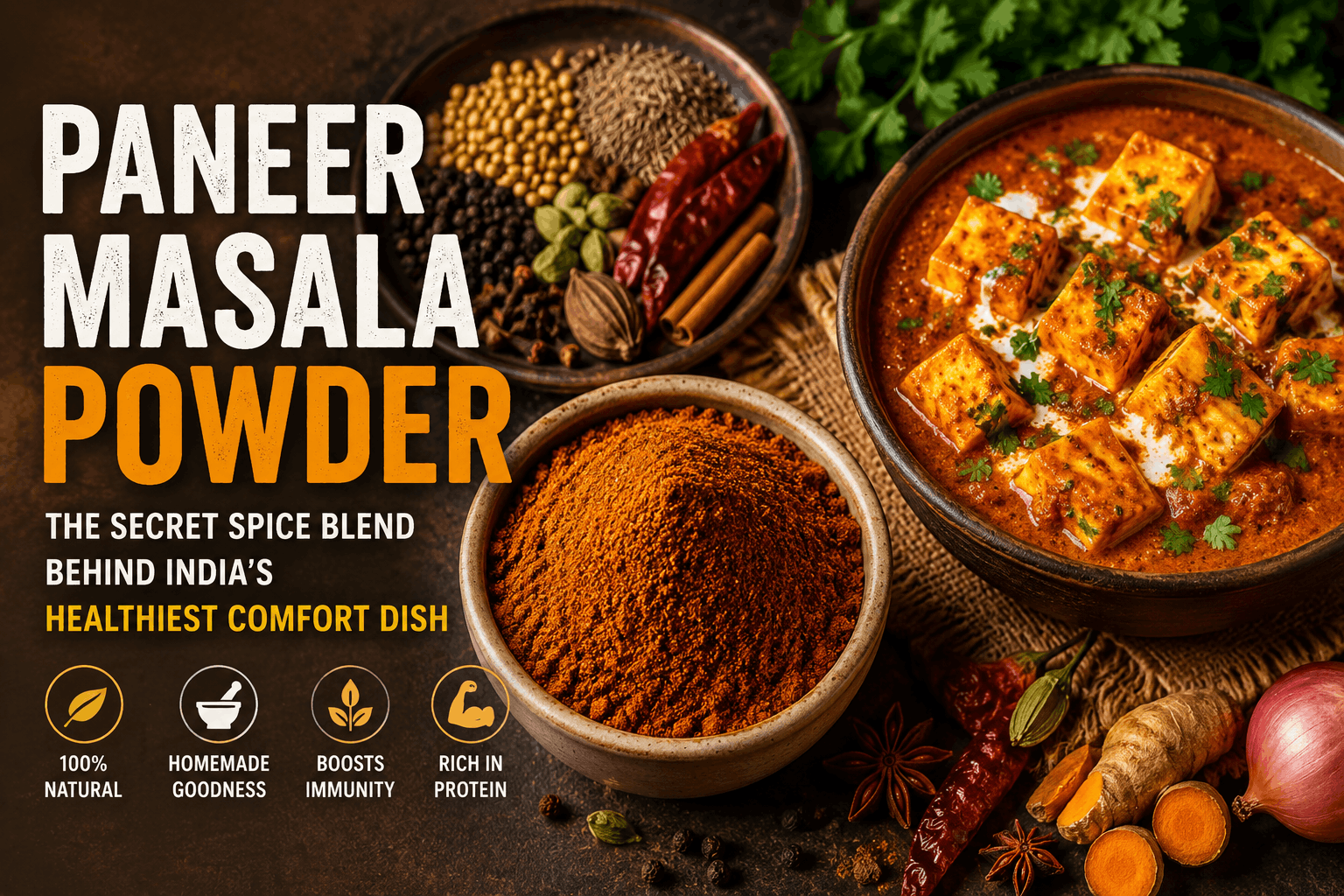
 Admin
Admin Learn everything you want to know about its incredible ingredients, tested health benefits and a DIY recipe which is much better than any available in the market.
This is whypaneer masalais made in practically every Indian home; whether a tiny kitchen in Ludhiana or a high-rise flat in Mumbai. It is comforting, smells earthy and comforting, protein packed and always, always home. What is almost always missed out is: The paneer masala powder is not just a mix of flavor. It’s a perfectly calibrated pile of spices that, when prepared with understanding, transforms a simple meal into a healthy, nutritious meal of truly deserving proportion. Know what goes into it, why it goes into it, and you can even make your very own masala powder from scratch at home and your entire approach to cooking, and hence to eating, will be transformed.
What Is Paneer Masala Powder?
Paneer masala powder is a spice mix which is dry and is designed specifically to flavor and build the base gravy for paneer dishes – usually for paneer masala, shahi paneer, and paneer butter masala. “Masala” in Hindi simply means spice mixture and in the context of paneer masala it is a blend of spices that is used to build a thick tomato gravy which coats the paneer, providing a robust, aromatic flavor. This is neither sharp and tangy like the chaat masala nor should be added in the end as garam masala (which is a mixed spice added at the end to give aroma).paneer masala powder has been formulated for giving body, color, heat and flavor depth
Check Previous Blog: Healthy Food Near Me? Here’s What Nobody
The Core Ingredients of Paneer Masala Powder (and Why Each One Matters)
A good paneer masala powder generally consists of 10 to 16 spices. Select ones will include things such as jeera, coriander, ginger, cloves, black cardamom, cassia bark, Kashmiri chilli, jaiphal, and such. All mixed together and providing just the right restaurant quality flavour.
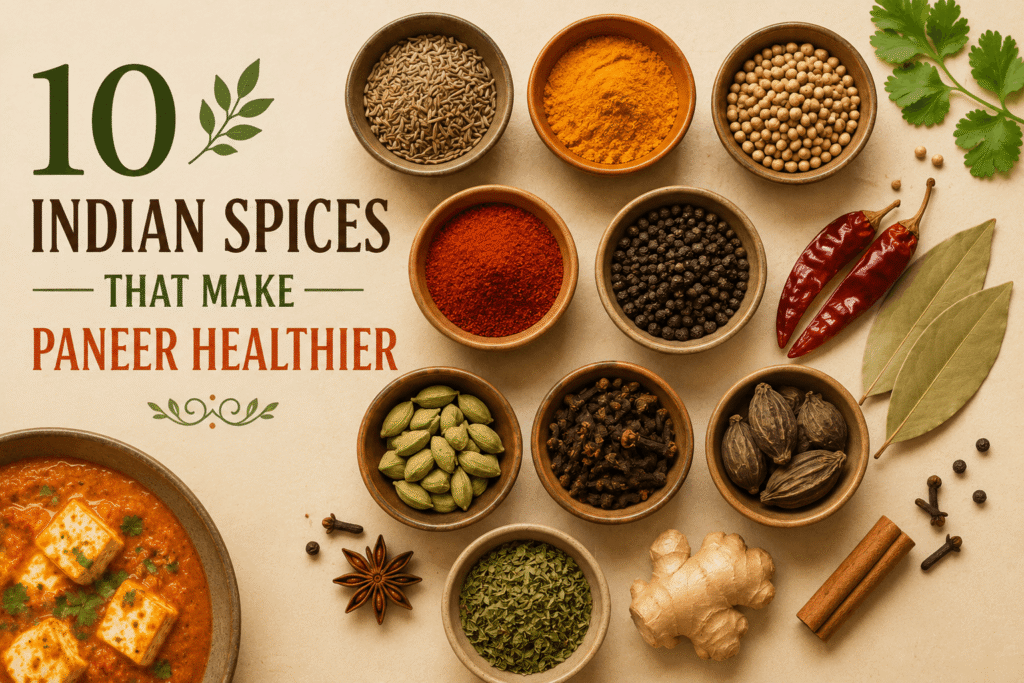
Here is a list of the role each spice played:
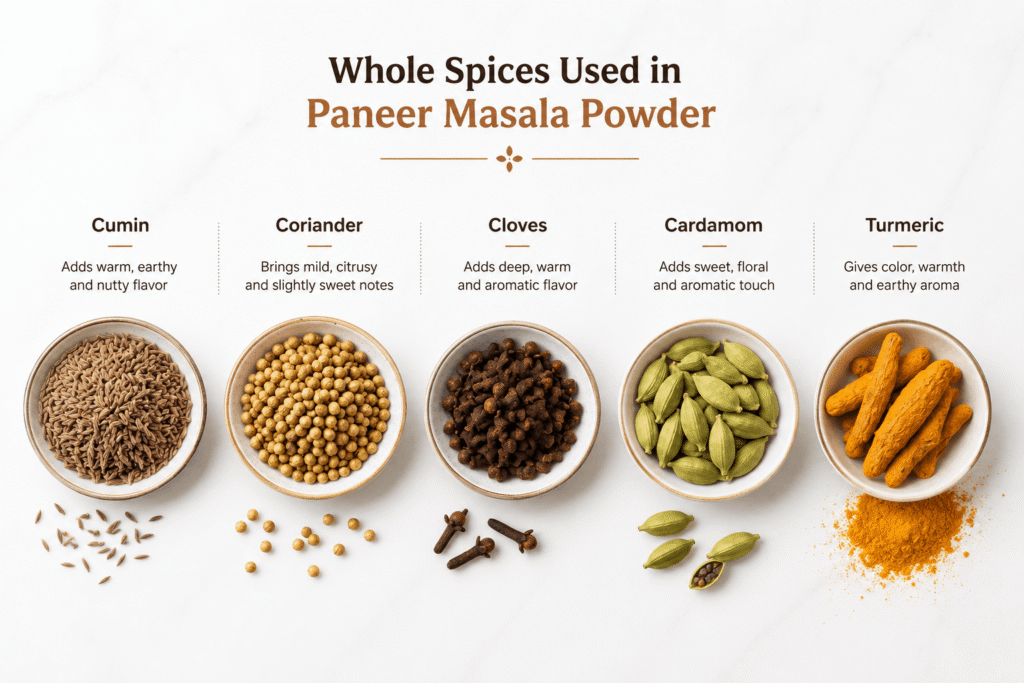
Turmeric (Haldi)
It’s likely the most research supported spice in the world! Spices found in paneer masala powder (and in many other such mixtures, for that matter, such as cloves) offer antioxidants which boost the immune system, lower the amount of inflammation within the body. The beneficial agent in turmeric that acts as such an anti-inflammatory is curcumin. One thing is for sure: when adding pepper to your masala (most good ones have black pepper in them), the absorption of curcumin in the body is 2,000 times better than when it is not taken.
Cumin (Jeera)
In the realm of Indian cuisine, cumin is what puts the digestion factor in there. It has been used as a digestor and to remove the bloating gas factor by the Ayurveda. The other digestive property of cumin is to increase the production of bile thus helping the body to metabolize fat.
Coriander (Dhaniya)
The seeds and ground powder are high in dietary fiber and a great source of iron and manganese. It has a slight citric smell to help elevate the earthiness of the other spices.Jeera,coriander, ginger and cloves are known to contain natural digestive properties that stimulate digestion and ease the stomach.
Kashmiri Red Chilli
That’s the reason behind the rich, gorgeous orange-red color of paneer masala – all without any aggressive heatKashmiri chili may have low levels of spice on the Scoville scale, but is high in capsaicin, the ingredient used in some products that is linked to increasing metabolism and decreasing hunger.
Cloves (Laung) and Black Cardamom (Badi Elaichi)
These are the warming, aromatic cornerstones of the blend. Using warming spices such as cassia bark, ginger and black pepper, the blend may help give your metabolism a bit of a push, and could possibly improve nutrient assimilation by the body. Cloves are among the most potent anti-oxidant spices around with a level that even challenges the high levels found in blueberries. .
Kasuri Methi (Dried Fenugreek Leaves)
Added toward the end of cooking or combined with masalas, kasuri methi is a flavorful ingredient. Kasuri methi is added either at the end of the cooking time or mixed in with the masalas, where both as a nutritional supplement, and also as an element of taste, thekasuri meethi contributes immune system stimulating anti-oxidants, in addition to general goodness to all the masalas based preparations.. There is even clinical data suggesting fenugreek may help in blood sugar management, which would be a boon to the millions of Indians that are suffering from pre-diabetes or type-2 diabetes.
Check Previous Blog: Healthy Recipes Using Curd: 10 Nutritious and
The Nutritional Power of Paneer + Masala Together
The Paneer along with a decent masala powder mix, makes up for one of the most satisfying and powerful nutritional options on an Indian dinner table.
Masala paneer gives you full vegetarian protein (20gms per 100gms of paneer) with 700mgs of calcium (same as in milk) with an added advantage of having anti-inflammatory spices like turmeric and cumin added to it.
The Casein protein in paneer digests slowly to provide muscle growth and satiety and can energize your body for long hours – post-exercise it should ideally be eaten with complex carbohydrates like Roti or Brown Rice. For vegetarians-which is a large segment of India’s population-paneer masala is one of the very few daily foods offering complete protein (all essential amino acids), calcium, phosphorus, vitamin A, D, and B12, as well as a full array of antioxidant spices.
Paneer is a good source of protein (16-18%), calcium and phosphorus especially for vegetarian diets and contains significant amounts of vitamin A and D. It’s a healthy food for expectant mothers and developing children and adolescent boys.
Store-Bought vs. Homemade Paneer Masala Powder: The Truth
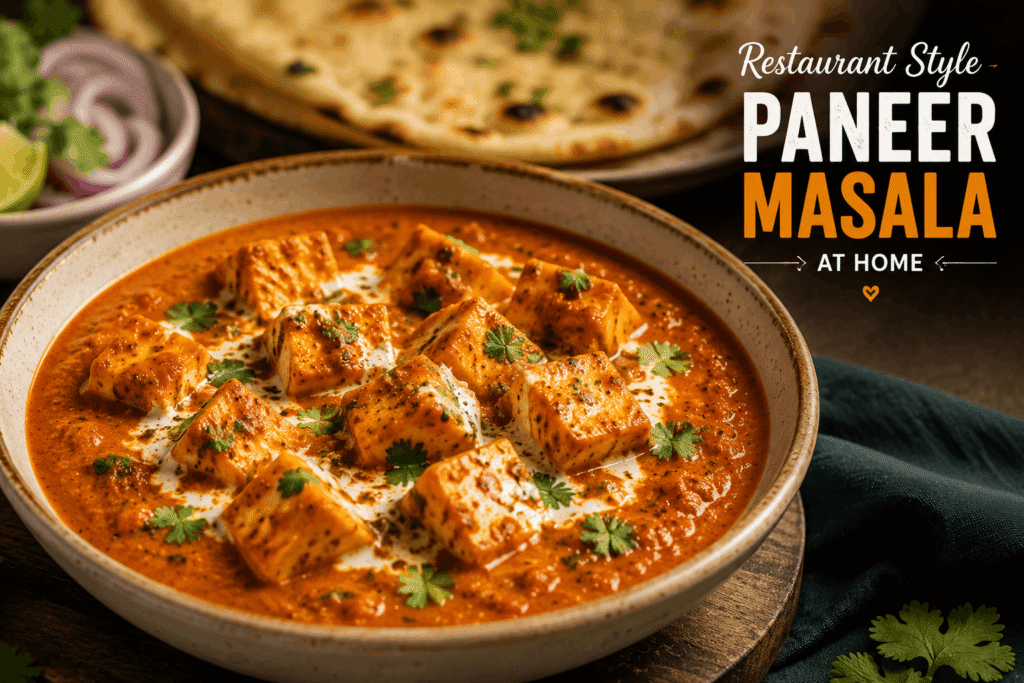
In India, walk through any kirana store aisle, and you’ll find 12 brands of paneer masala powder. Most are practical but, at a hidden cost- added preservatives, extra salt, artificial colors, flavor enhancers like MSG, and spices where most of the essential volatile oils are lost before they even reach your kitchen!
Spices draw much of their flavor and aroma from essential volatile oils which are trapped in the whole spice. Grinding spices releases these oils, and as a result many pre-ground spices (though convenient) lose much of their punch even before they reach your kitchen. It will take you 10 minutes, be cheaper and you will be in control of the food you’re eating.
How to Make Paneer Masala Powder at Home (Step-by-Step)
Ingredients (Makes ~100g of masala powder)
| Spice | Quantity |
| Coriander seeds | 3 tbsp |
| Cumin seeds | 1.5 tbsp |
| Kashmiri red chilli | 6–8 whole |
| Black peppercorns | 1 tsp |
| Cloves | 6–8 |
| Green cardamom | 4 pods |
| Black cardamom | 2 pods |
| Cinnamon (dalchini) | 1 inch |
| Fennel seeds (saunf) | 1 tsp |
| Turmeric powder | 1 tsp |
| Dried ginger powder | 1 tsp |
| Kasuri methi | 1 tbsp |
| Bay leaf | 2 |
| Star anise | 1 |
Method
Step 1 — Dry roast the whole spices. In a heavy bottomed kadai on a low flame add coriander seeds, cumin seeds, cloves, cardamoms, peppercorns, cinnamon, fennel seeds, bay leaf and star anise. On a low flame, roast for 3-4 mins and stir continuously till well aromatic. Do not hurry on this step as this is what makes a difference between a good masala and a great masala .
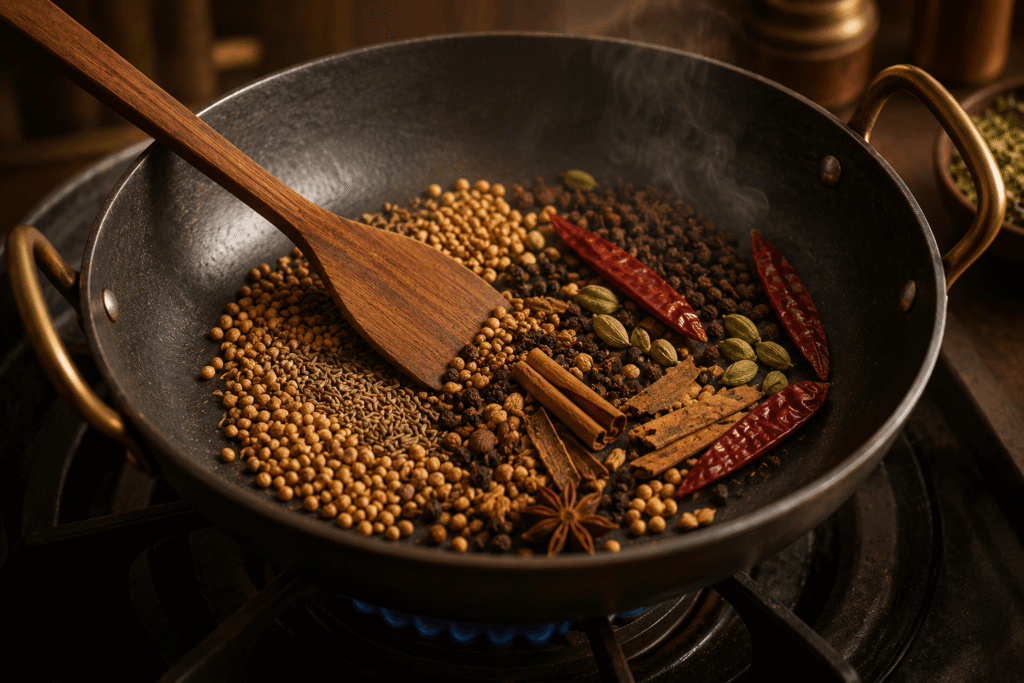
Step 2 — Cool completely. SSpread the roasted spices on a plate and let them cool to room temperature before grinding. Ground hot spices generate steam and will destroy the powder texture.
Step 3 — Grind to a fine powder. Add the roasted spices and grind together with the Kashmiri red chillies, dry ginger powder, turmeric, kasuri methi until you get a fine, smooth powder. Sieve if you wish.
Step 4 — Store correctly. Place the mixture in a clean, dry and air tight glass jar. Keep it in a dry, dark and cool place. The contents will remain fresh for 2 months, although the fragrance and flavor is most pronounced during the first 3 weeks.
How to Use Paneer Masala Powder for a Healthy Recipe
Here’s a quick, healthy paneer masala recipe using your homemade powder:
For 2 servings:
- 200g low-fat paneer, cubed
- 2 medium tomatoes, pureed
- 1 onion, finely chopped
- 1 tbsp ginger-garlic paste
- 2 tsp homemade paneer masala powder
- ½ tsp turmeric
- 1 tbsp oil or ghee
- Salt to taste
- Fresh coriander to garnish
Add paneer masala powder and turmeric and cook for 30 sec. Pour in cup water and bring to a boil. Then, add paneer cubes and cover the pan to allow it to simmer for 3-4 mins. Top with garnishes of choice and serve hot with jowar roti or brown rice. No cream was added and the meal has approx 220 calories and 18-20g of protein per portion. This is truly a healthy yet restaurant-style meal.
Frequently Asked Questions
What is paneer masala powder made of? This is a mix of whole and ground spices including cumin, coriander, turmeric, Kashmiri red chilli, cloves, cardamoms, cinnamon, fennel, black pepper, dried ginger and kasuri methi in different amounts as dictated by the region and the recipe.
Is paneer masala powder healthy? Yes. If the paneer masala powder does not contains artificial preservatives then the spices which is there in paneer masala powder have scientifically proven anti inflammatory, anti digestive, anti oxidant and metabolism increasing properties. It is proven scientifically that turmeric, cumin, coriander and clove are beneficial.
Can I make paneer masala powder at home? Certainly. Home made paneer masala powder is more fresh, more fragrant and more healthy than most commercially available ones. It needs dry roasting and grinding of 10-14 common spices, it takes less than 15 minutes to prepare. .
How long does homemade paneer masala powder last?Keep the homemade paneer masala powder in a tightly closed glass jar away from light and moisture to maintain its freshness for as long as 8 weeks. It is best to make smaller quantities in every 3-4 weeks for maximum flavor. .
What is the difference between garam masala and paneer masala powder? Garam masala is an overall finishing spice which added at the end to give aroma. Paneer masala powder is an all-in-one spice mix used to give color, body and flavor as well, which is to be added throughout the cooking – often with kasuri methi, fennel and Kashmiri chilli in addition, that a garam masala would not have.
The Bottom Line
More than just a convenient way to make your paneer masala dish tasty-it’s the essence of centuries of Indian cooking traditions and Ayurveda captured in one mixture of spices. Freshly prepared at home with good quality whole spices, it increases the flavor, as well as the health benefit of one of the most favorite Indian dishes.
High in protein paneer along with antioxidant rich masala spices, it makes paneer masala one of the most balanced and healthy meals within Indian cuisine. It is best for building muscles, keeping blood sugar levels in check, improving gut health or, simply, for enjoying the fulfillment of eating a good home cooked meal – learning to make your own paneer masala powder is one of the healthiest kitchen habits you will ever pick up.
Disclaimer: Any information in this article is for educational and informational purposes only. Consult with a professional nutritionist or healthcare practitioner for a specific plan.

 Admin
Admin
[…] a quick snack, toss cubes into a wrap with some veggies and mint chutney, or just let it swim in a good sabzi. Palak paneer, matar paneer, kadai paneer — take your pick, they’re all doing double duty as comfort food […]
[…] something worth knowing before we get into the actual meal plan. Traditional Indian home cooking — not restaurant food, not the festive version dripping in ghee — is genuinely excellent for […]
[…] Boiled eggs, moong dal chilla, low-fat paneer, or Greek yogurt. Protein repairs muscle tissue and keeps you full until […]
[…] Check another blog: Paneer Masala Powder […]