 Admin
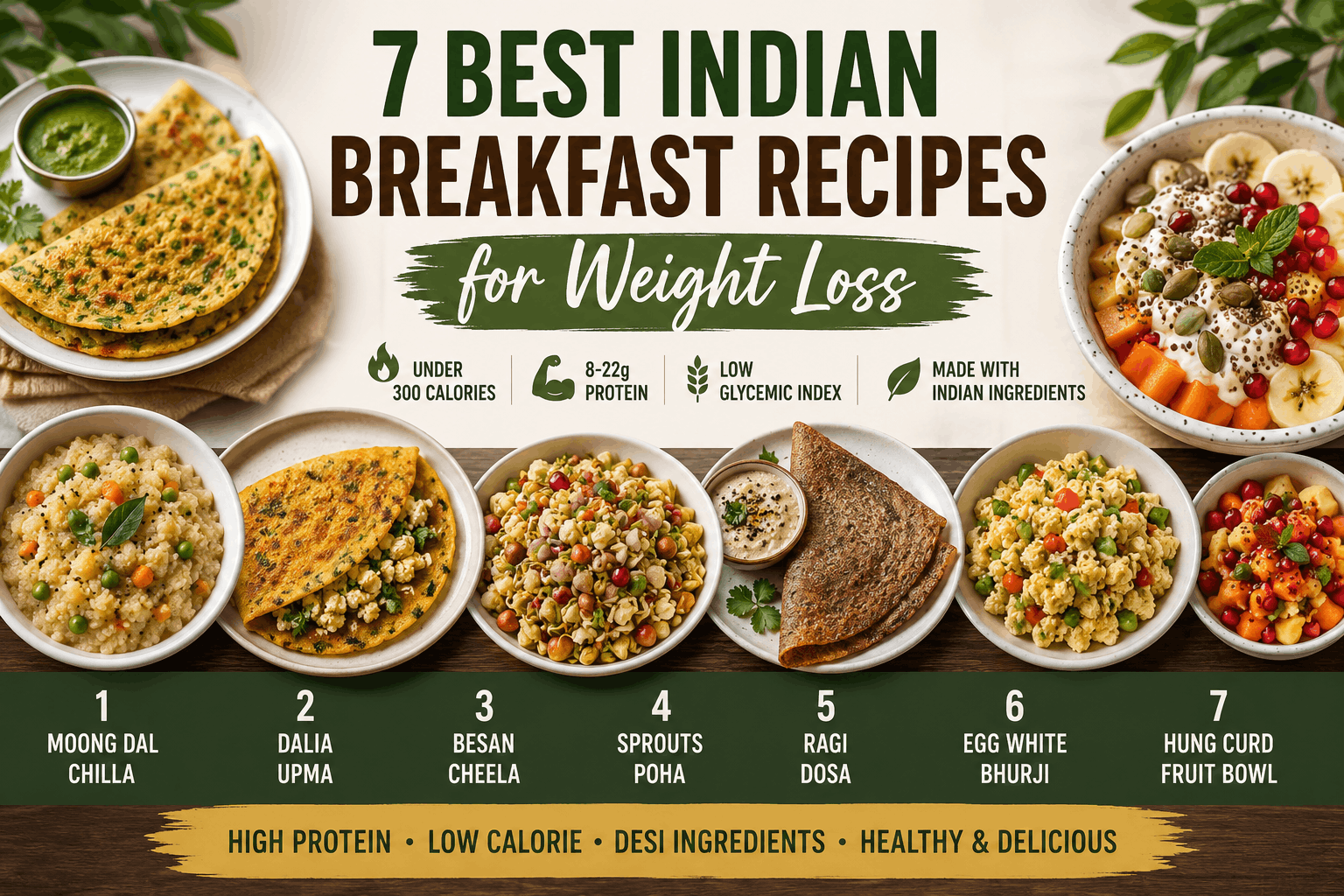
Admin Searching for a recipe for the perfect Indian breakfast for weight loss? Then here is the answer directly-7 such Indian breakfast recipes for weight loss; namely-Moong Dal Chilla, Dalia Upma, Besan Cheela, Sprouts Poha, Ragi Dosa, Egg White Bhurji and Hung Curd Fruit Bowl. All these 7 recipes have below 300 calories, 8-22 gm of protein per serve, low glycaemic index, and all these recipes can be cooked from the readily available Indian food items in all the Indian kitchens.
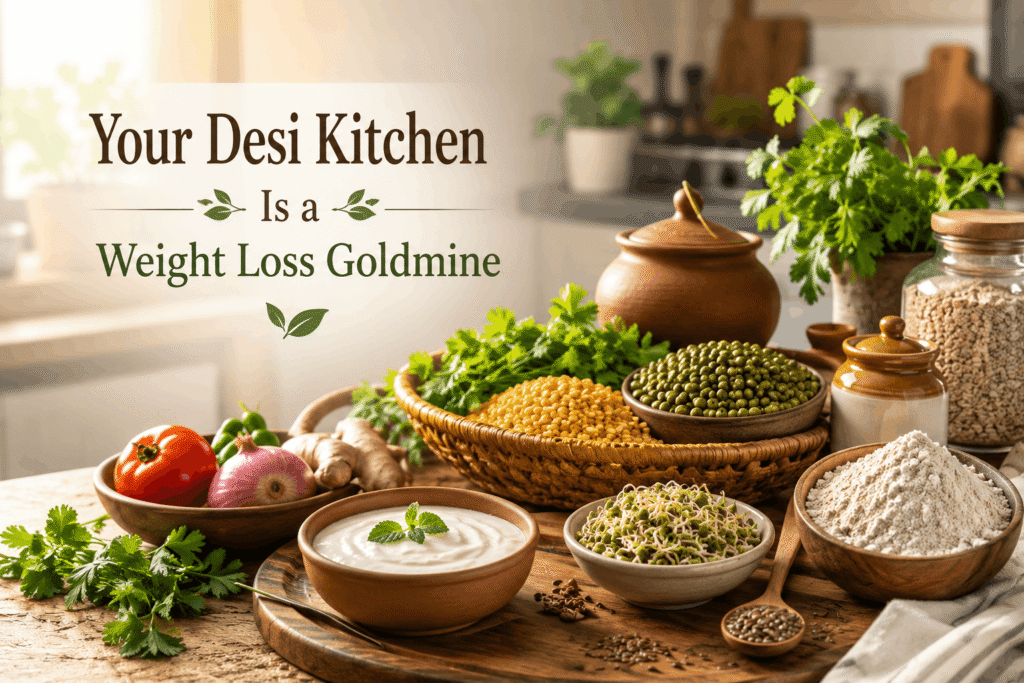
Introduction — Your Desi Kitchen Is a Weight Loss Goldmine
Almost every Indian begins her or his weight loss journey with one highly self-defeating action – missing breakfast. It would seem obvious that if you eat one less meal you are eating one less set of calories. But the opposite is true as far as nutrition is concerned. When you skip breakfast you’re sending signals to your body that you’re in a state of starvation. Hormones are immediately thrown into a panic. Your body begins to elevate cortisol (your stress hormone), decrease your metabolism and begin to store fat instead of burning it. By the time lunch rolls around, your hunger is ravenous and you overcompensate for your missed meal – completely canceling out the calorie deficit you thought you were creating with your breakfast.
Here’s the truth every RD in India will tell you – it’s not the right breakfast that will make you fat-it’s the wrong one. Buttered white bread, two biscuits and a sweet chai, a plate of maida based poori bhaji are culprits. The moment you substitute them with high-protein, high-fiber, low GI Indian foods-your body automatically switches into a fat burning gear.
What’s really exciting about it? You don’t need foreign supplements, imports, or complex western diets. Indian Breakfast Your Indian kitchen already has all the right kinds of high-protein, high-fiber, low GI food-all your dals, besans, ragi, sprouts and dahi which will keep you svelte without much fuss.
In this article I am sharing the 7 best Indian breakfast for weight loss along with preparation methods, calorie breakdown, protein count and scientific explanation why each works.
Check Previous Blog: Healthy Fast Food Recipes You Can Make
The Science — What a Real Weight-Loss Breakfast Must Deliver
Now before we get to recipes, it’s essential to know what your body really wants from a breakfast when you aim at weight loss. And this definitely doesn’t mean starving your stomach or eating plain grass. This means feeding your body the correct nutrients at the correct time.
A balanced Indian weight loss breakfast should provide:
- Protein: 15–20g minimum — Protein triggers satiety hormones (PYY and GLP-1) that suppress hunger for 3–5 hours and prevent mid-morning cravings
- Dietary Fiber: 5–8g — Fiber slows down digestion, stabilizes blood sugar, feeds healthy gut bacteria, and keeps you feeling full without excess calories
- Low Glycemic Index (below 55) — A low GI means glucose enters your bloodstream slowly, keeping insulin levels stable. Since insulin is the body’s primary fat-storage hormone, keeping it low is critical for fat burning
- Calorie Range: 200–350 kcal — Too little and you will overeat at lunch; too much and you create a surplus that works against your goals
- Healthy fats in small amounts — Fat-soluble vitamins (A, D, E, K) cannot be absorbed without dietary fat. A small amount of cold-pressed oil or desi ghee is not your enemy
A 2023 study from the National Institute of Nutrition, Hyderabad, proved that Indians who start their day with a protein rich breakfast lose 2.3 times more weight in 12 weeks time than those who don’t. Indian Breakfast It’s a fact that another study published in American Journal of Clinical Nutrition has confirmed, it says that consuming breakfast within 60 minutes of waking coincides with natural cortisol peak, the cortisol peak stimulates thermogenesis – Indian Breakfast the calorie burning effects that come from digesting-by as much as 30%.
The moral is simple: eat it right and eat it on time and the rest of the day your body is like a finely tuned fat burning machine.
Check Previous Blog: Healthy Recipes Using Curd: 10 Nutritious and
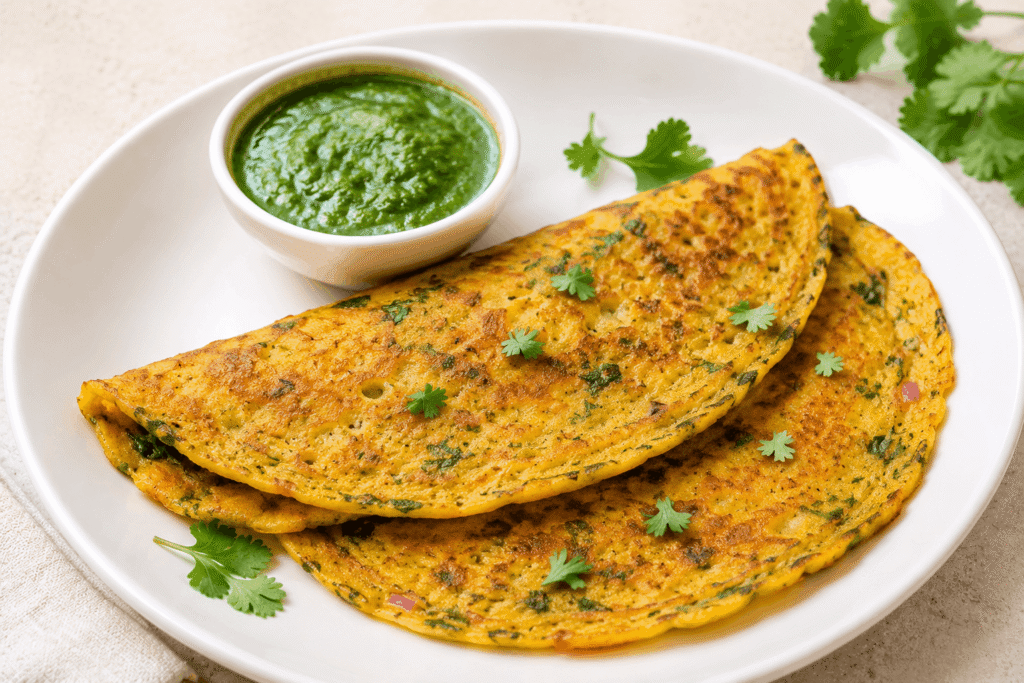
Recipe 1 — Moong Dal Chill (Green Lentil Savory Pancakes)
Moong Dal Chilla is often considered the number one Indian breakfast food for weight loss, and once you know what nutrients are packed into a green moong lentil, you can absolutely understand why. It is basically a savory high-protein low-carb pancake that is easy to make, that fills you up totally, and costs a fraction of nothing to make.
How to Make It:
- Soak yellow or green moong dal in water for 6–8 hours or overnight
- Drain and grind into a smooth batter using a blender with minimal water
- Add finely chopped onion, tomato, green chilli, grated ginger, fresh coriander, cumin seeds, and salt to taste
- Heat a non-stick tawa on medium-high heat, pour a ladle of batter, and spread into a thin circle
- Cook with just ¼ teaspoon of oil per chilla, flip once, and serve hot with sugar-free green chutney
Why It Works for Weight Loss: Moong dal has one of the lowest glycemic indices of any legume at approximately GI 29, meaning it causes virtually no insulin spike. Its exceptional combination of protein and fiber keeps hunger completely controlled for 3–4 hours after eating. Research published in the Journal of Nutrition found that lentil-based breakfasts reduce total daily caloric intake by up to 23% compared to grain-based breakfasts, simply because they suppress appetite hormones so effectively. Indian Breakfast
- Contains all essential amino acids — a complete plant-based protein source
- Rich in folate, magnesium, and potassium — supports healthy blood pressure and energy metabolism
- Zero cholesterol, minimal fat — ideal for both weight loss and heart health
- Extremely budget-friendly — a week’s supply of moong dal costs under ₹50
Pro Tip: Add 2 tablespoons of grated low-fat paneer directly into the batter before cooking. This simple addition pushes the protein content to 18g per serving while keeping calories under 200 — no taste compromise whatsoever.
Check Previous Blog: Healthy Food Near Me? Here’s What Nobody
Recipe 2 — Dalia Upma (Broken Wheat Savoury Porridge)
Dalia, also called lapsi or broken wheat, is possibly the most ignored weight loss food in Indian cuisine Indian Breakfast . Most people cook rava (semolina) upma out of habit but a quick and easy substitution of dalia in the preparation brings about an unbelievable difference in weight loss. They look exactly the same on a plate, they taste exactly the same too, but their health benefits are quite different.
How to Make It:
- Dry roast dalia in a pan on medium heat for 3–4 minutes until it turns light golden and aromatic — this prevents it from becoming mushy
- In the same pan, heat 1 teaspoon of oil and add mustard seeds, curry leaves, dried red chilli, and a pinch of hing Indian Breakfast
- Add finely chopped onion, tomato, carrot, green peas, and capsicum — sauté for 3 minutes
- Add the roasted dalia along with 2.5 cups of water and salt to taste
- Cover and cook on low heat for 8–10 minutes until all the water is absorbed
- Finish with a generous squeeze of fresh lemon juice and chopped coriander leaves
Why It Works for Weight Loss: The glycemic index of dalia sits at approximately 41 compared to rava’s GI of 66 — a significant difference when it comes to insulin response and fat storage. Dalia’s high insoluble fiber content promotes excellent digestive regularity, which reduces bloating and water retention — two things that often hide actual fat loss progress on the weighing scale.
- One serving provides nearly 7g of dietary fiber — 25% of your recommended daily intake
- Keeps you full for 3–4 hours with a steady release of energy — no mid-morning crashes
- Rich in B vitamins (B1, B3, B6) — essential for carbohydrate metabolism and energy production
- Low in fat, naturally cholesterol-free, and high in manganese for bone health Indian Breakfast
Pro Tip:Stir in one beaten egg or two tablespoons of roasted split chana dal (Bengal gram) while cooking the vegetables. This single addition transforms dalia upma from a medium-protein to a high-protein breakfast without changing the dish’s traditional flavour profile.
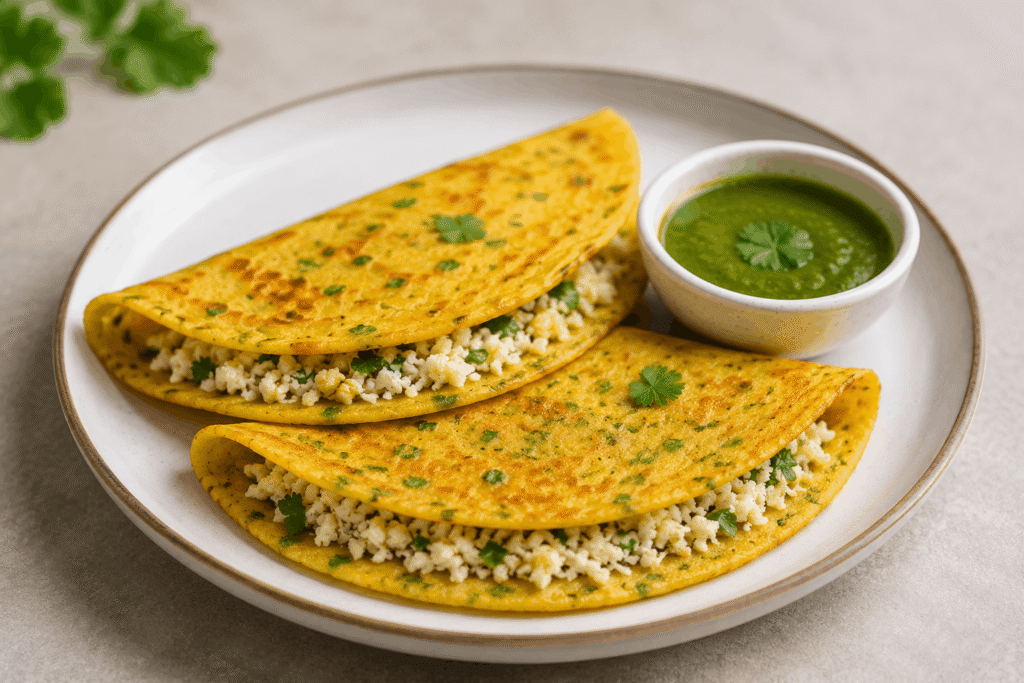
Recipe 3 — Besan Cheela with Paneer Stuffing (Chickpea Flour Crepe)
Besan Cheela is arguably the fastest high-protein Indian breakfast you can make entirely from scratch. Indian Breakfast It requires no soaking, no fermentation, no advance preparation — just mix, pour, and cook. What makes it particularly powerful for weight loss is the exceptional nutritional density of chickpea flour (besan) combined with the metabolism-boosting properties of the spices used in its preparation.
How to Make It:
- In a mixing bowl, whisk besan (chickpea flour) with enough water to create a smooth, pourable batter — roughly the consistency of dosa batter
- Add haldi (turmeric), ajwain (carom seeds), red chilli powder, a small pinch of hing, and salt Indian Breakfast
- Fold in finely shredded spinach, grated carrot, and chopped coriander
- Pour onto a hot non-stick tawa and spread thin — cook for 2 minutes per side with minimal oil
- For the stuffing: mix crumbled low-fat paneer with chilli flakes, roasted cumin powder, and fresh herbs — place 2 tablespoons in the centre and fold the cheela over
Why It Works for Weight Loss: Chickpea flour is better than wheat flour in every respect concerning weight loss. Indian Breakfast Twice as much protein, 3 times as much fiber, and a GI of roughly 35. Compare that to the GI of wheat flour 70+. Turmeric is shown to have curcumin, which has been widely researched, and found to block the development of new fat cells (adipogenesis) at the molecular level directly. Ajwain, while having very few proven beneficial effects in its own right, works by activating digestive enzymes in the stomach, creating an overall boost in metabolic activity and helping to prevent bloating and flatulence significantly.
- One serving delivers 15g of protein — comparable to a standard protein bar but at a fraction of the cost
- Naturally gluten-free — suitable for people with wheat sensitivity or PCOS
- Rich in iron, zinc, and magnesium — all critical for hormonal balance and healthy metabolism
- Hing (asafoetida) has been used in Ayurvedic medicine for centuries to improve gut motility and reduce digestive inflammation
Pro Tip: Replace the paneer filling with thick hung curd mixed with herbs and a pinch of black pepper for a probiotic version. The live bacterial cultures in hung curd support a healthy gut microbiome — which is directly linked to lower BMI in multiple large-scale studies. Indian Breakfast
Check Previous Blog: Paneer Masala Powder: The Secret Spice Blend
Recipe 4 — Sprouts Poha Chaat (Zero-Oil Power Bowl)
This recipe is a brilliant marriage of two Indian kitchen staples — flattened rice (poha) and freshly sprouted legumes — combined into a vibrant, zero-oil breakfast chaat that is both incredibly nutritious and genuinely delicious. It requires no cooking at all beyond the sprouting process, making it perfect for mornings when time is scarce.
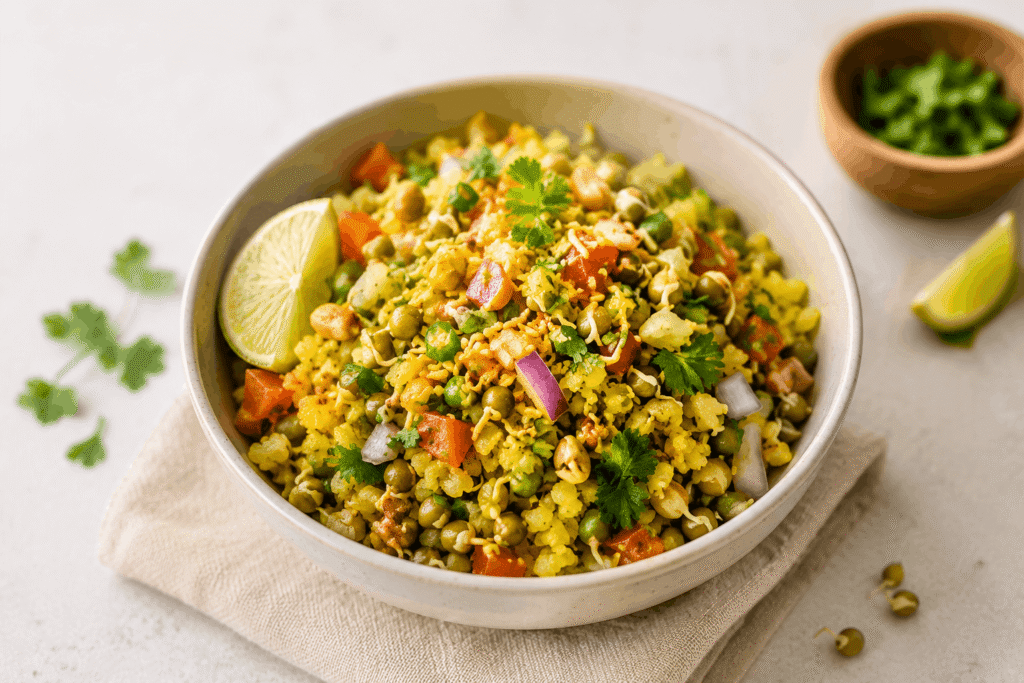
How to Make It:
- Rinse thick poha under cold running water, gently press out excess moisture, and let it rest for 5 minutes to soften
- In a large bowl, combine the softened poha with a mix of sprouted moong, sprouted brown chana, diced tomato, cucumber, red onion, and pomegranate seeds
- Season generously with chaat masala, roasted cumin powder, black salt, and fresh lemon juice
- Garnish with finely chopped coriander leaves, a handful of roasted unsalted peanuts, and optionally a sprinkle of sev for crunch Indian Breakfast
Why It Works for Weight Loss:That’s where the nutrition magic is – in the sprouting process. When legumes are sprouted, protein bioavailability increases up to 30%, anti-nutrients such as phytic acid and tannins are dramatically reduced, and digestive enzymes are activated – Indian Breakfast so you absorb a lot more nutrition from the same amount of food. Poha is rich in iron and the lemon juice in this recipe boosts the absorption rate of that iron by nearly 300% by converting non-heme iron to bioavailable form by Vitamin C — directly increasing your metabolic rate and energy levels throughout the day.
- Zero cooking oil — one of the lowest-calorie, highest-nutrition options on this list
- Pomegranate seeds add polyphenols and antioxidants that reduce systemic inflammation — a key driver of stubborn fat retention
- Roasted peanuts contribute healthy monounsaturated fats that signal satiety to the brain via leptin pathways
- High water content from fresh vegetables aids hydration and supports kidney function — critical during active weight loss
Pro Tip: Every Sunday evening, prepare a large batch of mixed sprouts. They stay fresh in an airtight container in the refrigerator for 3–4 days, turning this recipe into a 5-minute ready-to-assemble breakfast for the entire workweek.
Recipe 5 — Ragi Dosa (Finger Millet Crispy Crepe)
Ragi (finger millet) is one of India’s oldest and most nutritionally impressive grains. But it has been largely forgotten in modern urban kitchens favouring refined flour products. This is a major nutritional mistake especially if you are trying to lose weight. This ancient superfood is brought back in a familiar, tasty and quick-to-make form with ragi dosa.
How to Make It:
- Overnight method: Mix ragi flour with urad dal batter in a 2:1 ratio and ferment overnight — this version is crispier and more flavorful
- Quick method (no fermentation): Mix ragi flour with thick curd, water, a pinch of hing, cumin seeds, finely grated onion, and salt into a thin, pourable batter — use immediately
- Heat a cast iron or non-stick tawa until very hot, pour a ladle of batter, spread thin in circular motions
- Drizzle ½ teaspoon of cold-pressed oil around the edges, cook until crisp, and serve with fresh coconut chutney (made with minimal oil) and sambar
Why It Works for Weight Loss: Ragi’s calcium content of 344mg per 100g is higher than milk on a gram-for-gram basis. This matters for weight loss because calcium stored in fat cells directly activates fat breakdown (lipolysis) — a mechanism confirmed by multiple studies from the American Journal of Clinical Nutrition
- Contains polyphenols and flavonoids that reduce oxidative stress and support liver health
- Naturally gluten-free — safe for those with wheat intolerance or celiac disease
- Rich in dietary fiber (3.6g per 100g) — supports gut health and cholesterol reduction
- One of the most affordable millets available across India at approximately ₹40–60 per kg
Pro Tip: To the quick batter directly add the grated fresh bottle gourd (lauki) or zucchini. These vegetables are 95% water and add almost no calories, but add additional fiber and hydration that makes each dosa much more filling.
Recipe 6 — Egg White Bhurji with Multigrain Toast
maximum protein at minimum calories is your priority, nothing on this list beats Egg White Bhurji. With 22 grams of protein in a single serving under 250 calories, this breakfast delivers results that rival commercial protein supplements — at roughly 1/20th of the cost. The Indian spices used in its preparation are not just for flavor; they contribute genuine metabolic benefits that make this dish significantly more effective than plain scrambled eggs.
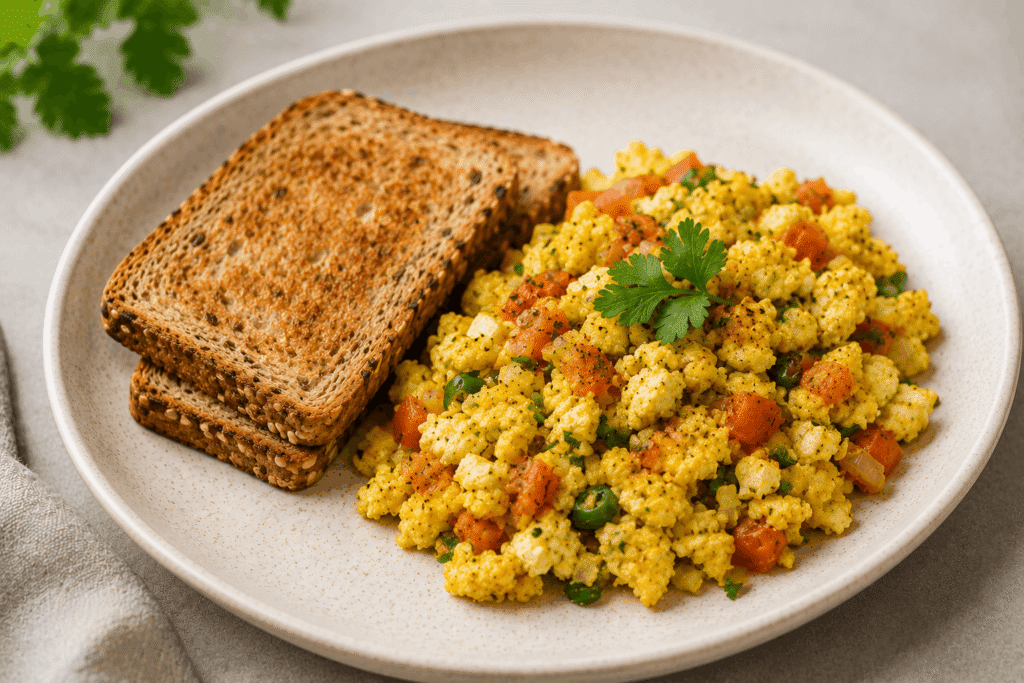
How to Make It:
- Whisk 4 egg whites and 1 whole egg together with a pinch of haldi, black pepper, and salt
- In a non-stick pan, heat ½ teaspoon of desi ghee on medium heat — do not substitute with refined oil here
- Add finely chopped onion, diced tomato, sliced green chilli, and diced capsicum — sauté for 2–3 minutes
- Pour the egg mixture over the vegetables and scramble continuously on medium-low heat until just cooked — avoid overcooking as it makes the eggs rubbery
- Serve immediately alongside one slice of toasted multigrain bread (no butter)
Why It Works for Weight Loss: Egg whites are essentially pure protein — each egg white delivers 3.6 grams of complete protein with virtually zero fat and only 17 calories. Four egg whites combined with one whole egg provides 22 grams of protein at around 190 calories before the toast — a ratio that is almost impossible to match with any other whole food. Clinical studies have demonstrated that high-protein breakfasts can lower ghrelin (the hunger hormone) levels by up to 50% compared to carbohydrate-based breakfasts, and boost post-meal thermogenesis for up to 3 hours. We use desi ghee for a reason. It contains CLA (conjugated linoleic acid), a naturally occurring fatty acid which has been clinically proven to actively reduce body fat percentage while preserving lean muscle mass.
- The whole egg yolk adds vitamins A, D, E, and K — fat-soluble nutrients that cannot be absorbed without dietary fat, and which support hormonal health during weight loss
- Turmeric’s curcumin reduces inflammation in fat tissue, improving insulin sensitivity
- Multigrain toast adds 3–4g of fiber and complex carbohydrates for sustained energy without blood sugar spikes
- Complete amino acid profile supports muscle maintenance during caloric deficit — critical for long-term metabolic health
Pro Tip:Add a tablespoon of crumbled low-fat paneer to the bhurji while cooking for a vegetarian-friendly protein boost that takes total protein to 26g — an exceptional start to any weight-loss day.
Recipe 7 — Hung Curd Bowl with Seasonal Fruit and Seeds
This final recipe is the simplest on the list, yet nutritionally one of the most sophisticated. The combination of hung curd, fresh Indian seasonal fruits, and metabolically active seeds creates a breakfast that simultaneously supports fat burning, gut health, hormone balance, and inflammation reduction — all in a bowl that takes five minutes to assemble.
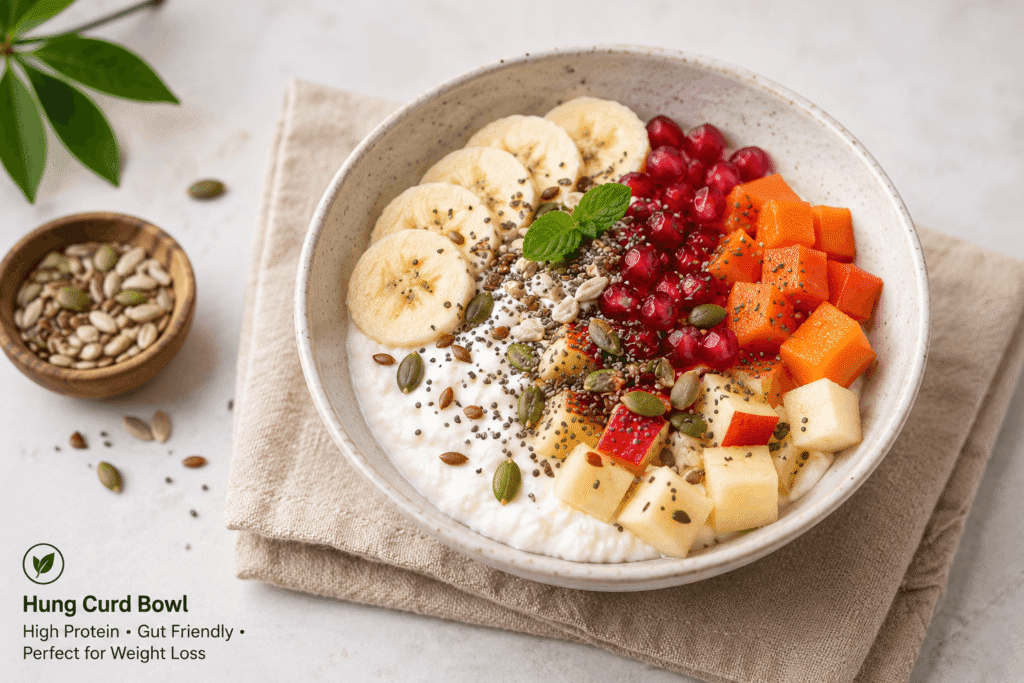
How to Make It:
- The night before: pour 1 cup of full-fat or low-fat dahi into a muslin cloth, tie it over a bowl, and refrigerate overnight. By morning you will have beautifully thick hung curd with double the protein content of regular dahi
- Spoon the hung curd into a bowl as the base layer
- Add seasonal Indian fruits: sliced banana, diced papaya, pomegranate seeds, chopped apple, and a few grapes
- Sprinkle on top: 1 teaspoon of flaxseeds, 1 teaspoon of chia seeds, and 1 teaspoon of roasted unsalted sunflower seeds
- Optional: drizzle of ½ teaspoon raw forest honey and a pinch of cinnamon powder
- Eat immediately — do not let chia seeds sit too long as they absorb moisture from the curd
Why It Works for Weight Loss: The whey water has been drained out, so hung curd has almost double the protein content of regular dahi (around 10–12g per 100g). The probiotic bacteria in it, primarily strains of Lactobacillus and Bifidobacterium, have a direct influence on the gut microbiome, and in studies on the Indian population, a healthy gut microbiome has been definitively associated with a lower BMI, better insulin sensitivity and less inflammation throughout the body. Papaya is full of an enzyme called papain which helps the digestion of dietary protein for better absorption and liver detoxification. Flax and chia seeds are among the best plant sources of omega-3 fatty acids, which help to reduce the inflammatory markers that cause stubborn fat to accumulate—especially visceral fat in the belly—and resist being lost.
- Cinnamon in this recipe is not just a flavour agent — it contains cinnamaldehyde, a compound proven to improve insulin sensitivity by mimicking insulin’s action at the cellular level
- Pomegranate seeds provide punicalagins — powerful antioxidants that protect mitochondria (your cellular fat-burning engines) from oxidative damage
- The combination of protein + fiber + healthy fats in this bowl delivers a satiety score comparable to a full cooked meal
- Completely no-cook (after hanging curd) — the ideal option for those who genuinely have no time for morning cooking
Pro Tip: Prepare hung curd in double batches every 2 days and store in an airtight glass container. It stays perfectly fresh for 72 hours and can be used not just for this recipe but also as a marinade, raita base, or evening snack with fruit.
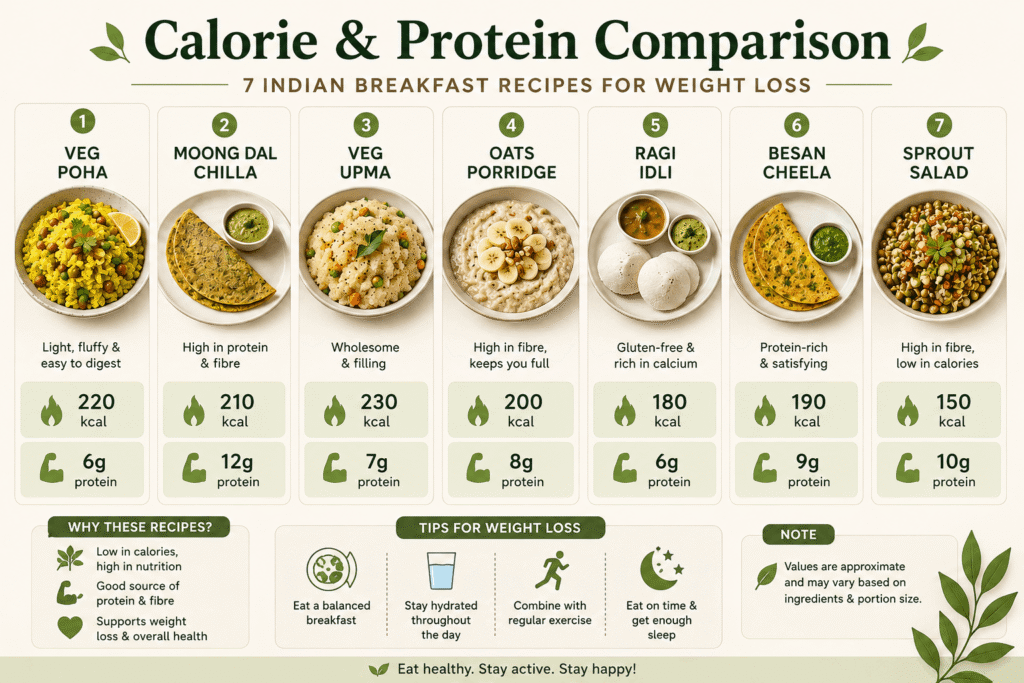
Complete Calorie, Protein & Glycemic Index Comparison
| Recipe | Calories | Protein | Fiber | GI | Best For | |
| 1 | Moong Dal Chilla | 180 kcal | 14g | 5g | ~29 (Very Low) | All-round fat loss, muscle preservation |
| 2 | Dalia Upma | 210 kcal | 8g | 7g | ~41 (Low) | Gut health, sustained fullness |
| 3 | Besan Cheela + Paneer | 200 kcal | 15g | 4g | ~35 (Low) | Quick prep, gluten-free |
| 4 | Sprouts Poha Chaat | 190 kcal | 11g | 8g | ~40 (Low) | Zero oil, detox, iron absorption |
| 5 | Ragi Dosa | 230 kcal | 9g | 6g | ~55 (Medium) | Calcium, sleep quality, metabolism |
| 6 | Egg White Bhurji | 245 kcal | 22g | 2g | ~35 (Low) | Highest protein, maximum satiety |
| 7 | Hung Curd Fruit Bowl | 180 kcal | 12g | 4g | ~38 (Low) | Gut health, probiotics, no-cook |
5 Non-Negotiable Rules for Maximum Results
Getting the right recipes is only half the battle. How and when you eat these breakfasts is equally important for sustainable weight loss results.
Rule 1 — Eat Within 60 Minutes of Waking Your body’s cortisol levels naturally peak 30–45 minutes after waking. Eating a protein-rich breakfast during this window activates your metabolism through thermogenesis and signals the body that food is available — preventing it from entering fat-storage survival mode for the rest of the day.
Rule 2 — Never Use More Than 1 Teaspoon of Oil This is not to say NO oil. Fat-free cooking hinders absorption of vitamins fat-soluble A, D, E and K. Employ ½ – 1 teaspoon of cold pressed mustard oil or coconut oil or desi ghee – whatever matches the dish better. The amount is a pittance in terms of calories added (only about 40 kcal for a teaspoon), and a large chunk added to the taste.
Rule 3 — Always Finish with Lemon Juice Fresh lemon juice on any Indian breakfast does two things: it dramatically improves the bioavailability of non-heme iron present in dal, besan, ragi, and poha, and its citric acid helps regulate blood sugar response after the meal. This single habit can increase your metabolic energy by 15–20% over time.
Rule 4 — Drink 500ml of Warm Water Before Eating Drinking half a litre of warm water 20–30 minutes before breakfast stretches the stomach slightly, triggering early satiety signals. Clinical trials confirm this simple practice reduces caloric intake at breakfast by approximately 13% — automatically, without any conscious effort.
Rule 5 — Prep the Night Before The main reason for discarding no. 1 healthy breakfast is time constraint during morning hours. Soak your lentils, chop your vegetables and combine your dry ingredients or hang your curd for 10 minutes each evening. This single practice reduces your cooking time by 70% in the morning and you will also resist the temptation to have biscuits or skip breakfast.
Conclusion — Start Every Morning Like Your Body Deserves
This is the one single most crucial takeaway from this whole article. Indian Breakfast India’s food heritage has quietly given rise to some of the most nutritionally intelligent weight loss breakfasts the world over. Our ancestors built our meals out of lentils, millets, fermentations and fresh vegetables for a reason, not by accident: because that’s truly what fuels the body optimally. Somewhere along the way, packaging companies convinced an entire generation that biscuits and white bread are easier and healthier. They aren’t.
The moong dal lying in your kitchen is a better protein supplement than any bought commercially. Ragi in your pantry contains more calcium than a glass of milk. Homemade dahi contains strains of probiotics that expensive supplements claim they can deliver for Rs 500 a bottle.
You don’t have to change your whole life to get results. Just pick two dishes from this list this week.

 Admin
Admin
[…] Best Indian Breakfast […]
[…] Roast it in the oven with jeera and rock salt. Add chunks of it to your vegetable curry. One sweet potato a few times a week is all you need to start feeling the […]