 Admin
Admin The 8 Months Baby Food Chart is one of the most searched topics among Indian parents who want to provide balanced nutrition to their growing babies. At eight months, babies can enjoy a variety of soft foods, including fruits, vegetables, khichdi, dal, curd, and mashed paneer. A well-planned meal schedule helps support healthy growth, brain development, and digestion. Introducing different textures and flavors gradually can also encourage better eating habits. Following a structured 8 Months Baby Food Chart makes it easier for parents to offer nutritious meals while ensuring their baby receives essential vitamins, minerals, and energy every day.
First Things First — What Is Happening With Your Baby at 8 Months?
By the age of 8 months, your baby’s existence is quite literally turning upside down. He is sitting (or at least is nearly there), pilfering morsels off your plate, and observing every mouthful that passes your lips as if he were Gordon Ramsey in a miniature package. The appetite and interest were no co-incidence. He was practically crying out, “give me some.
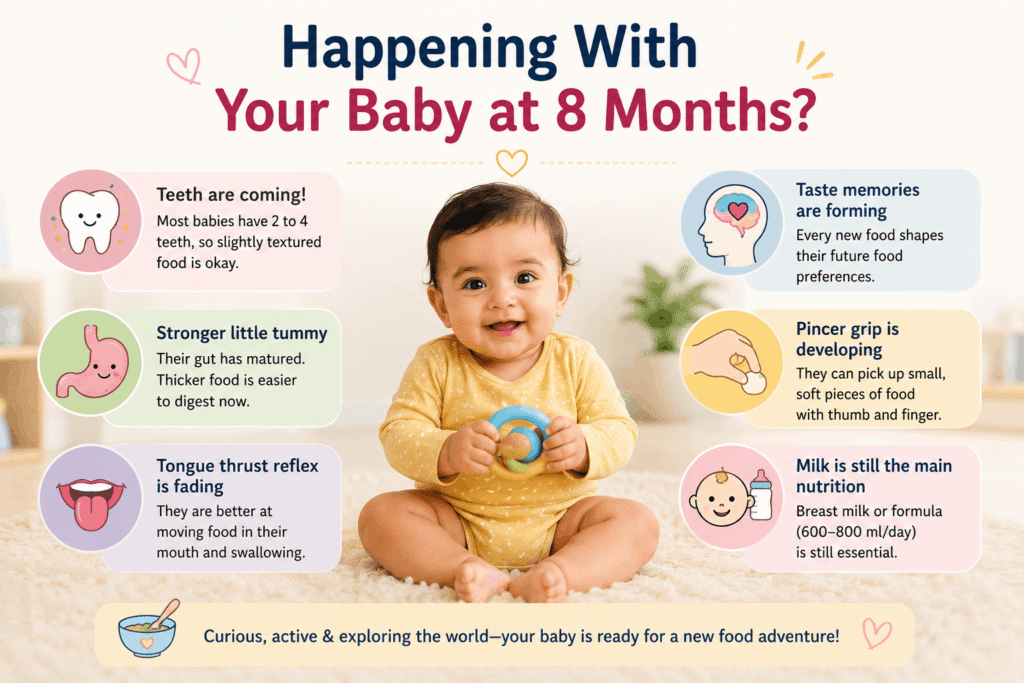
Here is what is different now compared to 6 or 7 months:
- Most babies have 2 to 4 teeth coming in, so slightly textured food is fine
- Their gut has matured — thicker consistencies no longer upset the stomach as easily
- The tongue thrust reflex that used to push food out is mostly gone
- They are forming taste memory right now — whatever you introduce today shapes their food preferences for years
- Pincer grip is developing — small soft pieces are becoming manageable
However, the one thing that is unchanging is breastmilk or formula, which is the primary source of nutrition – in the region of 600 to 800ml a day. Solids are “top-up” foods and just supplement milk.
Check Previous Blog: Complete nutrition, health & purchasing guide of
How Many Times Should You Feed Solid Food in 8 Months?
This confuses a lot of parents. Keep it simple:
- 2 to 3 solid meals a day — breakfast, lunch, and a light dinner
- 1 to 2 small snacks between meals — fruit mash or a small portion of porridge
- 4 to 5 milk feeds across the day and before sleep
- Small sips of boiled cooled water — around 60 to 120 ml total through the day, offered alongside meals
Do not get too caught up in exact quantities. A 2 to 4 tablespoon portion per meal is genuinely enough. Baby stomachs are tiny. The goal at this stage is exposure and variety — not volume.
Check Previous Blog: How Nutrition Works: A Complete Guide to
Daily Meal Timing That Works for Most Indian Families
Every baby has a different routine. But if you need a starting point, this rough structure works well:
| Time | What to Offer |
| 6:30 – 7:00 AM | Breast milk or Formula |
| 8:30 – 9:00 AM | Solid breakfast — porridge or fruit |
| 11:00 – 11:30 AM | Milk feed + small fruit puree if hungry |
| 1:00 – 1:30 PM | Main lunch — khichdi, dal rice, etc. |
| 4:00 – 4:30 PM | Light snack + milk feed |
| 7:00 – 7:30 PM | Soft dinner — keep it light |
| 9:30 – 10:00 PM | Bedtime milk feed |
Do not wake your baby to feed solids. Ever. Night milk feeds are fine — solid meals are not.
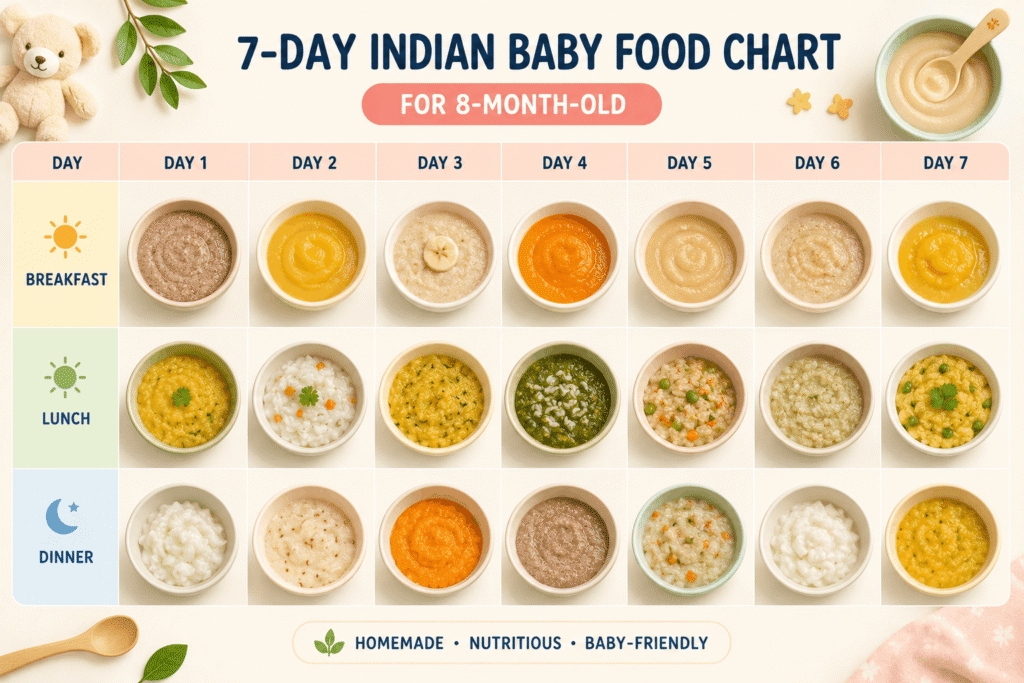
7-Day Indian Baby Food Chart — Day by Day
This chart uses ingredients available in every Indian household. No imports, no fancy superfoods, no expensive packets. Just your regular kitchen.
Day 1
Breakfast — Ragi Porridge
Ragi is really one of the greatest things to give to an 8-month old baby. Even more calcium than milk, has quite a bit of iron, and it is very easily digestible. Roast a couple of tablespoons of ragi flour for a few minutes dry on low flame, then cook with water on low heat until it thickens up, and finally mix in a tiny bit of breast milk that was pumped out, or formula. And you are done, warm and serving. 8 Months Baby Food
Lunch — Moong Dal Khichdi with Ghee
Add rice, moong dal and pinch of haldi in a pressure cooker. Well mashed, no gristle. Garnish with 1 tsp ghee. 8 Months Baby Food Add a spoonful of grated carrot while the dish is being cooked and no one will know.
Dinner — Soft Rice with Mashed Potato
Keep dinner light. Soft rice cooked well, mixed with steamed and mashed potato. Nothing else needed. Easy to digest before sleep.
- No salt anywhere in these meals
- No sugar either — the ghee adds enough flavor for a baby
- Turmeric in tiny amounts is fine and beneficial
- Check Previous Blog: The 30-Day Indian Diet Plan for Acne-Free
Day 2
Breakfast — Banana Apple Puree
Peel a ripe banana, mash well. Steam one small apple until soft, mash it too. Mix both together. No cooking beyond that. Babies almost always love this combination on the first try.
Lunch — Rice, Toor Dal and Carrot
Cook toor dal until very soft. Mix with well-cooked soft rice and a tablespoon of steamed mashed carrot. Finish with a drop of ghee. This meal gives your baby protein, carbohydrates, Vitamin A, and healthy fat all in one bowl. 8 Months Baby Food
Dinner — Suji Kheer
Cook fine semolina in full-fat milk on a low flame, stirring constantly. 8 Months Baby FoodA very small pinch of cardamom and a few drops of jaggery syrup is fine. Do not make it too sweet. Serve warm.
- If you are introducing apple for the first time, watch for 2 to 3 days before adding something new
- Toor dal is slightly heavier than moong dal — if baby shows any gas or discomfort, go back to moong for a few more days
Day 3
Breakfast — Oats Porridge with Banana
Cook rolled oats with water or milk until soft. Mash in half a ripe banana. Oats are rich in iron and fiber. This is a particularly good option if your baby tends toward constipation.
Lunch — Pongal
Another South Indian classic that makes excellent baby food.Rice and moongdal cooked together with a miniscule tempering of ghee and jeera. Mash it well. The jeera helps digest too – Gran had a point there!
Dinner — Sweet Potato Puree
If you plan on introducing sweet potato to your baby, this recipe couldn’t be easier: steam the sweet potato until it’s super tender, mash until smooth. A dash of cinnamon brings out a fantastic flavor and helps with digestion. 8 Months Baby Food
Day 4
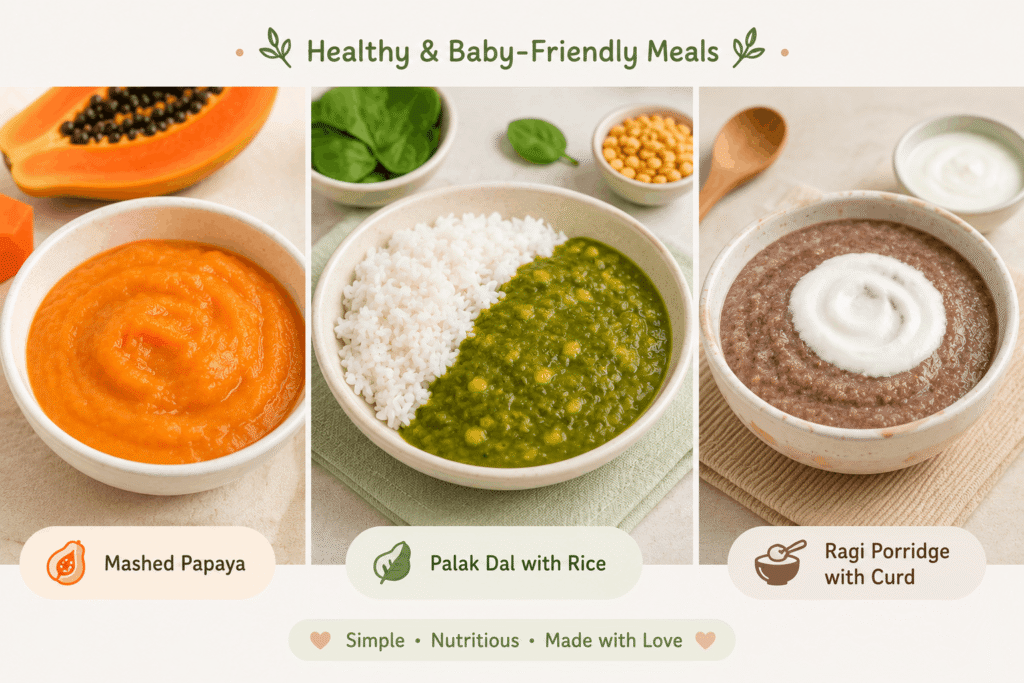
Breakfast — Mashed Papaya
Just ripe papaya — peel, remove seeds, mash with a fork. No cooking needed. Papaya has natural digestive enzymes that are fantastic for babies with irregular digestion. Vitamin C content is high too.
Lunch — Palak Dal with Rice
Blanch a bunch of spinach and make into a puree. Serve flat with boiled moong dal along with hot rice and a spoon of ghee. The recipe is one of the best ways to have an iron rich diet at home. Eat a little portion of papaya or mango with this meal, for higher iron absorption from Vitamin C.
Dinner — Ragi Porridge with Curd
Make a small bowl of ragi porridge and mix one tablespoon of homemade, plain curd into it. Curd is a good source of probiotics that are good for our gut and calcium in ragi is great for our bones. The combo is awesome. 8 Months Baby Food
Day 5
Breakfast — Chikoo or Pear Puree
Both are mild, naturally sweet, and well-tolerated. Steam pear until soft before mashing. Chikoo can be mashed raw if fully ripe. High in fiber — good if your baby had any constipation earlier in the week.
Lunch — Mixed Vegetable Khichdi
This time adds a bit more texture than earlier days. Cook rice, moong dal, carrot, peas, and French beans together in a pressure cooker. Mash but leave it slightly textured — a few small soft lumps are fine now. This begins training the jaw and tongue muscles.
Dinner — Suji Upma
Very soft suji cooked with ghee, cumin, and grated carrot. Minimal tempering. No mustard seeds for babies — they can be a choking hazard at this stage. Serve warm and mashed.
Day 6
Breakfast — Dalia Porridge
Wheat(broken) is cooked with milk to a creamy, soft consistency. Dalia is rich in fibre and B vitamins and makes good, quick, energy food for the very active, busy 8 month old.
Lunch — Moong Dal Soup with Lauki and Rice
Bottle gourd ( Lauki ) is one of the most delicate vegetables for a baby. It is hydrating, light, and easy to digest. Cook it with moong dal, puree and serve with soft rice.
Dinner — Curd Rice
A classic South Indian food and perfect for babies too! Some well cooked soft rice and fresh homemade curd. Nothing else required! It is cool, packed with probiotics and mostly loved by fussy eaters too.
Check Previous Blog: Dry Pepper: Why This Ignored Kitchen
Day 7
Breakfast — Mango Puree (Seasonal) or Apple Pear Blend
If mangoes are in season use them. One of the best things about an Indian summer is ripe Alphonso or Kesar mango mashed smooth. High in vitamins A, C and E. If they’re out of season, a mix of stewed apples and pears is just as nice.
Lunch — Multigrain Khichdi
Mix rice, moong dal and one or two other grains like bajra or dalia. Add whatever vegetables are in season. It’s a great way to boost your nutrition for the end of the week.
Dinner — Rice, Yellow Dal, Ghee
Simple and familiar. End the week on a comfort note. Your baby has tried many new things this week — a familiar, gentle meal for dinner is a good way to close.
Best Indian Foods for 8-Month Babies
Grains and Cereals
Indian grains are genuinely some of the most nutritious weaning foods in the world. No need to look further:
- Ragi — more calcium than milk per gram; great for bones and teeth
- Rice — easiest to digest; hypoallergenic; ideal base food
- Dalia — fiber-rich; good for digestion and sustained energy
- Oats — high in iron; pairs well with any fruit
- Suji — quick to make; versatile; gentle on the stomach
- Bajra — iron and magnesium; warming grain; good in cooler months
Lentils
- Moong dal — start here; lightest on digestion; mild flavor
- Toor dal — good protein and B vitamins; introduce after moong
- Masoor dal — high iron content; excellent for preventing anemia
Vegetables (Always Steam and Mash)
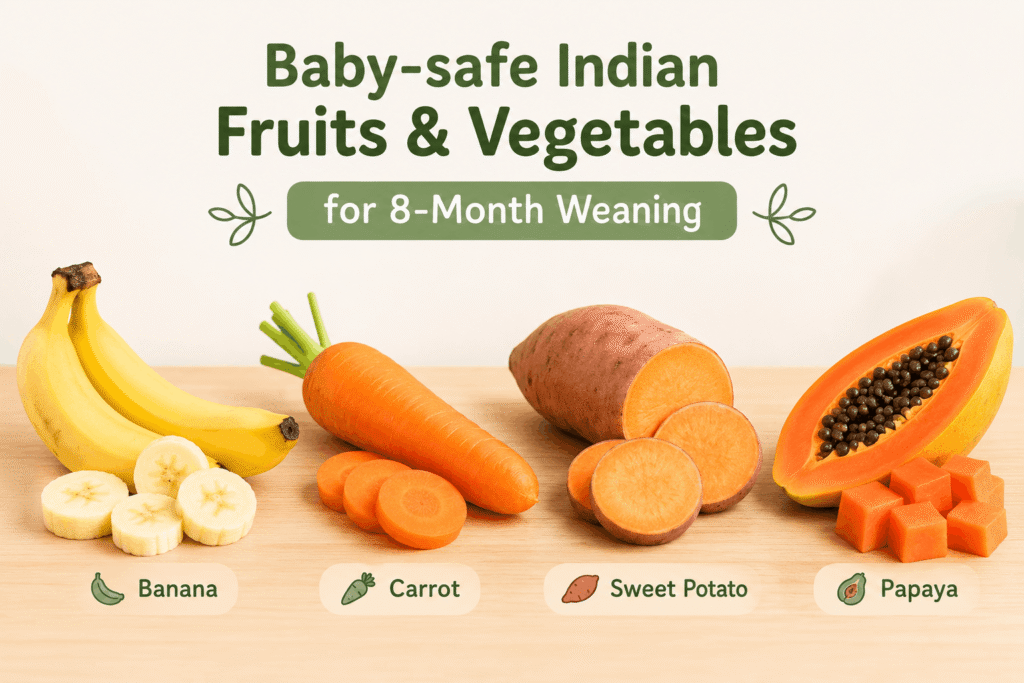
- Carrot — Vitamin A, natural sweetness
- Sweet potato — energy-dense, beta-carotene
- Bottle gourd (lauki) — cooling, hydrating, very gentle
- Pumpkin — antioxidants, easy digestion
- Spinach — iron, calcium, folate
- Peas — plant protein, fiber
- Beetroot — good for hemoglobin levels
Fruits
- Banana — instant energy, potassium, easy to mash
- Apple — stew before mashing; fiber and antioxidants
- Pear — great for constipation; mild and sweet
- Papaya — digestive enzymes, Vitamin C
- Chikoo — energy-dense, naturally sweet
- Mango — seasonal superfood; Vitamins A, C, E
- Avocado — healthy fats for brain development
Dairy
- Curd (homemade, full-fat, plain) — probiotics, calcium, protein
- Paneer — soft crumbled paneer gives good protein and calcium
- Ghee — 1 to 2 drops per meal; brain-supporting fats, calorie-dense
- Check another blog: Moringa 1 Teaspoon Powder
What to Absolutely Avoid Before 1 Year
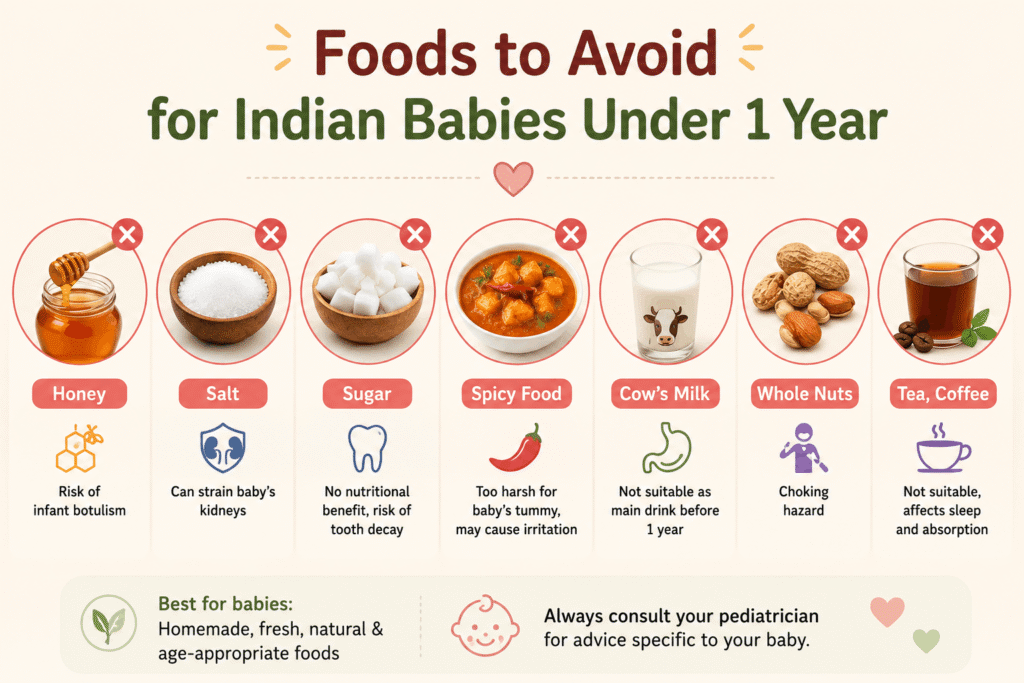
This part matters a lot. These are not suggestions — they are safety rules:
- Honey — risk of infant botulism; dangerous before 12 months, no exceptions
- Salt — baby kidneys cannot handle it; avoid completely
- Sugar — use natural sweetness from fruits only
- Cow’s milk as a main drink — stresses kidneys; curd and paneer are fine
- Egg whites — allergenic; if you want to try egg, start with only the yolk
- Whole nuts — choking hazard; use nut powder or thin butters only
- Chili and heavy spices — too harsh for the gut
- Citrus fruits — oranges, lemon, lime can cause rashes and reflux
- Packaged baby food — often has hidden salt, sugar, and preservatives despite the label
- Tea, coffee, cold drinks — absolutely not
Nutrition Your Baby Needs Right Now
| Nutrient | Why It Matters | Best Indian Sources |
| Iron | Brain development, prevents anemia | Ragi, spinach, masoor dal, bajra |
| Calcium | Bones and teeth | Ragi, curd, paneer, til (sesame) |
| Healthy Fats | Brain and nervous system | Ghee, avocado, breast milk |
| Zinc | Immunity and growth | Dal, whole grains, paneer |
| Vitamin A | Vision and immunity | Carrot, sweet potato, pumpkin, mango |
| Vitamin C | Iron absorption, immunity | Mango, papaya, pear |
| Protein | Muscle and organ growth | Dal, curd, paneer, egg yolk |
3 Recipes You Can Make in Under 15 Minutes
Ragi Porridge
Take 2 tbsp of ragi flour in a pan.Dry roast it for 2 minutes on a very slow flame.Slowly keep adding 100 ml water stirring continuously to make sure no lumps are formed.Cook for 3 to 4 minutes on a very slow flame until it becomes thick.Turn off flame, slowly add 50 ml expressed milk or formula. Mix and serve hot. No salt, no sugar. 8 Months Baby Food
Moong Dal Khichdi
Wash and soak 2 Tsp rice & 1 Tsp moong dal for 15 mins. Put in a pressure cooker with 1 CUP water.Optional-Add a tablespoon of grated carrot OR some peas.Cook for 3 whistles.Open and mash well.Add half a Tsp of ghee.Done.Add warm water if more consistency is required.
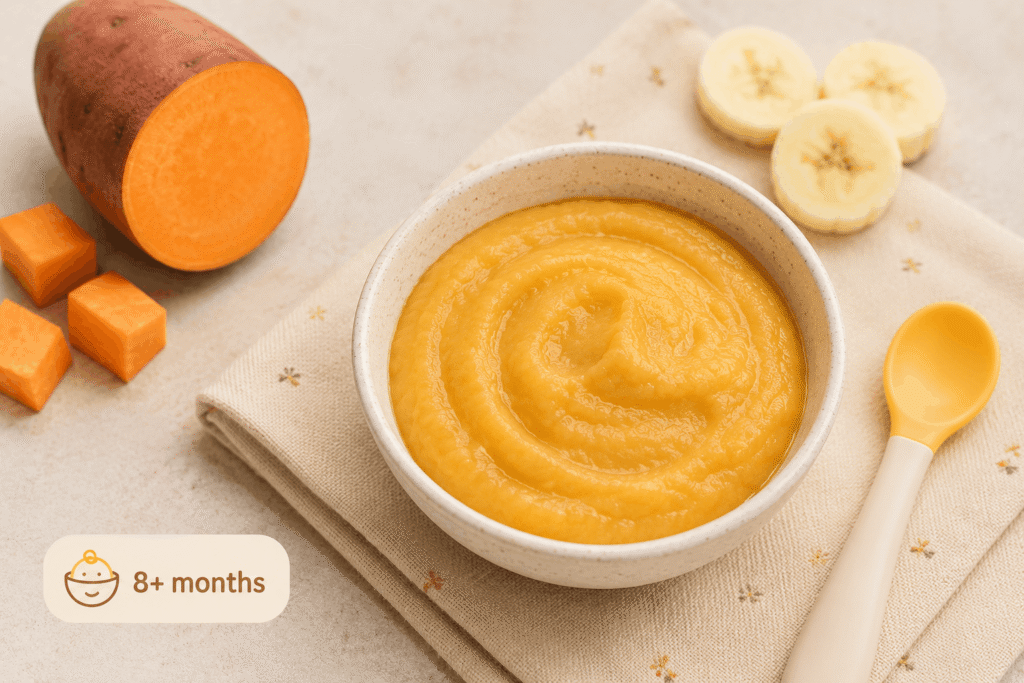
Sweet Potato Banana Mash
Skin and dice one small sweet potato. Steal for 8-10 minutes until fork tender. Mash well until very smooth. Mash in half of a ripe banana. Mash together. No seasoning necessary, as it is sweet and babies adore it.
8 Months Baby Food Chart for Indian Babies
Things Worth Knowing That Nobody Usually Tells You
So feed the baby with one new food and wait for three days before introducing a new food. This way you know that it was a new food, (rash, runs, sick) but of one of three? Awful.
Texture matters more than most parents realize. If you keep them on completely smooth purées for too long, it will make babies more likely to refuse lumpy foods later on. After the first 2 weeks that they’ve been trying new food, start mashing things slightly less smooth. A few soft lumps at 8 months is fine.
Babies reject food up to 15 times before accepting it. This is a widely accepted practice. 8 Months Baby Food If your baby rejects palak today, try again 3 days later, then again a week later. Don’t try it once, and decide your baby doesn’t like spinach.
Fresh food every day. Baby food should not be kept in the fridge for more than 24 hours. Their immunity system has not yet developed and they are more susceptible to infections from contamination than adults.
Eat with your baby. Babies are great watchers. When you get excited about what you’re eating, they are also eager to give it a try. It’s likely the most underutilized weapon in the war against fussy eating.
Ghee deserves more credit. I do one or two drops with each meal to boost the baby’s brain development, absorption of fat soluble vitamins, provide additional good calories, and truly, make food for the baby that tastes a little better. Our grandmothers were not wrong with this.
Common Questions Indian Parents Ask
My baby is spitting everything out — is something wrong?It does not necessarily mean this. 8 Months Baby FoodSome babies do not accept solids for 2 or 3 weeks and carry on offering. There is no forcing and if milk intake is normal, and weight is appropriate there is no need to worry as the baby is simply adjusting.
Can I give rice daily? Yes, rice is a hypoallergenic and easily digestible staple food and for good reason. Mix with a combination of dal, veggies or curd for a balanced meal.
Is ragi really that good? Yes. It has more calcium than milk per gram, good iron levels, and contains lysine — an amino acid that most cereals lack. It is not just traditional wisdom; the nutrition data backs it up completely.
Can I give curd in the morning? Yes. Plain full-fat homemade curd can be given at any meal. Morning curd with ragi porridge is an excellent combination.
My baby is constipated — what helps? Pear puree, papaya, and oats porridge are your best options.8 Months Baby Food Also make sure water intake is adequate. Avoid bananas and sweet potatoes temporarily until things improve.
How do I know if my baby is eating enough? If they are gaining weight steadily, have good energy, produce wet diapers regularly, and seem content after meals — they are eating enough. Do not compare portions with other babies.
Closing Thoughts
There is no perfect food chart. What works brilliantly for one baby might be rejected completely by another. 8 Months Baby FoodThe goal of this phase is not to hit some exact nutritional target every single day — it is to expose your baby to a wide variety of tastes, textures, and foods, and to make mealtimes a pleasant experience rather than a stressful one.
Your kitchen already has everything you need. Dal, ragi, seasonal vegetables, fresh fruit, curd, ghee — these are not basic ingredients. They are the foundation of one of the most nutritionally complete weaning traditions in the world. 8 Months Baby Food
Be consistent. Be patient. And try not to stress too much when half of lunch ends up on the floor. That is just how it goes at 8 months.
When in doubt about allergies, weight, or feeding difficulties, your pediatrician is always the right person to call.

 Admin
Admin