 Admin
Admin Why You’ve Tried Dieting Before and It Still Didn’t Work
You know what healthy food is, that’s not an issue. Most people struggling with their weight know a samosa isn’t healthy.. They’re stuck in a cycle where they do well for 10 days, then a wedding happens, or a late work deadline, or just a really bad Tuesday — and suddenly the whole plan is out the window.
Here’s what nobody says out loud: most diet advice in India is just copy-pasted from Western health blogs and slapped with a few Indian food substitutions. Swap your sandwich with a roti. Replace your salad with a kachumber. Done. Except it’s not done at all, because that advice doesn’t account for the fact that you eat what your mother cooks, that your office has a samosa every Friday, that fasting during Karwa Chauth or Navratri completely wrecks a structured meal schedule.
Real weight loss for Indians needs to start with real Indian life. Not a version of it that’s been cleaned up for a wellness magazine.
The other big myth worth killing early — being overweight isn’t a willpower problem. Scientists are saying the average Indian adult (18 to 49 years) is gaining about 1kg a year without realizing it is happening. It’s a stealthy accumulation, in the shape of larger servings, more processed and packaged foods, reduced walking and more couch-time, before suddenly you can no longer deny the number staring back at you from the bathroom scale. This insidious weight-gain trend is exactly what we’re working against here.. Not with a 7-day detox. With an actual plan you can live inside. Weight Loss
So What Even Is a Diet Plan Chart — And Why Do You Need One?
Think of a diet plan chart less like a rulebook and more like a daily anchor. It just tells you — roughly — what to eat at what time so you’re not making random food decisions when you’re hungry and tired at 8 PM. Because hungry-and-tired is when the Maggi happens. Or the packet of Hide & Seek biscuits. Or “just one small piece” of whatever’s sitting on the kitchen counter.
Structure removes that moment of weakness. That’s genuinely all it does.
The actual science behind it is pretty straightforward. Your body loses fat when it uses more energy than you give it through food. Simple calorie deficit. But how you create that deficit matters enormously — because if you just starve yourself, your body panics. It slows your metabolism, holds onto fat, and breaks down muscle for energy instead. Then the second you eat normally again, it stores everything aggressively. That’s why crash diets work for two weeks and then completely backfire.
A proper diet chart creates a gentle deficit — somewhere around 400 to 500 calories less than your body needs daily. Not dramatic. Not miserable. Just consistent. And consistency over 8 to 12 weeks does what no crash diet ever manages to do: permanent change.
g.If you eat around every 3 hours, your blood sugar will stay balanced. Stable blood sugar means no crash, no “need to eat something right this instant and it does not matter what it is” urges, and no “I have no self control with food” statements (since there are actually very few people who don’t have any self control, and most people who feel that way actually have unstable blood sugar caused by not eating breakfast, or a carb rich, no protein, meal for lunch). Weight Loss
Fix the timing and the composition. The cravings largely fix themselves.
The Case for Indian Food — It’s Better Than You Think
Here’s something worth knowing before we get into the actual meal plan. Traditional Indian home cooking — not restaurant food, not the festive version dripping in ghee — is genuinely excellent for weight loss. It’s not something you need to fight against or work around. It’s actually your biggest advantage.
Indian food is, in its nature, based on whole grains, lentils, fresh vegetables in season, and spices-foods about which, modern science on nutrition says, a whole lot about them being useful for weight management. A traditional Indian plate of food at right quantity is actually a balanced, anti-inflammatory and fiber rich meal, without much engineering.
One staple, a simple home-cooked lunch-dal, sabzi, a roti or two, curd alongside-contains protein from dal, micronutrients and fiber from the vegetables cooked as a side, complex carbohydrates from the rotis and probiotics from the curd. This is indeed a complete meal. It’s the food itself that’s not the culprit. It’s the additional ladle of oil in the tadka, four rotis instead of two, finishing off whatever is in the pot for fear of wastage. weight loss
The spices deserve their own mention because they do real work. Jeera genuinely helps with fat metabolism — not in a dramatic way, but measurably.Fenugreek seeds decrease the rate at which sugar enters your bloodstream from the digestive system and therefore cause an insulin spike that is not as sharp. This in turn leads to lower fat storage after meals. Turmeric’s ability to combat inflammation; it’s now understood that the underlying reason some of us cannot get rid of belly fat regardless of diet is chronic low-grade inflammation. Ajwain is used to promote healthy digestion. Haldi aids in the function of the liver. It is not just oldwives tales; there is research behind almost all of these.
Leafy greens like palak, methi leaves, and sarson are high in fibre and low enough in calories that you can eat a generous portion without worrying about it. And legumes — in any form, dal or whole — are particularly good because their fibre digests slowly, keeping you full for much longer than most other foods. weight loss
The one honest problem with traditional Indian eating is the carbohydrate load. Rice and roti in the quantities most families eat them — especially when millets have largely disappeared and maida has quietly shown up everywhere — tips the balance. That’s the adjustment this plan makes. Not eliminating carbs. Just choosing better ones in better amounts.
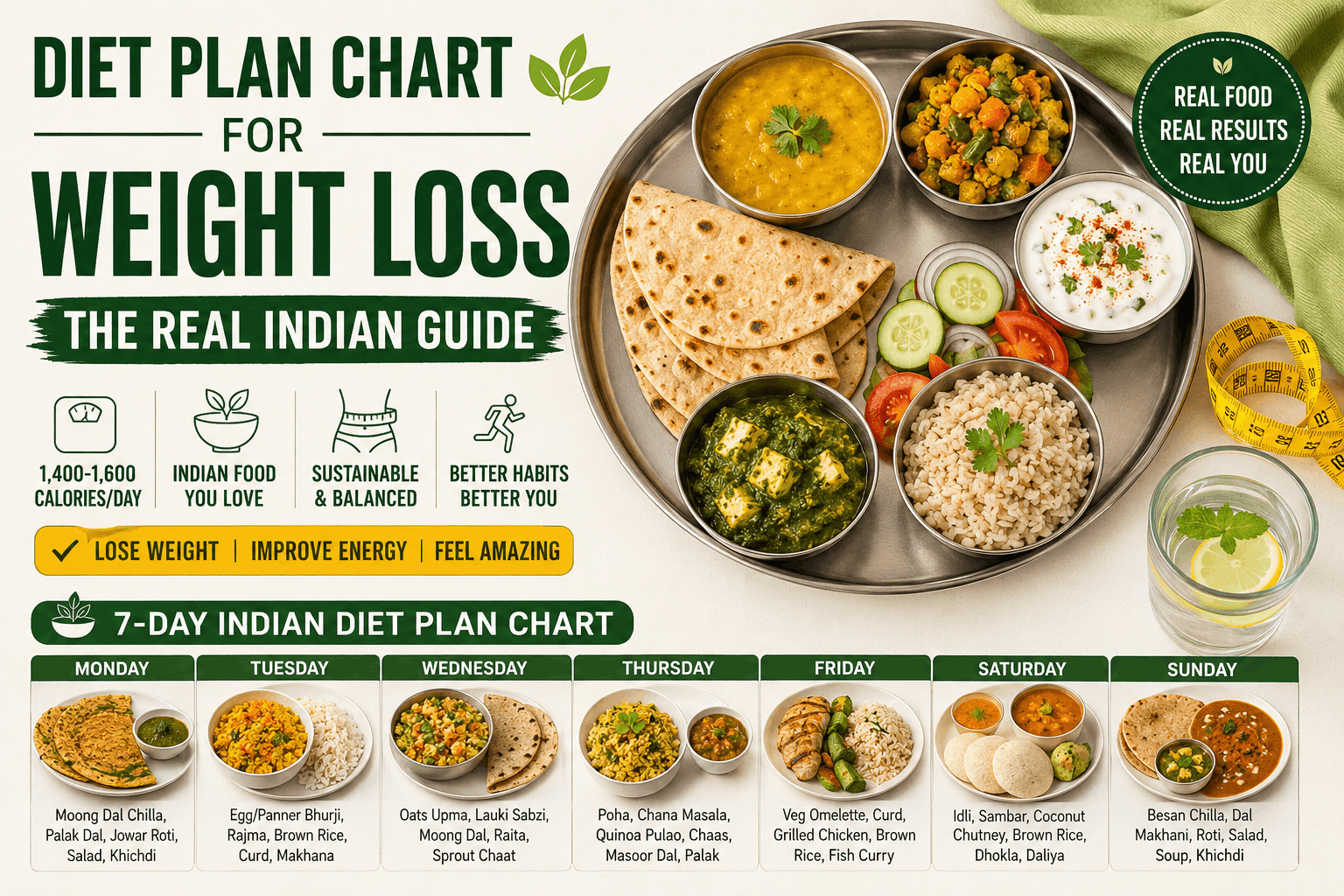
1.Day Indian Diet Plan Chart for Weight Loss
Each day in the plan is between 1400 and 1600 calories. 3-4 teaspoons (this must be measured not estimated) of cooking oil per day, target 8-10 glasses of water. Dinner is completed by 8:00pm, earlier is better.
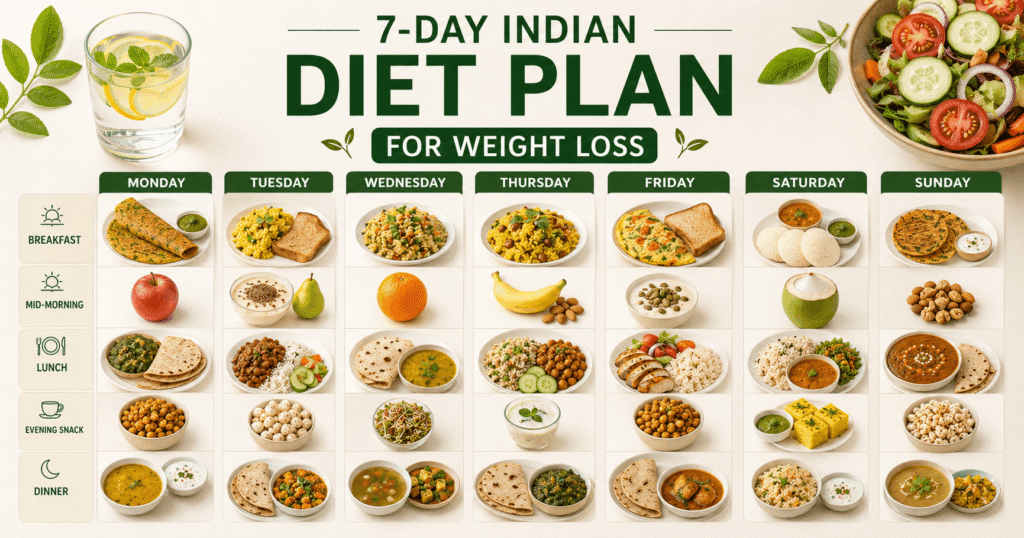
Monday — Start Clean.
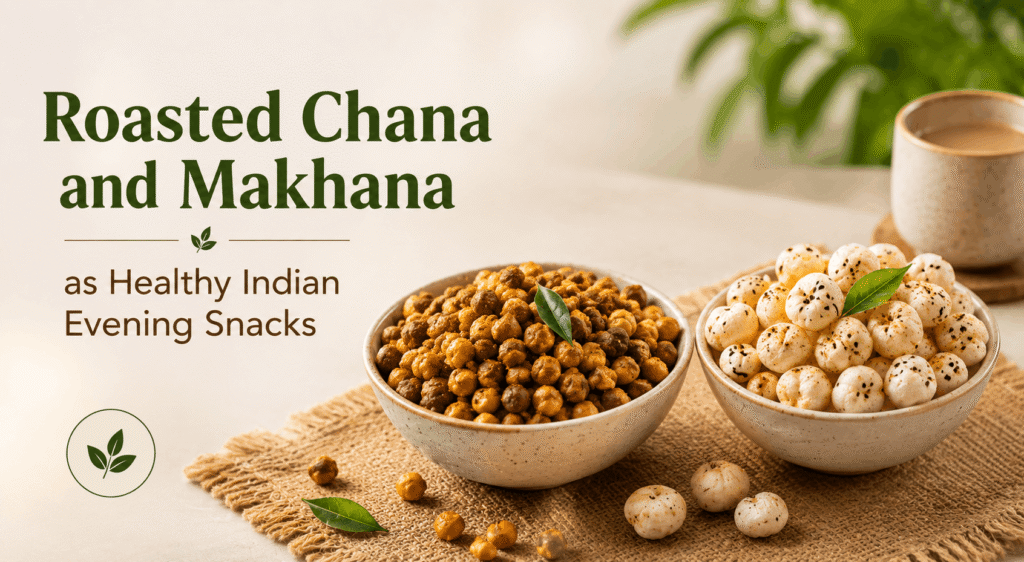
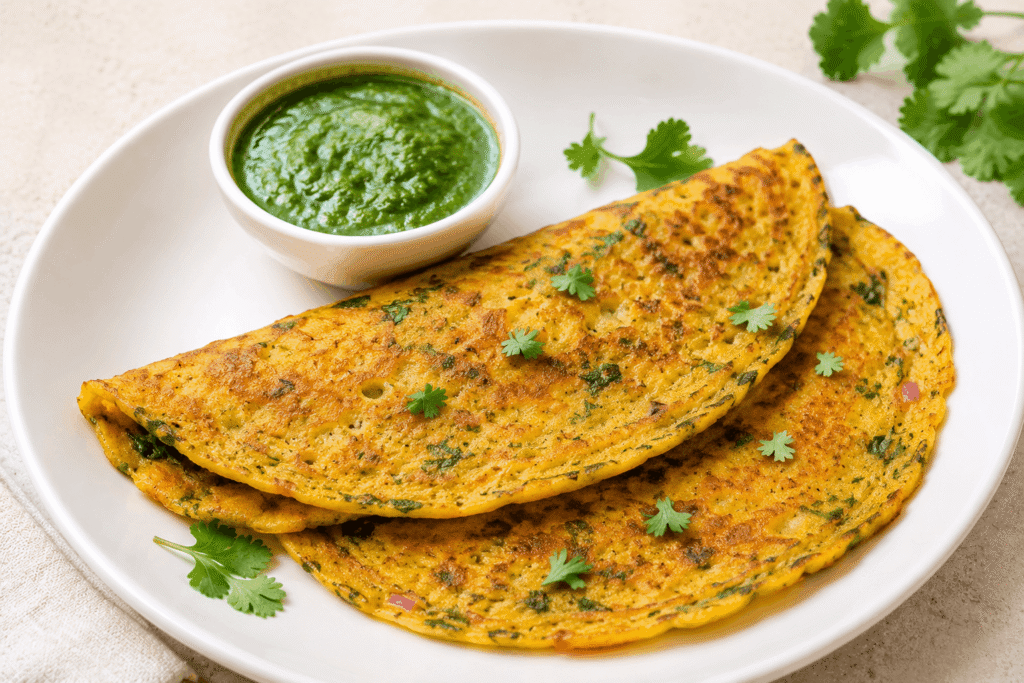
Kick off with warm lemon water and five soaked almonds the moment you wake up.No miracles involved here – simply gently nudging your system into a waking state before your digestive process is called into action with breakfast. For your 8.30 AM breakfast, prepare two moong dal chillas with mint chutney and a cup of green tea. Believe me, moong dal chillas are one of the top Indian breakfasts that can aid your weight loss plan-high on protein, low on calories, and quick to prepare. Around 11.00 AM in mid-morning, have a seasonal fruit-apple or guava. weight loss At 1:30 PM in the afternoon, have a lunch of two jowar rotis with palak dal and cucumber salad with a small cup of curd. Iron comes from the palak, protein from the dal, calcium from the curd, and complex carbohydrates from the jowar roti in this single meal. Eat around 30 gms of roasted chana with black coffee or green tea in your evening snack at 4:30 PM. It contains a good dose of protein to carry you through to dinner. For your 7:30 PM dinner, have a small bowl of vegetable khichdi with a small cup of raita. It is light on the system and light on the calories and is a very comforting meal.
Tuesday — Protein Focus.
Mornings begin with methi-soaked water (just soak 1/2 spoon of methi seeds overnight and drink the water in the morning. Yes, sounds like garbage and mostly is, but the effect on blood sugar is truly incredible). Breakfast at 8:30 includes two boiled eggs orpaneer bhurji with one multigrain toast – protein start is NON-negotiable! Mid-morning snack includes 100 gm low-fat curd with one spoon of flaxseeds and one small pear. Lunch at 1:30 includes 1/2 cup cooked brown rice with rajma and one stir-fried vegetable side dish plus a plain salad. The combination of rice and rajma is a complete protein combination and both these foods together make up for all the necessary amino acids required by the body for the muscles. weight lossEvening snack at 5:00pm is about 20 gm of roasted makhana with green tea – 70 calories and is incredibly filling, somehow. The day ends with dinner at 7:30pm, two bajra rotis, mixed sabzi and one bowl of dal.
Wednesday — Gut Reset.
Wednesday gets a detox theme — not in the pseudoscience sense, but in the sense of giving your digestive system a lighter, cleaner day. Morning is jeera water with four soaked almonds. I eat breakfast at 8.30 which consists of oats upma with mixed veggies, a cup of green tea –beta-glucan fiber found in oats is one of the only food groups whosecholesterol lowering properties have been proven in studies with humans and not merely a theoretical possibility. I have one orange or fruit that is in season mid morning. At 1:30 I eat two rotis (whole wheat) with a lauki sabzi, a side of moong dal and a portion of raita-launki deserves a special mention for being 96% water; you can pile it onto your plate and the physical volume will fill your stomach, not just theoretically but actually and will be devoid of significant calories. For a mid-evening snack I have a small plate of sprouts chaat (with lemon and chaat masala). Sprouts are living foods-germination increases their protein and enzyme content dramatically. Dinner at 7:30:clear vegetable soup with one roti and a small portion of paneer.
Thursday — Fibre and Gut Bacteria Day.
Morning ritual: hot water with chia seedssoaked-only half a teaspoon dissolved in a glass. They swell and absorb water in your stomach; feeling that full sensation will carry you through to breakfast and then some. Breakfast: poha at 8:30-the regular kind, with mustard seeds, curry leaves, onion, and some vegetables. It’s light, iron-rich and truly quick to make. Mid-morning snack: one banana and five almonds. Bananas get a bad rep, but they contain resistant starch, which feed the healthy gut bacteria-those that actually determine how many calories are absorbed from your food. Lunch at 1:30: quinoa pulao if you can find quinoa or brown rice pulao, with chana masala and cucumber salad. In the evening, have a glass of chaas with jeera and mint-it’s only 40 calories and is probiotic and refreshing in the heat of the afternoon. Dinner at 7:30: masoor dal with two rotis and sauteed palak with garlic.
Friday — Non-Veg Option.
The plan does go beyond being vegetarian with you, if you’re eating meat or eggs; the day which embraces this is Friday. Mornings are lemon-ginger water, 2 walnuts. Breakfast is 2 eggs for an omelet, full of veggies- capsicum, onions, tomato, whatever else you have. 1 slice of multi-grain toast with it. The choline in eggs has a specific effect on metabolising fat in the liver, more than most people think, with the widespread epidemic of fatty liver in urban India. weight loss Mid morning is a curd, like a Greek style one, with pumpkin and sunflower seeds mixed into it. The zinc from the seeds, influences thyroid functioning, which in turn has an effect on your metabolic rate. Lunch at 1:30 is 100g chicken grilled, or paneer that’s been grilled, half a cup of brown rice and a salad. In the evenings, roasted chana with black coffee. Fish curry, with tomato, and minimal coconut milk (for it to be lighter) with 2 rotis. Omega 3 from fish has a specific and known effect on decreasing abdominal fat, regardless of caloric content.
Saturday — South Indian Day
Saturday has a South Indian structure, partly because the cuisine is naturally weight-loss-friendly and partly because it gives the week some variety. Your morning is turmeric milk with low-fat milk, or ajwain plain water if you want something light. 9 AM- breakfast is two idlis with sambar and just a small dollop of coconut chutney- these fermented, light cakes (approximately 290 calories for two) boost gut health, a growing factor for weight management. weight loss Fermented foods like idli batter boost the diversity of your micro biome which leads to more efficient fat storage and calorie management by your body. 11 AM- coconut water, or a small fruit salad. 1.30 PM- lunch, is half a cup of brown rice with sambar, a stir-fried vegetable accompaniment and some curd. Evening snack- two pieces of steamed dhokla with green chutney- this fermented chickpea snack is 110 calories, but high in protein too. 7.30 PM- dinner is vegetable daliya with raita and a small side salad.
Sunday — Slow and Nourishing.
Sunday doesn’t need to be strict. It needs to be good. Morning at 7:30 is lemon ginger water with four soaked almonds — slightly later because rest day. Breakfast at 9:30 is two besan chillas with mint curd dip. Gram flour is low glycaemic and protein-dense — a better base for a chilla than almost anything else.It’s around mid morning. I eat a small handful mixed nuts – almonds, walnuts and 2 cashews – plus one fruit. Lunch at 2pm (will have late on Sunday, which is intentional) – Dal Makhani – less oil and two chapatis plus kachumber.. weight loss Yes, dal makhani is on a weight loss plan. Made at home with a light hand on the butter and cream, it’s a completely reasonable meal. The problem is the restaurant version that’s simmered in half a stick of butter. Evening at 5 is herbal tea with 15 grams of makhana. Dinner at 7:30 is clear vegetable soup with a small bowl of khichdi. Quiet, filling, and the right way to end the week.
2.What to Eat More Of — With Real Reasons
Moong dal. is probably the single best weight loss food in an Indian kitchen.This packs approximately 24g protein per 100g (dry weight), with a very low GI of approx 25, and is gentle enough for even sensitive stomachs, IBS or when recovering from illness. You will feel full for 3-4 hours without feeling heavy.. Eat it as dal, as chilla, as sprouts, as soup — there are genuinely dozens of ways to cook it.
Eggs do something specific for weight loss that most foods don’t.A number of studies have confirmed that eating eggs for breakfast reduces the feeling of hunger and calorie intake throughout the day. It’s not just at lunch, it lasts throughout the whole 24 hours!Eggs are full of excellent protein and good fats which combine to help digest food slowly.Two eggs for breakfast is around 150 calories. The satiety you get from them is worth five times that in terms of what it prevents you from eating later.
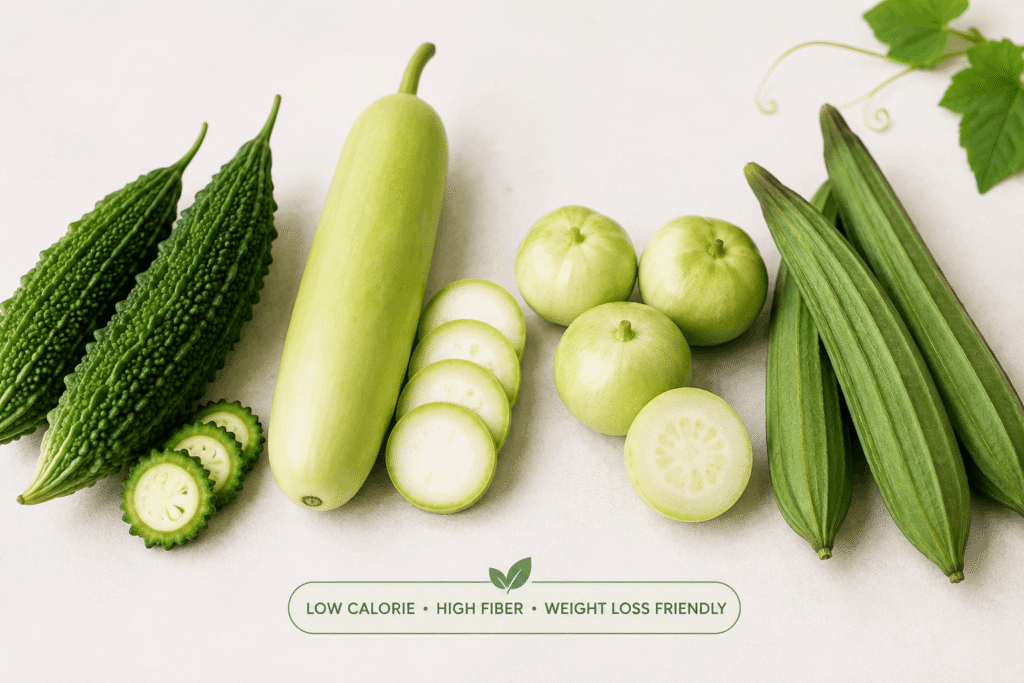
Seasonal vegetables — karela, lauki, tinda, turai, parwal — are genuinely underrated in weight loss conversations. They’re 90 to 96 percent water. A whole bowl of lauki sabzi, you can eat till your heart’s content, with the same number of calories of less than 60. Karela can’t be left out; it has charantin and momordicin which increases insulin sensitivity, useful for all concerned about their fat belly, fat liver or diabetes running in the family.
Curd and chaas contribute to something that most diet advice skips entirely: gut microbiome diversity. The evidence linking bacteria in the gut with the weight have become quite strong over the last ten years. Individuals with varied guts consistently absorb fewer net calories from the same meal and control their inflammatory process better. A small bowl of curd or a glass of chaas everyday can be a low effort, high-reward activity.
Millets — bajra, jowar, ragi — It’s good to incorporate them into your daily cooking rotation again even if they have been absent from your families kitchens for a little while. The glycaemic index is significantly lower than that of refined wheat, and white rice. This helps keep blood sugar levels more constant without giving them an upward spike which means less insulin released, and less of a signal sent to your body to store fat. Also ragi contains more calcium than virtually any other grain and this is important for women, especially if you are lowering dairy.
3.What to Cut Out — And Why Each One Actually Matters
Maida, in every form it shows up in your day — the paratha fried for breakfast, the biscuits with chai, the white bread sandwich, the samosa cover, the naan at dinner — is the most consistent obstacle to weight loss in the average Indian diet. When wheat is refined into maida, everything useful gets stripped away. What’s left is pure starch that hits the bloodstream almost as fast as drinking sugar water. The insulin spike that follows sends a direct signal to fat cells to store. Then the crash brings the craving. Then you eat more. It’s a cycle, and maida runs it.
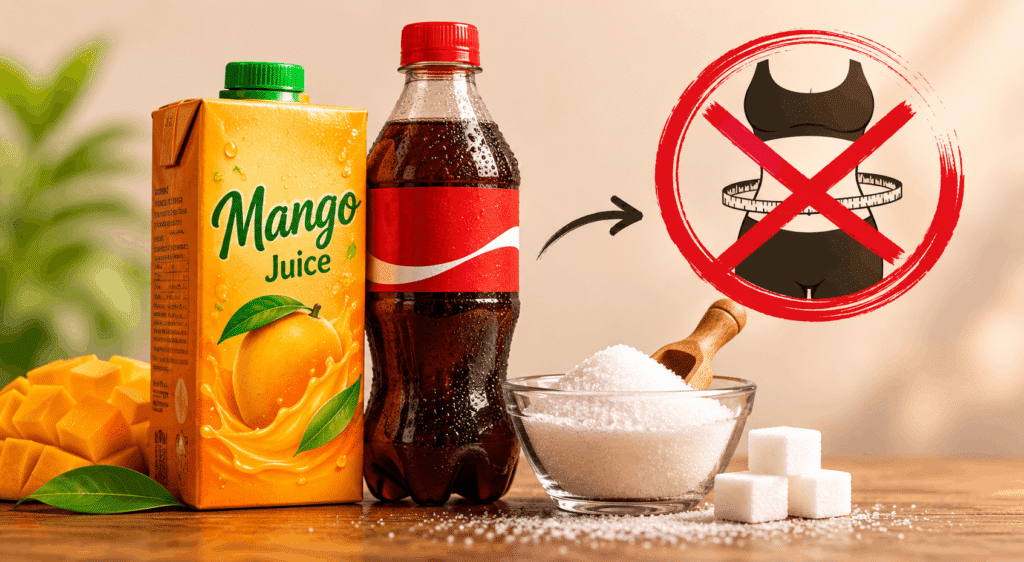
Packaged fruit juices and cold drinks are possibly the most deceptive category. A 200 ml tetrapak of mango juice has roughly 110 to 130 calories and 25 to 28 grams of sugar — barely any different from a Coke — and it produces almost zero feeling of fullness because liquid calories don’t trigger the same satiety signals that solid food does. The fructose in these drinks bypasses muscle cells entirely and gets processed by the liver, where excess amounts get converted directly into triglycerides. Regular juice drinkers often have early-stage fatty liver without knowing it.weight loss
Deep-fried snacks eaten daily are a compounding problem. The food itself absorbs enormous amounts of oil during frying. But the second issue is the oil being used — commercial frying operations often reuse oil repeatedly until it breaks down into compounds that actively promote inflammation and insulin resistance. A samosa from a street stall isn’t just 280 calories. It’s 280 calories of food cooked in oil that’s been heated and reheated for hours. The metabolic damage is beyond what the calorie number alone captures.
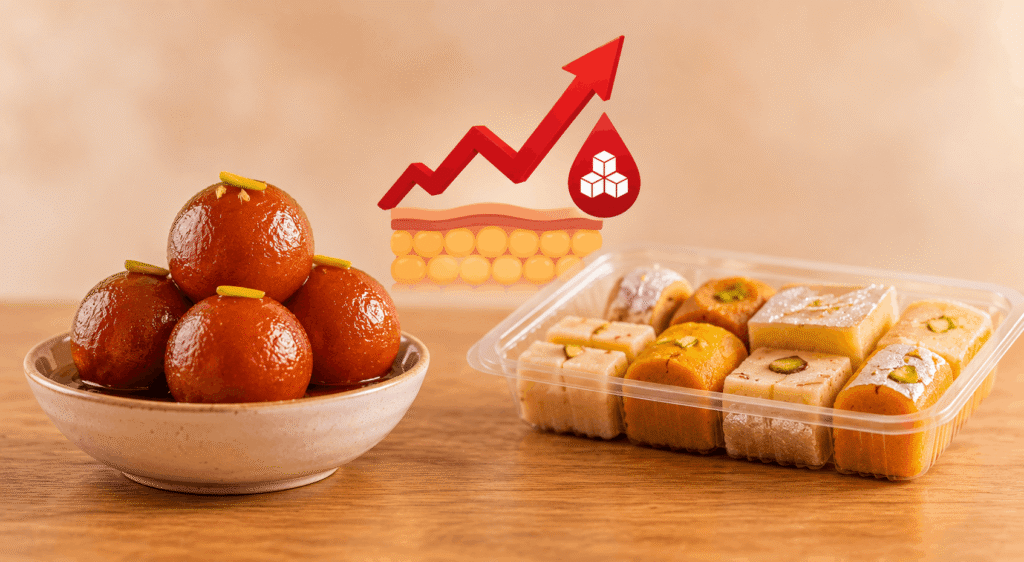
Mithai and packaged sweets hit blood sugar hard because they combine refined sugar, refined flour, and concentrated fat simultaneously — all three of the things that drive the worst kind of calorie absorption. Two pieces of gulab jamun at a family dinner isn’t a catastrophe. Two pieces every day, or multiple servings at every occasion, is a real problem. If you want something sweet, two dates, a small piece of jaggery, or one square of 70 percent dark chocolate will satisfy the craving without the blood sugar disaster.
4.Daily Habits That Make the Diet Chart Actually Stick
Eat your heaviest meal at lunch, not dinner.This is not about being an old-fashioned way. Your body does actually have its highest metabolic rate in the afternoon, decreasing considerably by evening. The same meal eaten at 1 PM produces a measurably different insulin response than the same meal eaten at 9 PM — less fat storage at lunch, more at dinner. Culturally, many Indians already have the infrastructure for this — a proper home-cooked lunch is part of the routine for a lot of families and office workers who carry tiffins. Use that to your advantage.
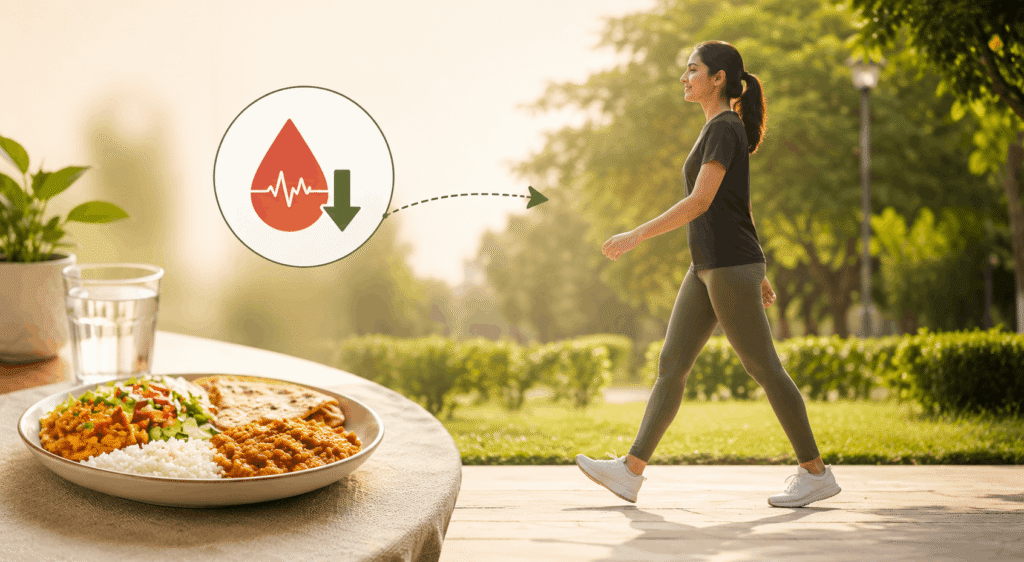
Walk for 10 minutes after each main meal. Not a workout. Just take a walk. Glucose goes to your muscles as the body uses it directly during post meal walks, ignoring the insulin dependent storage mechanism where the excess sugar is transferred to your fat cells. Three half hour calorie burning, meaningful, no-gym workouts throughout the day will achieve this (post breakfast, post lunch, post dinner). It’s sounds too easy and it’s true.
Stop eating by 8 PM consistently. There is also a diurnal cycle to the body’s digestive and metabolic functions. There is very little activity from evening onwards. Any food consumed in the late evening is less digested and takes longer to be removed from the gut. It is also more likely to be converted and stored as fat, because at about 9 pm the sensitivity to insulin is at its lowest point of the day. This is one of the simplest, and also one of the most effective, changes most Indians could make; for, a late supper is very common in an urban house. weight loss
Handle your stress with something other than food. Stress eating is the thing that quietly dismantles more diet plans than almost any other factor.It is biochemical in nature – why cortisol sends you toward specific, high-fat high-sugar foods is because that is the only food that it has trained your brain into realizing will give it a dopamine high in the shortest amount of time. Once you can find a biochemical way to vent cortisol that IS NOT high-fat, high-sugar food-for me this is often 10 minutes on the tread mill, a phone call to someone I enjoy talking to, or some pranayama before sleep-then the intensity of the craving diminishes significantly. You’ll probably see a result in about two weeks of consistency.
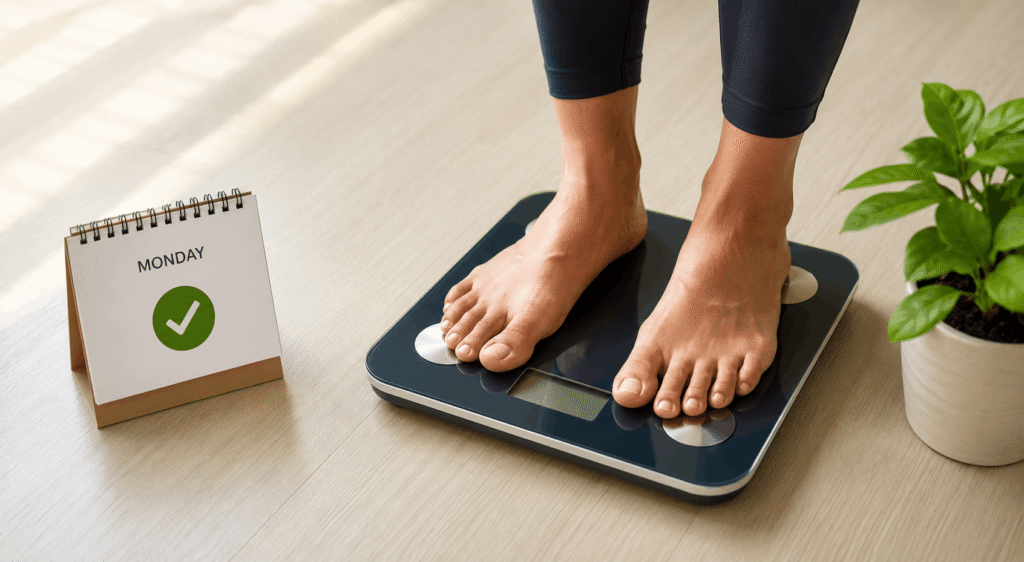
Weigh yourself once a week, same day, same time. Daily weighing creates unnecessary panic because body weight swings by 1 to 2 kg naturally depending on water retention, sodium intake, hormonal cycles, and digestive contents. A Monday morning weigh-in, first thing after waking, gives you a clean comparable number each week. Track the weekly trend across 6 to 8 weeks — that line tells you whether what you’re doing is working, not the daily number
Can I lose weight without giving up rice and roti?
Yes, genuinely. The portion size and the type matter far more than whether you eat them at all. Half a cup of cooked brown rice with dal and sabzi is a perfectly solid weight loss meal. Two jowar rotis with protein and vegetables is exactly what this plan recommends. The version of rice and roti that causes problems is three cups of white rice with a fried side and nothing else, or four large wheat rotis dipped in butter. Fix the portion and the pairing, not the food category.
How long before I actually see results?
Honestly, the first week usually shows a larger number on the scale — sometimes 2 to 3 kg — but most of that is water weight from reducing refined carbs and processed sodium. Real fat loss kicks in from week two or three and progresses at roughly 0.5 to 1 kg per week after that. Sustainable weight loss means consistently choosing and portioning appropriate foods; not dramatic, short-term success, then regaining everything the minute you resume “normal” eating. Give the plan a minimum of 6 to 8 weeks of sincere consistency to see if it is successful.
What if I have a bad day — a wedding, a festival, a moment where I eat everything?
One bad day doesn’t undo two weeks of good work. The science on this is reassuring — your body would need a sustained multi-day surplus to actually reverse meaningful fat loss. The bigger danger isn’t the feast day itself, it’s the “I’ve already ruined it so I may as well keep eating badly” spiral that follows. Eat what you want at the wedding. Go back to your plan the next morning. That’s the complete strategy.
Do I need supplements?
Probably not, with two exceptions. The lack of vitamin D is one of the most widespread problems across India, even in sunny weather, due to the fact that it is precisely in the mid day when the sun is hottest that most Indians in cities choose to remain inside. Lack of vitamin D is known to slow down fat loss and keep one feeling lethargic. Get your levels checked and supplement if needed. Vitamin B12 is the second — if you’re vegetarian, especially if you eat limited dairy, B12 deficiency is genuinely common and worth either supplementing or monitoring.
When should I see a doctor instead of following this plan?
If you’ve been eating in a reasonable calorie range with daily movement for 6 to 8 weeks and the scale hasn’t moved at all, get thyroid levels checked.Hypothyroidism and PCOS are extremely common in Indian women, and both work directly against weight loss in a way that no diet chart can overcome. If there has been a sincere effort made at dieting, and no results showing, then the cause may be hormonal or metabolic and a doctor should be consulted, prior to implementing a diet chart.
The Honest Ending
No diet plan is magic. This one isn’t either. What it is, is realistic — built around food that actually exists in Indian homes, structured around how Indian days actually run, and based on principles that have enough research behind them that you can trust they’ll work if you actually follow through.
These are the individuals who lost and maintained their weight loss not because they found “the right way of eating” weight loss but because they discovered a sustainable way of eating that they could maintain even through the life complications that will arise. This is the whole premise of this plan.
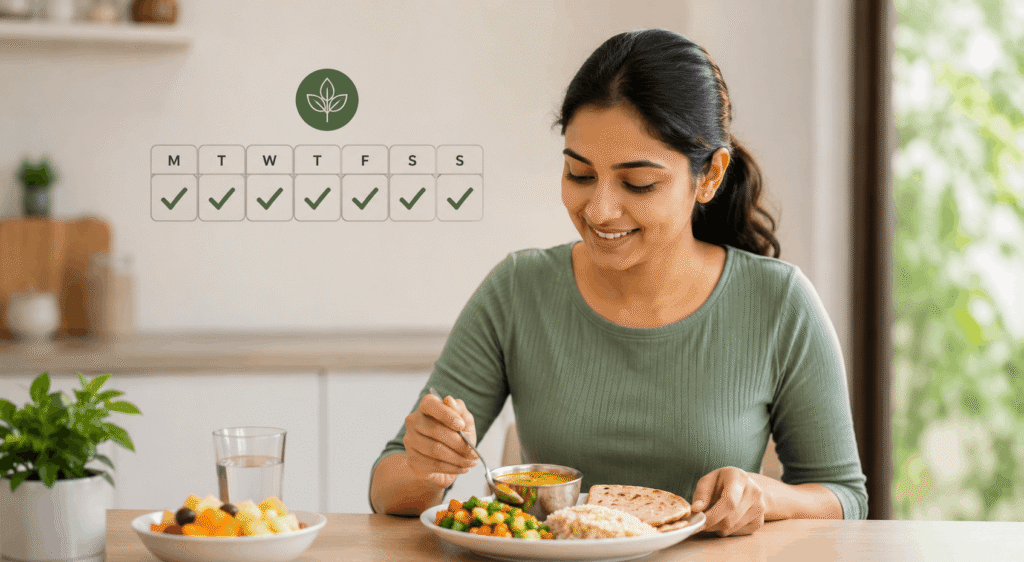
Start Monday. Don’t wait for the “right time.” Follow it 80 percent well for 8 weeks and see what happens. The other 20 percent — the festival meals, the social dinners, the days you just couldn’t — doesn’t matter as much as you think it does. weight loss
Consistency over a long period beats perfection over a short one. Every single tim

 Admin
Admin
[…] time, recover briefly and repeat. It can help boost your metabolism such that your body continues to burn calories for hours even after you have finished exercising. Known as the afterburn effect, this is why HIIT […]
[…] the benefits of morning exercise for weight loss go beyond just burning fat.It’s normal for your cortisol levels to be high in the morning. […]
[…] Check another blog: Diet Plan Chart […]