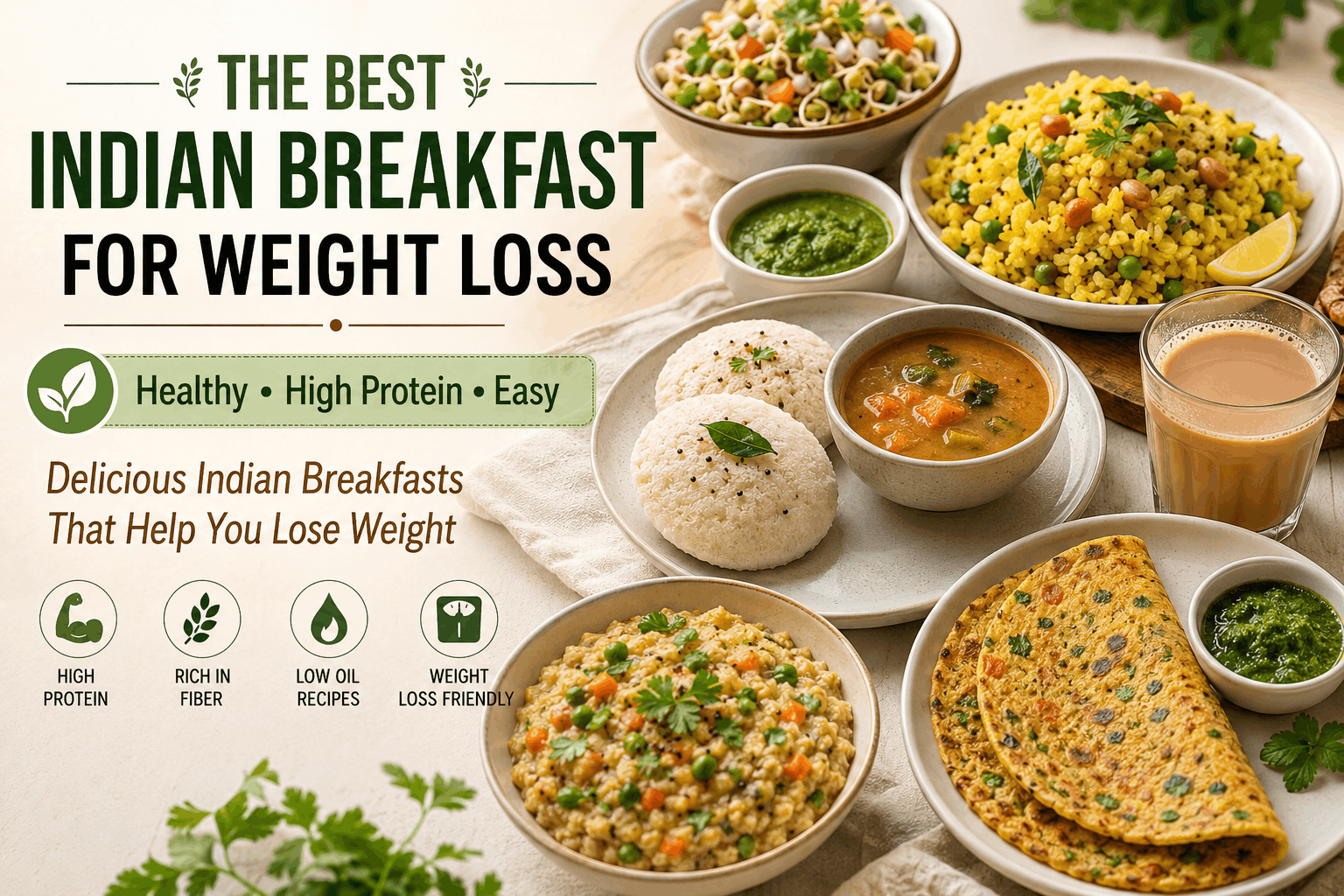
 Admin
Admin Weight loss starts not at the gym, not at dinner, but at the breakfast table every single morning.
Most people in India treat breakfast like an afterthought. Either they are rushing out the door, or they grab whatever is fastest — two slices of white bread with butter, some biscuits with chai, or last night’s leftover roti reheated on the tawa. Then they wonder why the weight is not moving.
Here is the one thing nobody explains properly. Breakfast is not just the first meal of the day. It sets the stage for everything that follows — how hungry you feel at lunch, whether you snack at 11 AM, how much energy you have in the afternoon, and whether your body is burning fat or storing it.
Nail breakfast and the rest becomes so much easier. Get it wrong and you are fighting your own biology all day long.
The Real Problem With Most Indian Breakfasts
So are Indian breakfasts bad for losing weight? Not at all! If you take a look at what traditional Indian breakfasts were traditionally composed of – fermented batter from lentil, flattened rice, millet porridges, and raw vegetables stir-fried with minimal oil – they are fantastic foods to have in a healthy body.
The problem is what happened to Indian breakfast over the last few decades.
White bread substituted whole grains. Sugar-packed breakfast cereals showed up on the scene, touted as healthy. Ghee-laden and oily restaurant cooking made its way into homes. Servings ballooned. Chai became sweeter. And somewhere down the line, the truly healthy heart of traditional Indian breakfast became lost in a sea of habits that actively (if unintentionally) hinder weight loss.
The solution isn’t rocket science. It doesn’t involve any exotic ingredients or costly supplement packs. It’s simply knowing what your body truly requires each morning and mapping it back onto the Indian cuisine you already know.
What Happens in Your Body When You Eat Breakfast
When you get up after sleeping for 7 to 8 hours, the body hasn’t eaten throughout the night. Cortisol, the stress hormone, is elevated in the morning.. Blood sugar is low. Your metabolism is essentially waiting to be switched on.
A good breakfast does several things at once. It brings cortisol back to a normal level. It stabilises blood sugar so you do not experience that sharp mid-morning energy crash. It triggers the production of fullness hormones that reduce appetite throughout the day. Weight loss And it will provide the protein to your body, organs, and muscles. When you are not having breakfast or eating foods void of nutrition like glucose biscuits packet, sugary cereal, bread and jam – your blood sugar level will go up for a short period and drop down very quickly. It is this drop that makes you feel that terrible hunger two hours later.That hunger is what makes you overeat at lunch. The extra calories from that lunch become fat. Weight loss
This is not a willpower problem. It is a breakfast problem.
1.What Makes the Best Indian Breakfast for Weight Loss?”
But before we delve into actual dishes, let’s cover what all weight-loss breakfasts must have in common, no matter what their origin:
Protein- Is crucial. Protein actually commands the hunger hormones. With adequate protein- minimum 10 to 15g- you can keep hunger hormones under control for 3 to 4 hours. You don’t need to feel hungry again any sooner. Indian foods high in protein include all dals and lentils, paneer, curd, egg, besan and sprouts.
Fibre is the second key component. Fibre slows down digestion, releasing energy more slowly, thus allowing blood sugar levels to increase more gradually and leaving you feeling more full for longer. Some common foods with Fibre are the aforementioned vegetables and whole grains as well as millets and cooked dals.Weight loss
Minimal refined carbohydrates are the third requirement.”
This is 3. Refined flour and large amounts of white rice, sugar-these break down quickly and bring about blood sugar crashes and spikes, leading to excessive eating. Swapping refined grains for whole grains is often the most effective thing an Indian family can do to lose weight.
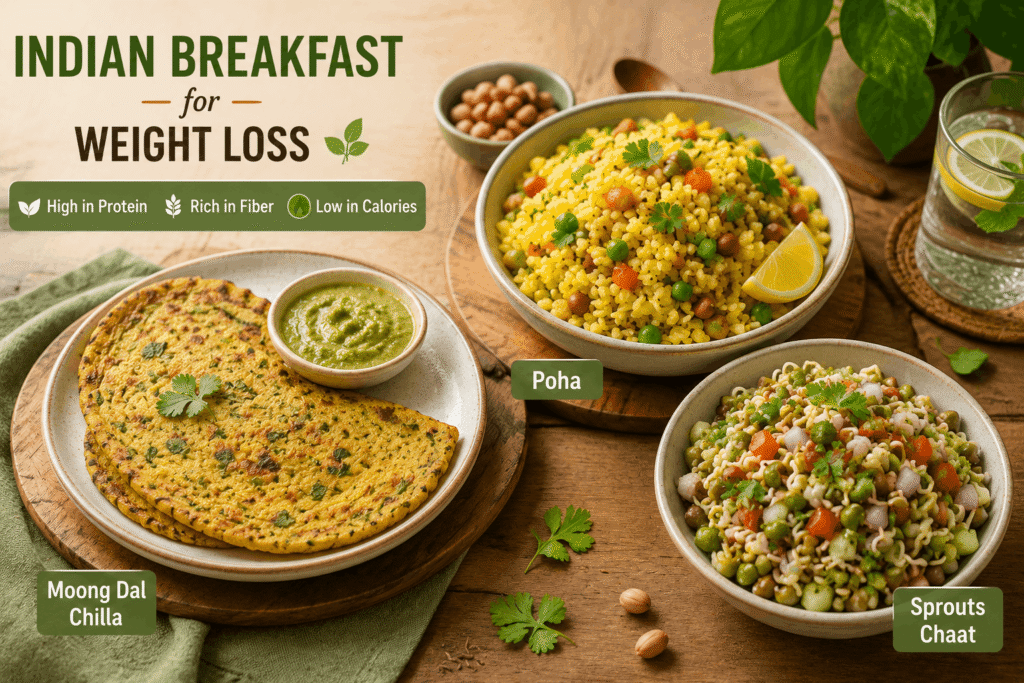
2.”7 Best Indian Breakfast Foods for Weight Loss”
Moong Dal and Chillas Made From It
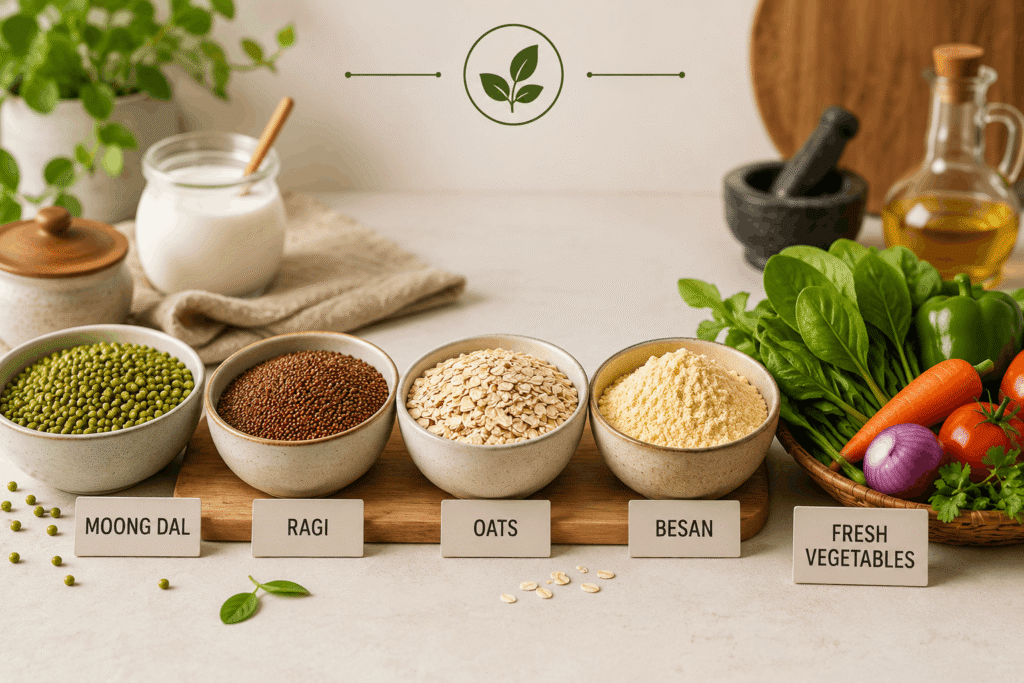
In my opinion, the most potent food in the Indian kitchen for weight loss is green moong dal, rich in vegetable protein, highly digestible and light with minimal calories and immense versatility.
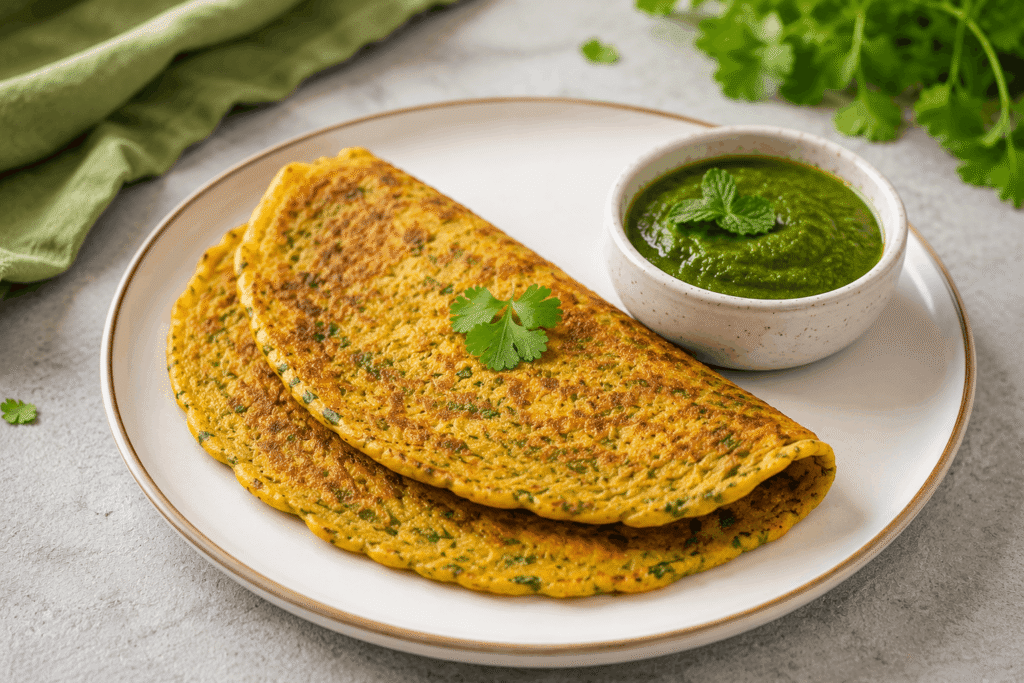
The simplest and most effective meal for breakfast is a chilla made of the ground batter of soaked moong dal. Soak dal overnight, grind in the morning with ginger, green chilli and spices, spread thin on a hot non stick tawa, load with veggies and flip with as little oil as possible.
Two moong dal chillas provide about 12g of protein and 5g of fibre with only 150 calories. What an incredible nutrient density! Together with some mint chutney, it makes a full breakfast which keeps you full for 3 to 4 hours.
The key is the non-stick pan and restraint with oil. Half a teaspoon is truly enough when the surface is properly heated.
Poha Done Properly
Poha is slightly unfairly maligned in weight loss conversations because the flattening is misinterpreted as a lack of carbohydrates. Actually:
Poha is considered a medium glycaemic index food that when prepared with certain additions weight loss, becomes quite filling and a complete meal. The number one addition required is roasted peanuts. Peanuts provide healthy fats, as well as protein, and turn the poha from a simple carbohydrate snack into a meal.
However, you will also increase the fibre and the bulk of your poha and make it quite filling without adding too many calories by adding lots of vegetables, like green peas, carrot, onion or even grated cauliflower. Use a teaspoon of oil at most for the entire preparation.
Fresh lemon juice at the end is not optional — it brightens the flavour significantly and also improves the absorption of iron from the dish.
A well-made vegetable poha with peanuts is around 210 calories and takes ten minutes. On a busy weekday morning that combination is hard to beat.
One upgrade worth trying: switch to red or brown poha instead of the standard white. It is available in most stores now, has a lower glycaemic index, and the taste difference is minimal once it is seasoned properly.
Idli — Especially the Oats Version
The most body-kind breakfast item is the traditionally steamed idli. It’s oil free, fermented, light on the tummy and gives you a sensible balance of carbs and protein.
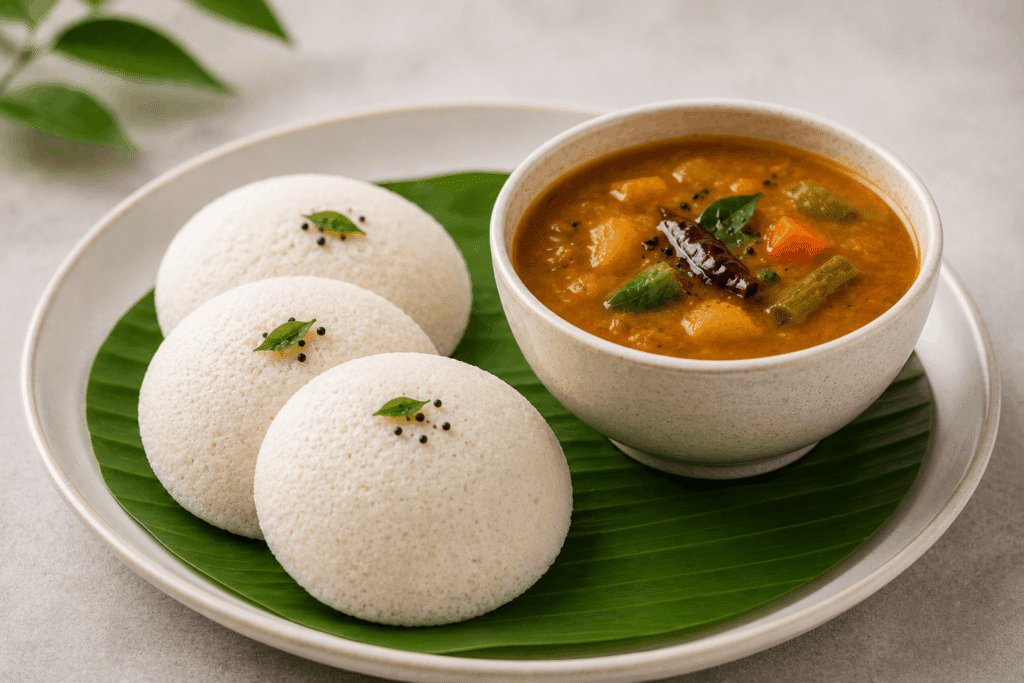
Fermentation of the idli batter overnight is doing a actually useful thing for your tummy. Good bacteria are created, nutrients are released and made more bio-available (more usable by your body), and the cooked batter becomes more easily digestible. Your gut health is linked directly to successful weight management; it is not some airy-fairy statement, it’s scientifically backed by research, consistently.
The oats idli is taken one step further; replace the rice in the idli batter with finely powdered rolled oats (fully or partially). You up the fiber considerably and the process is still totally oil free. The texture is slightly different; a little softer but perfectly acceptable and nutritious enough. weight loss
Two oats idli with light vegetable sambar make a 220-calorie breakfast and I guarantee it feels substantial. The sambar here helps. A light lentil and vegetable sambar increases protein from the dal and fiber from the vegetables, and keeps the whole meal under 300 calories.
Avoid heavy coconut chutney as the main accompaniment. A small amount is fine but it adds calories quickly and most people use significantly more than a small amount.
Upma Made With Oats or Broken Wheat
Regular semolina upma is a staple in South Indian homes and a decent breakfast, but it can be improved for weight loss purposes by swapping the sooji for either rolled oats or broken wheat.
Oats upma — also called masala oats — is made with exactly the same tadka and vegetable combination as regular upma. Mustard seeds, curry leaves, green chilli, ginger, onion, vegetables of your choice, then the oats added with water and cooked covered on low flame. The result tastes like upma, smells like upma, and feels like upma. The difference is the dramatically higher fibre content that comes from the oats.
Broken wheat upma achieves something similar. Broken wheat, also called dalia or lapsi, is a whole grain with a nutty flavour and excellent nutritional profile. It takes slightly longer to cook than oats but the texture is more substantial and many people find it more satisfying.
Both versions should use one teaspoon of oil maximum and should be loaded with vegetables. The vegetables are not a garnish — they are a meaningful part of the nutritional value of the meal.
Sprouts
If there is one breakfast food that is criminally underused in Indian households despite being readily available, it is fresh sprouts.
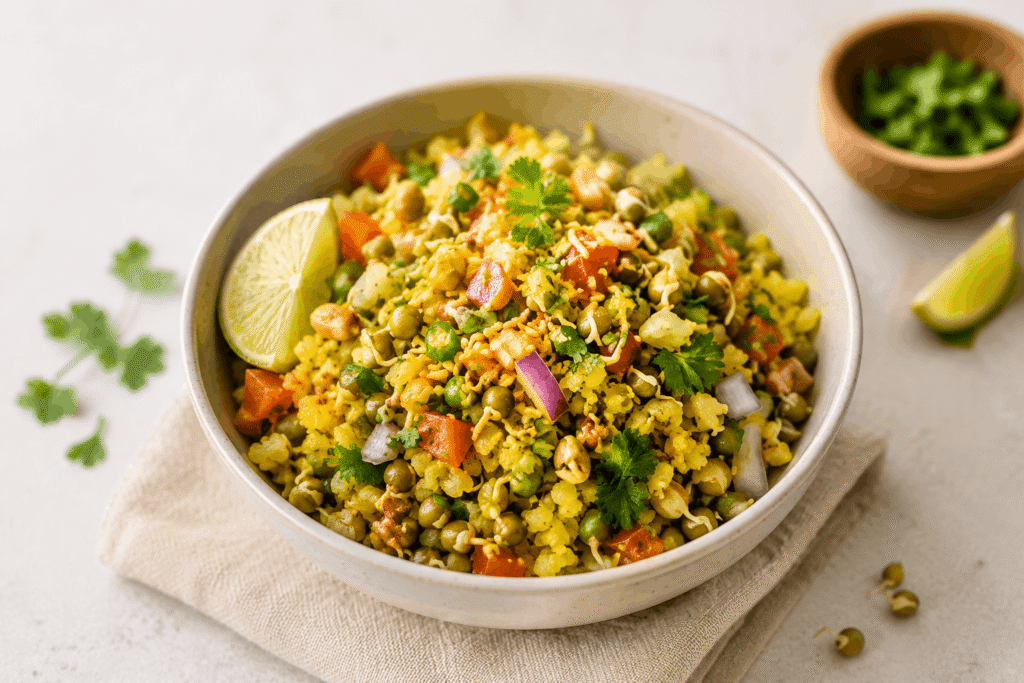
Sprouting is what happens when you soak a legume — moong, chana, moth bean — in water and allow it to germinate. During this process something remarkable happens to the nutritional profile. The protein content increases. Certain vitamins, particularly Vitamin C and B vitamins, increase significantly. The antinutrients that can interfere with digestion reduce. The result is a living food that is more nutritious per calorie than almost anything else you can put in your body.
A cup of mixed sprouts with chopped vegetables, lemon juice, chaat masala, and black salt is 14 grams of protein and 8 grams of fibre for around 180 calories. No cooking required. Assembly takes five minutes. weight loss
The sprouting itself requires zero active effort. Soak moong overnight, drain, wrap in a damp cloth and leave on the counter, check the next morning. Done. Keep a container of mixed sprouts in the refrigerator and this becomes the fastest and most nutritious breakfast available to you on any given morning.
Eat them raw or very lightly steamed. Heat reduces their nutritional potency considerably.
Besan Chilla
Chickpea flour, or besan, is another underused protein source in Indian breakfast cooking despite being available in every home.
The logic is the same as the moong dal chilla, but without any soaking time. From start to finish besan chilla is ready in 12 minutes. Seconds for the batter, a minute or two on the hot tawa, and you have a high protein, high fiber, satisfying breakfast.
The digestive marvel that truly makes besan chilla a must have for us is ajwain – the spice that the name of the besan chilla itself references (besan chilla meaning spiced besan pancake). Add a big pinch every time you make the batter and there’s far less bloating with besan; the digestive reaction to besan is definitely lessened by it.
Eat it with low-fat curd. This will boost its protein, add some probiotics and the contrast between warm chilla and cooling curd is actually one of the nicer simple combinations in an Indian breakfast.
3.What to Avoid in the Morning
White bread and butter or jam. This combination spikes blood sugar rapidly and provides almost no protein or fibre. It creates hunger within an hour and a half and contributes to the pattern of overeating later in the day.
Packaged cereals. Every cereal in India that comes to mind is sold on the “healthy” premise and has a high level of added sugar. Check the ingredients list on a ready-to-eat cereal that you’re consuming and note the sugar per serving. I guarantee you will be shocked and saddened.
Biscuits with chai as a meal.BISCUTS are the definition of sugar and refined flour bundled up, Four to six of those along with two glasses of sweet chai would count as a breakfast of 400 to 500 calories and it is pure refined carbohydrate with no protein and very little fibre
Aloo paratha with excess ghee.One paratha of atta and very starchy potato filling, with one spoonful of ghee put on the top, is very quickly a 350-400 kcal and contains minimal protein. Made differently — whole wheat flour, minimal ghee, stuffed with paneer or vegetables instead of only potato — the same meal becomes far more weight-loss compatible.
Sweet chai in large quantities. This is 160 to 200 calories before your meal which most people really don’t notice or account for as food, and two mugs of milky sweet chai. A few glasses of unsweetened green tea or warm jeera water most mornings will actually count over weeks.
4.Practical Things That Make a Real Difference
Prepare the night before. Almost all of the most delicious Indian breakfast recipes do need a little bit of pre-planning – soak dal, keep sprouts ready, make idli batter etc. Ten minutes work the night before makes the morning friction free and will have you eat well even on a rushing morning.
Measure your oil. This sounds tedious but it is genuinely important for the first two to three weeks until you develop a sense of how much you are actually using. One tablespoon of oil is 120 calories and it goes into the pan invisibly. A teaspoon is usually enough.One half a tsp would be fine for chillas if it’s on a good non stick surface. If you have one tsp as compared to one tbs over all meals it totals a great deal.
Eat breakfast within an hour of waking. This is when your body is most receptive to it and when the metabolic benefits are greatest. It also prevents the cortisol-driven morning hunger from building to the point where you make poor food choices simply because you are very hungry.
Do not drink calories. Water, unsweetened green tea, plain buttermilk, jeera water, plain coconut water — these belong at breakfast. Sweet chai, fruit juice, flavoured yoghurt drinks, cold coffee with sugar — these are calories you drink without feeling full from them. Liquid calories are uniquely unhelpful for weight lo
5.A Simple Weekly Breakfast Plan
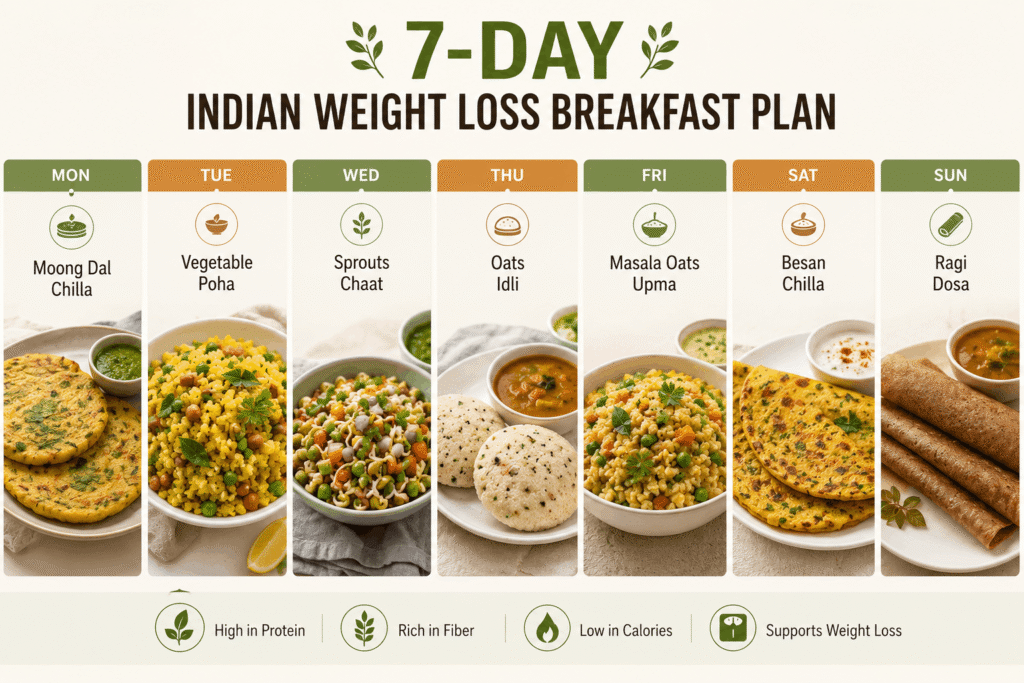
Monday — Moong Dal Chilla with mint chutney and a cup of green tea
Tuesday — Vegetable Poha with peanuts and a small bowl of plain curd
Wednesday — Mixed Sprouts Chaat with a piece of fresh fruit
Thursday — Oats Idli with vegetable sambar
Friday — Masala Oats Upma with a cup of buttermilk
Saturday — Besan Chilla with curd and tomato chutney
Sunday — Ragi Dosa with light sambar — take your time with this one
One Thing to Remember
Sustainable weight loss does not come from eating meals you tolerate. It comes from eating meals you genuinely look forward to, that happen to be good for your body.
Each and every one of the breakfasts listed here uses readily available ingredients from any Indian grocery store, and does not exceed fifty rupees per serving, can be prepared in under 20 minutes, and would be acceptable to most of your family members. weight loss
You do not have to change your entire food culture in order to lose weight. You have to know what you want your morning meal to accomplish for your body, and then use the rich,diverse, Truly healthy food tradition that Indian breakfast is, to achieve that goal.
Start with just one modification this week. Just one. Instead of biscuits and chai, just have a moong dal chilla. By Wednesday morning you’ll already feel a difference.

 Admin
Admin
[…] Indian Breakfast for Weight Loss […]
[…] is the meal people rush through or skip entirely, which is exactly backwards. A solidIndian Breakfast for Weight Loss needs two things — protein and fibre — so you’re not raiding the snack drawer by […]
[…] Forearms on the ground, body in one straight line. Hold. Your shoulders will shake. Your stomach will want to sag. Do not let it. Thirty seconds into […]
[…] weight loss advice is written for Western bodies, Western diets, and Western lifestyles. It talks about salads and […]
[…] Check another blog: Indian Breakfast for Weight Loss […]