 Admin
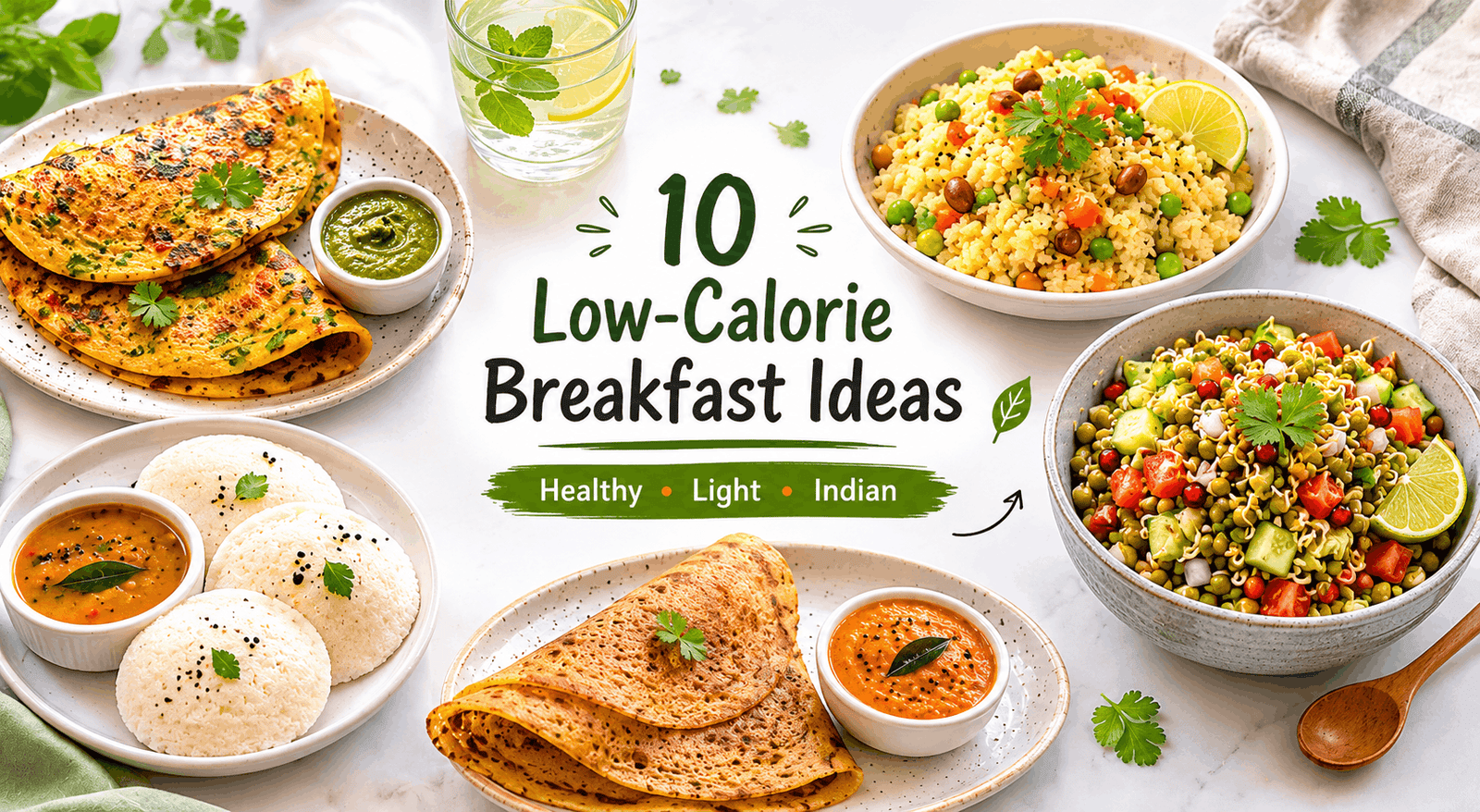
Admin Let’s be honest. Most of us never really thought about what our morning plate was doing to our waistline. If you are now looking for the best low-calorie Indian breakfast options that are filling, tasty, and genuinely practical, you are in the right place. No smoothie bowls. No imported ingredients. Just real Indian food that works.
1. Moong Dal Chill — The Best Low-Calorie Indian Breakfast to Start With
If there is one breakfast worth making a habit of, this is it.
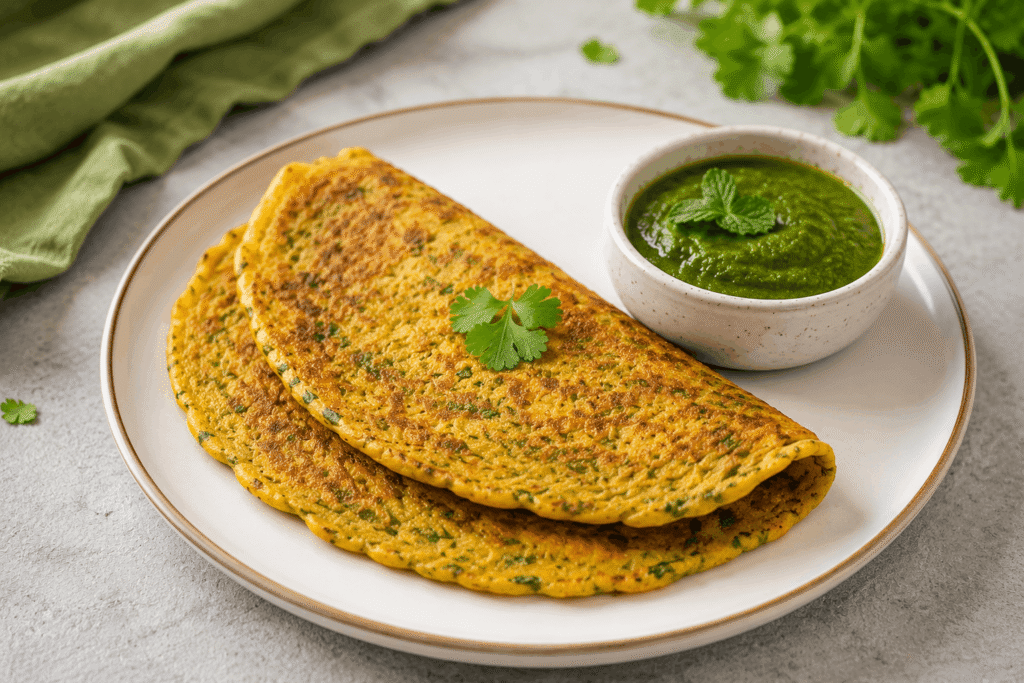
Moong dal chilla is nothing but a simple, savory thin pancake prepared with ground soaked moong dal. Just soak the dal overnight, grind it, add finely chopped onion, tomato, green chili, salt and a pinch of hing, and cook on a non-stick tawa with little or no oil. This is ready in 10 minutes flat. A single chilla is loaded with about 8 to 10 g of protein and is around 130 to 160 calories.
The real power of chilla for weight loss comes from its protein content. Moong dal keeps hunger at bay for hours and hours together. 90% of people have 2 chillas in the morning, it doesn’t make you want biscuits by 11 am.
Alternatively, for a more substantial breakfast stuff a tablespoon of paneer or leftover sabzi inside. With green chutney it’s a wholesome breakfast under 300 calories.
Quick note-use a non-stick pan and don’t give in to adding too much oil, ½ tsp of oil should be perfectly enough.
2. Steamed Idli with Sambar — A Classic Low-Calorie Indian Breakfast Under 220 Cal
Idli has been part of a breakfast menu for the people of South India for many generations and it seems on average they are not wrong. Yes, it is right. One steamed idli has about 33 calories. Since it is steamed, there is absolutely no oil. It’s prepared from a fermented batter of rice and urad dal. A plate of 3 idlis along with a bowl of sambar – an authentic sambar cooked with drumstick, pumpkin, and some dal – amounts to approximately 200-220 caloriesAll this, a wholesome breakfast within 250 calories!
We sometimes really underestimate the significance of fermented food. They are easy to digest, good for the stomach, and feed the beneficial microbes in our body. Thus, on a day your digestion is not so good, idli will never be a problem.
To make the breakfast even healthier, you can switch to oat idli or ragi idli. Though it will have a slightly different taste, these two alternatives work well and have higher fibre than regular rice idli.
Have your coconut chutney with moderation. One tablespoon can be eaten freely. But a full ladle can sneakily shoot up your calorie count.
3. Vegetable Poha — An Easy Low-Calorie Indian Breakfast in 15 Minutes
So, in my honest opinion, I feel Poha is the most under rated breakfast item throughout India. But, when made the right way, one plate of vegetable Poha is quite light, nourishing and served within 15 mins. And here I am talking about making it the right way again. A plate of oily Poha drowning in sev is a separate dish altogether.
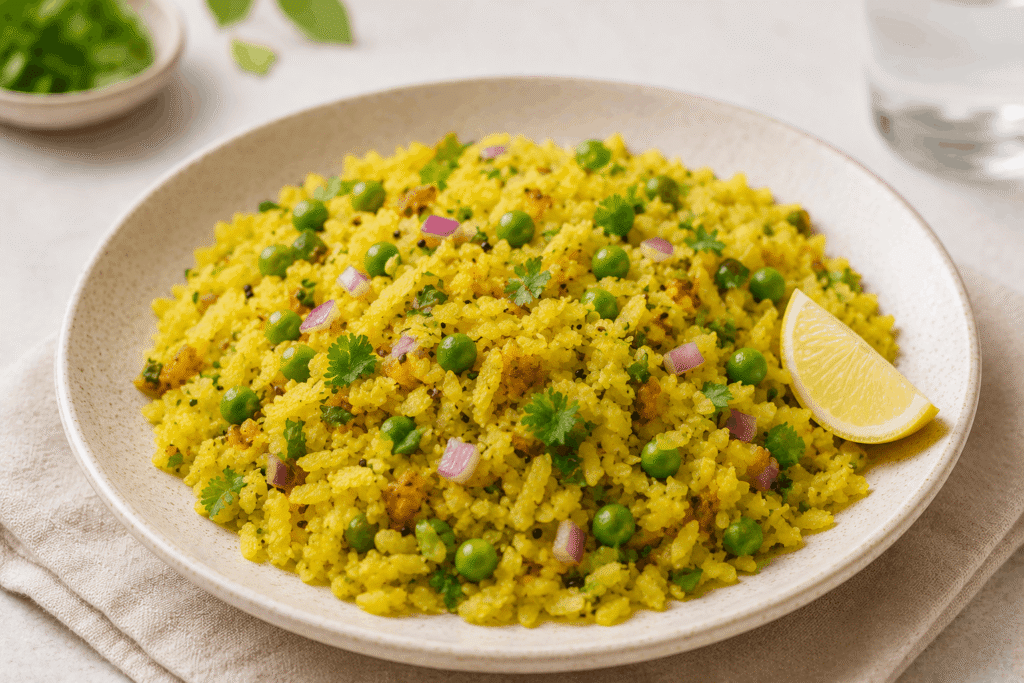
I use approximately half a tsp of oil, add some mustard seeds, curry leaves, turmeric, green chilly, slit onion and the veggies available with you (peas, carrots and beans all work great). Add some roasted peanuts for crunch and protein. Top off with a squeeze of lemon juice (good for taste as well as the iron absorption process in the body). A portion of approx 3/4 cup will total up around 180-210 calories. This isn’t particularly a protein packed meal, but it’s a low-fat stomach friendly meal that will give you enough energy to start the day. Try brown poha sometime if you come across it, fiber content will be higher and it tastes like heaven!
4. Ragi Dosa — A Fibre-Rich Low-Calorie Indian Breakfast for Stable Energy
I am also a little upset that Ragi–which really is one of the most nutritious grains on the planet-doesn’t receive much publicity outside Karnataka. Ragi (finger millet) is a good source of calcium (per 100g Ragi contains more calcium than milk!) and is quite low in the glycemic index. This means it won’t leave you feeling famished one hour later; it won’t cause blood sugar levels to spike then dip and leave you craving something sweet!And of course, it’s gluten-free!
For a ragi dosa, roughly three tbsp of ragi flour is combined with one tbsp of rice flour, salt, some cumin and then water is added until a thin batter is achieved. This is spread in a thin layer onto a hot tawa with a drop or two of oil, and cooked. One dosa contains approx. 140-160 calories. Two dosas with sambar makes a brilliant breakfast if you are watching blood sugar/diabetes. Tastes slightly earthy compared to a regular dosa, but it’s fairly palatable for anyone willing to move past the initial novelty of the ‘new’ taste. Definitely give it a
5. Oats Upma — A Modern Low-Calorie Indian Breakfast for Cholesterol Control
Traditional rava upma is a decent breakfast but semolina digests quickly and hunger tends to return within two hours. Switching rava for rolled oats solves that problem quite neatly.
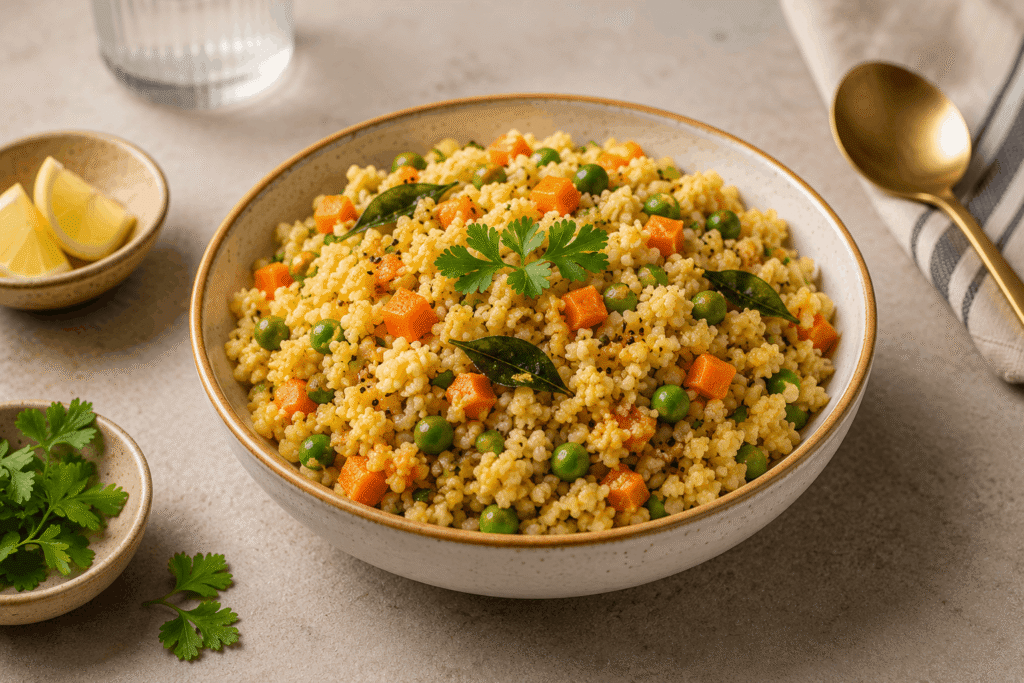
It is prepared using almost similar ingredients to regular upma- Mustard seeds, Curry leaves, Onion, Green chilli, Ginger and vegetables – only, semolina replaced with oats. It is softer to eat but tastes equally yummy. Oats contain a fair amount of beta-glucan (a type of soluble fibre). Beta-glucan slows down the process of digestion, over time reduces cholesterol level and you would feel fuller than the semolina based upma does.
Each serving of oats upma will provide between 220-250 calories and between 5-6 grams of fiber. Use steel cut oats rather than rolled oats in order to retain some texture-instant oats will just turn to mush.
This is a good breakfast for a weight, blood sugar, and cholesterol diet.
6.Sprouted Moong Salad — The Lightest Low-Calorie Indian Breakfast on This List
No cooking. No gas. No tawa. Just planning ahead.
Rinse the whole moong in the evening and leave it to soak overnight. The next morning drain all the water, wrap the moong in a damp muslin cloth and keep on the counter. Next morning you will have sprouts. Overall the whole process takes approximately 36 hours of passive wait and approximately 3 minutes of your actual work.
Sprouted moong is easier to digest than dal cooked on the stove as during the sprouting process complicated starch molecules break down and thus the complex starches get converted into simpler ones. The amount of vitamin C further rises to 13 times the original and the protein is far more bio available.Sprouted moong 1 cup gives 7-9gms protein and the total calorie count is between 120-140gms.
Chop the cucumber, tomato, onion and sprinkle some lemon juice, chaat masala, and rock salt over it. Pomegranate seeds if available can also be mixed in. Add a tablespoon of roasted peanuts for more crunch and protein.
More substantial for breakfast than one thinks.
7. Besan Chilla — A Protein-Packed Low-Calorie Indian Breakfast Option
This is basically the same concept as the moong dal chilla, just that you use chickpea flour instead. It’s got a nuttier flavor and a slightly thicker texture. Besan is a powerhouse of protein and fiber, and also contains resistant starch that essentially feeds your gut microbes. Whisk your besan with a little water until you have a batter that you can pour into a pan, add in some finely chopped onion, capsicum, grated carrot, green chili, ajwain, salt and turmeric, and cook on a non-stick tawa with a tiny bit of oil. Ajwain is a “kitchen truth” that’s real – it aids digestion by helping with gas and bloating. Best to leave it in.The calorie count for one chilla is approximately between 160 to 190 cals. When the chillas are supplemented by a little crumbled paneer, the protein count goes up to 13 grams for each chilla. Two such chillas with curd makes a meal fit for a champion.
8. Egg Bhurji — The Quickest Low-Calorie Indian Breakfast for Non-Vegetarians
So for you eggs fans, this is about as easy as it gets for a high-protein Indian breakfast.
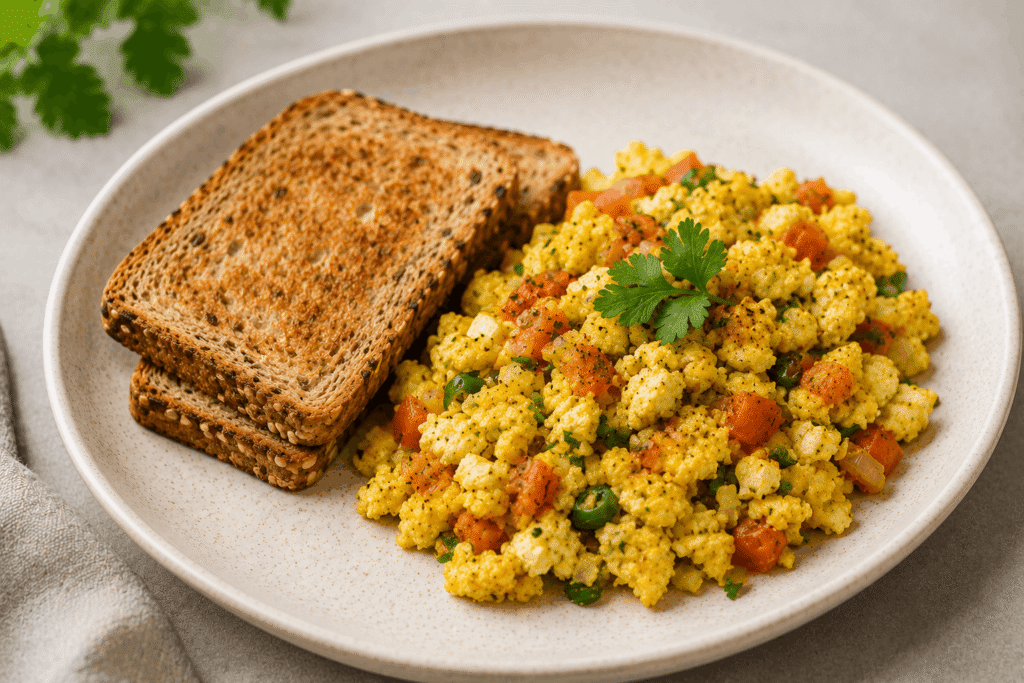
In a hurry heat ½ teaspoon oil then the 2 eggs with onion, tomato, green chili, ginger, pinch of turmeric, salt and some cumin. Mix well and finish with fresh chopped coriander. In 8 minutes flat you prepared a full meal.
The 2 eggs have approx. 180-200 calories and 12-14 g protein.
. There are all 9 essential amino acids, so our body can very effectively utilize the protein from eggs.
Substitute the 2 buttered rotis with 1 slice of whole wheat toast and your meal comes to under 280 calories. That, I can tell you, is a truly filling meal and great for weight loss, minus the feeling of dieting.
9. Steamed Dhokla — A Gut-Friendly Low-Calorie Indian Breakfast from Gujarat
Here’s something the rest of India should know about Gujarati food – even steamed food can be incredibly delicious!
Try Dhokla. A steamed batter of fermented besan (chickpea flour) and yogurt, which is tempered with oil, mustard seeds and curry leaves. Light, airy, slightly sour and extremely yummy.
. A plate of 3 pieces is usually between 160-180 calories and is a natural probiotic because it’s fermented.
This is where it gets a little unhealthy if you’re not careful – tempering is the biggest calorie source.Just keep oil to a teaspoon, and add mustard seeds and curry leaves-that’s all! Instead of sweet tamarind chutney, serve it with a green chutney if you want to keep your sugar level under check. Also, dhokla is one of those breakfasts that tastes just fine at room temperature, and hence an excellent breakfast on the move!.
10. Dalia Upma — A High-Fibre Low-Calorie Indian Breakfast Your Body Will Thank You For
Ever tried something your grandma told you was healthy and turned out that grandma was right? Well, daliya (broken wheat) might just be one of those things.
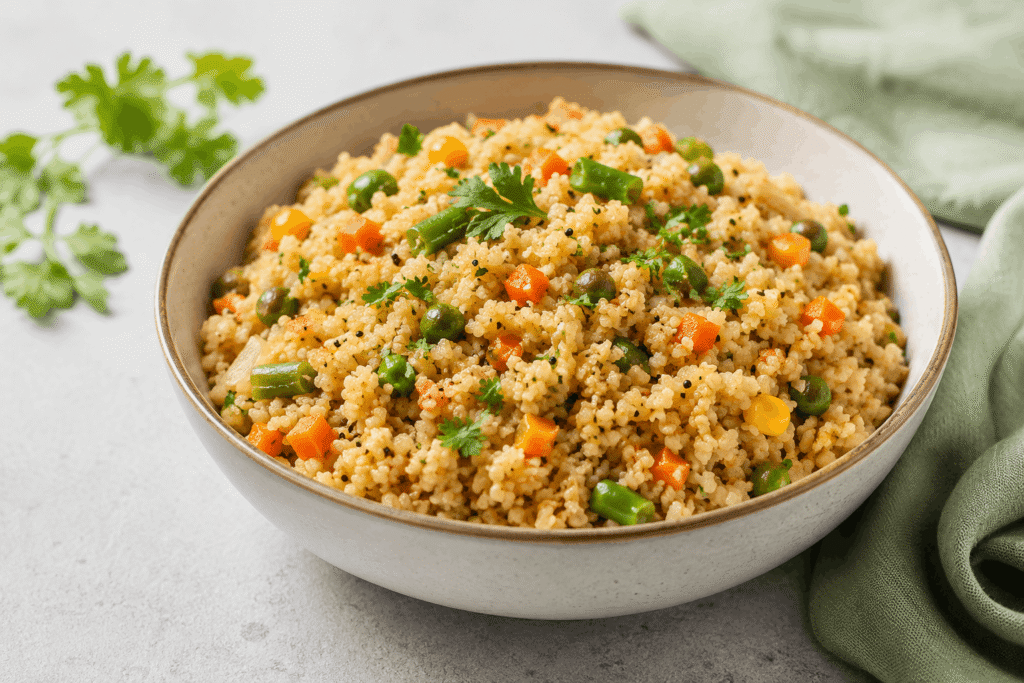
This whole grain food retains its bran layer, which means it packs in way more fiber than any refined grains. A serving of veggie daliya upma contains about 6 to 7 grams of fiber and comes in at about 180–200 calories.This extra fiber is where the actual wonders are-daliya digests at a slow rate, your sugar levels don’t rise too fast and you will stay full for about 3-4 hours. To prepare it, simply use daliya in place of semolina in your usual upma recipe (mustard seeds, curry leaves, onion, ginger and mixed vegetables). If you desire, you could also add a teaspoon of ghee near the end-if you do, you should really try adding it-for your fat soluble vitamins and the extra taste makes it even better!
It also happens to be one of the cheapest options on the list.
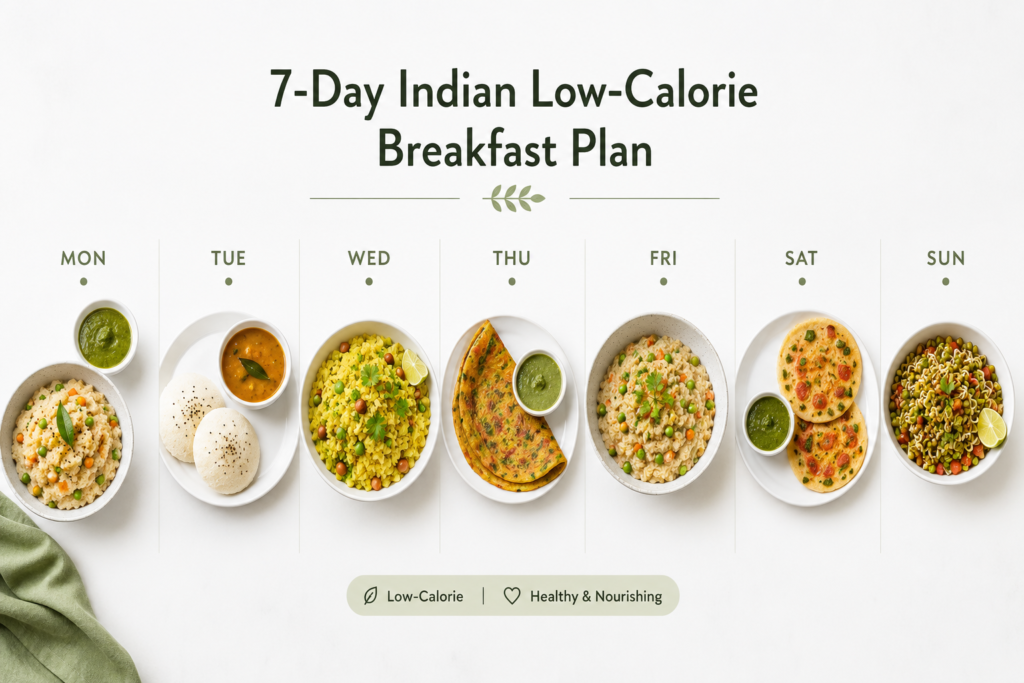
7-Day Low-Calorie Indian Breakfast Plan for Weight Loss
- 1.Monday — Two moong dal chillas with a bowl of low fat curd. Roughly 290 calories.
- 2.Tuesday — Three steamed idlis with sambar. Around 220 calories.
- 3.Wednesday — Vegetable poha with a banana on the side. Around 300 calories.
- 4.Thursday — Egg bhurji with one slice of whole wheat toast. Around 275 calories.
- 5.Friday — Oats upma with a cup of green tea. Around 230 calories.
- 6.Saturday — Two ragi dosas with a small amount of coconut chutney. Around 325 calories.
- 7.Sunday — Sprouted moong salad with one boiled egg. Around 210 calories.
No day goes over 350 calories. Every breakfast has enough protein or fibre to carry you comfortably to lunch. And not one of them requires anything you cannot find in a regular Indian kitchen.
Practical Tips to Make Your Low-Calorie Indian Breakfast Work Better
You might be shocked to hear this, but the biggest calorie trap of Indian breakfast is cooking oil. In most households, they use way more oil than what they realize. TTry substituting with half a teaspoon. You really won’t be able to taste the difference but shave off 60 to 80 calories each meal time. The milk and sugar chai you consume in the mornings has approx 60 calories a cup; two cups before your meal therefore would have cost you 120 calories. Add it up across a week, Green tea or black coffee as simple as that to make at least on weekdays.
Do not skip protein. Even a small bowl of curd or one boiled egg alongside a carbohydrate-based breakfast like poha makes a real difference to how long you stay full.
And finally — consistency matters more than perfection. Eating the right breakfast six days out of seven, over several months, is worth far more than a perfectly tracked meal for two weeks followed by giving up.

 Admin
Admin
[…] Low-Calorie Breakfast Ideas […]
[…] Low-Calorie Breakfast Ideas […]
[…] According to the ICMR, a healthy sedentary adult requires approximately 0.83 grams of protein per kg body weight. This is about 50 grams a day if you weigh around 60 kg. However, this number represents the bare minimum requirement to avoid deficiency, not the quantity that will give you healthy muscle especially after the age of 30 where you begin to lose muscle without even realising (sarcopenia is the jargon if you want it). If you’re a bit active then even most nutritionists will recommend 1-1.2 g per kg body weight. […]
[…] and stops you from snacking on junk by 11 AM. If your goal is to manage weight, looking up some Low-Calorie Breakfast Ideas can give you options that are filling without piling on extra […]