 Admin
Admin I’ll be honest — every time someone tells me to “transform your life,” I close the tab. Big promises rarely survive a Monday morning commute. So this isn’t that. This is a list of small, slightly boring things that actually work, tested against the reality of Indian life: traffic, deadlines, family WhatsApp groups that never sleep, and a mother-in-law who insists you eat one more roti.
If you’ve ever searched for simple wellness habits to improve your health and felt overwhelmed by 6 AM workout videos and green juice influencers, this one’s for you. No overhaul required. Just a few things, done consistently, that quietly add up.
Why Simple Wellness Habits to Improve Your Health Matter More Than Big Changes (revised from “Why the Small Stuff Actually Works”)
Here’s a pattern I’ve noticed over and over: people who try to fix everything at once usually fix nothing. The person who vows to wake up at 5 AM, cut out sugar completely, and run five kilometres — starting Monday — is often back to their old routine by Thursday.
The ones who actually change something? They start absurdly small. A walk after dinner. One glass of water before chai. That’s it. And somehow, months later, they’ve built a completely different relationship with their health, almost without noticing.
That’s no coincidence, habits stick when they are small and tied to an established action. The issue isn’t willpower being ineffectual, it’s that it wasn’t intended to hold this much of a burden.
1.Start Your Day With Water, Not Chai or Coffee
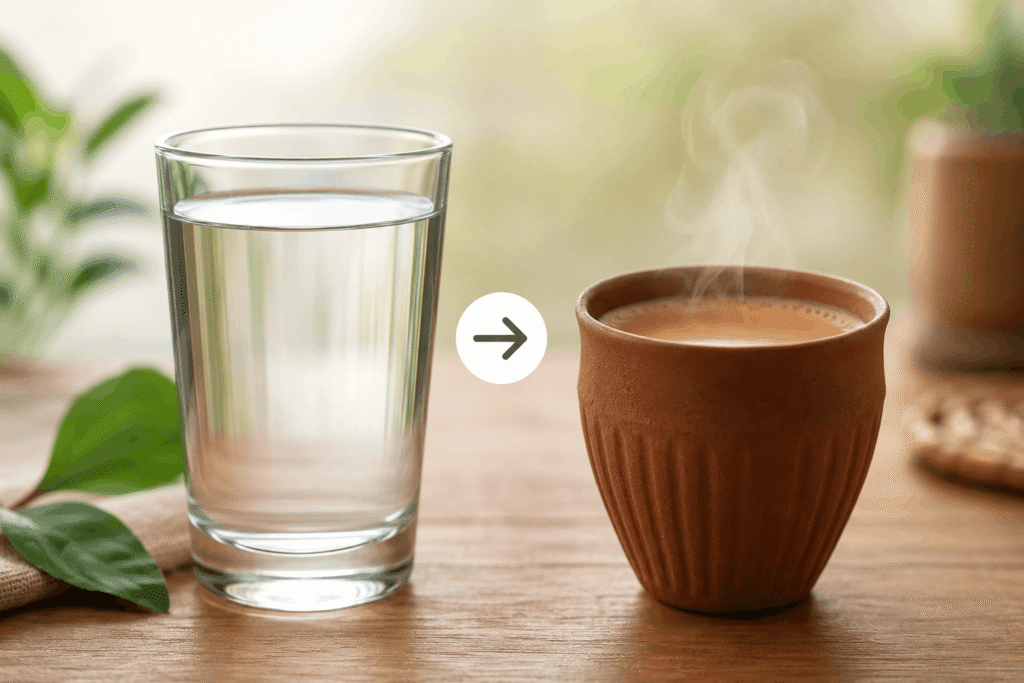
I know, I know — chai first thing feels non-negotiable in most Indian homes. Keep the chai. But try having a glass of water before it.
Your body’s been without fluids for six-plus hours overnight. Water first thing helps wake up digestion and gives your metabolism a nudge before caffeine takes over. Some people add lemon, some soak methi seeds overnight — an old trick, honestly, and there’s something to it.
Just keep a bottle near your bed. That’s the whole hack. If it’s not within arm’s reach, you won’t do it.
2. Practice Mindful Eating Instead of Rushed Meals
Think about your last few meals. Were you watching something? Scrolling? Eating standing up in the kitchen because you were running late?
There’s another common habit, too, which no one tells you about, but it makes a difference over even most dieting advice. If you eat without being engaged, you can’t sense when your body tells you it’s had enough and you eat more, process food poorly and then drag an hour later.
Try this instead:
- Put the phone in another room during at least one meal a day
- Chew properly — not the two-bites-and-swallow move
- Sit down. Actually sit.
Our grandparents ate this way without thinking about it. We’ve just… drifted from it.
3. Prioritise 7-8 Hours of Quality Sleep
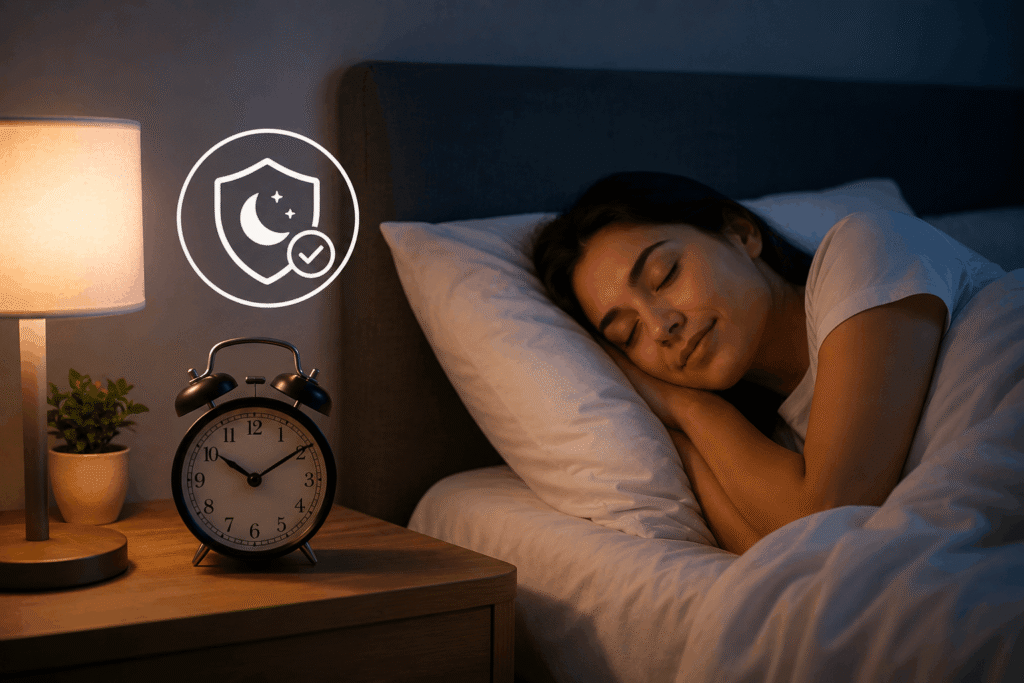
Work calls in the evening, the “just-one-more-episode” habit, endless scrolling through the latest disaster till the early hours – familiar right? Somehow we’ve all gradually started ditching sleep first and the evidence appears everywhere – your mood, your weight, your ability to focus, your immune system, even how much tolerance you have to your morning commute.
A few things that genuinely help:
- Same sleep and wake time, weekends included (yes, even Sundays)
- Phone away 30-40 minutes before bed
- Dark, cool room
- No caffeine after 4 PM, however tempting
Nobody wants to hear this, but sleep isn’t the reward for a productive day. It’s the reason you get to have productive days at all.
4. Move Your Body for At Least 30 Minutes Daily
You don’t need a gym. You don’t need equipment. You just need to move your body for half an hour, somehow, most days.
That could be:
- A walk around the block after dinner
- Yoga at home — genuinely one of India’s best exports to the wellness world
- Dancing badly to old Bollywood songs in your living room
- Taking the stairs because the lift is broken again anyway
Surya Namaskar deserves a special mention here. It’s movement and breathing rolled into one, and it takes maybe ten minutes.
Thirty minutes a day, most days, cuts your risk for a long list of things — heart disease, diabetes, the works. Nothing dramatic. Just consistent.
5.Reduce Sugar and Processed Food Intake

It’s not like you have to ban gulab jamun from your life – you can eat it sparingly! It’s unfair, impractical even. But it’s true that you end up paying for all that sweetness with diseases, especially those such as diabetes which has an incredibly high prevalence in India.
Small swaps that don’t feel like punishment:
- Jaggery instead of refined sugar, when you can
- Roasted makhana instead of chips
- Fresh fruit when the sweet craving hits on a random Tuesday
- Actually reading the label before buying packaged food (the sugar content is often shocking)
It’s portion control, not prohibition. Big difference.
6. Practice Deep Breathing and Meditation
Stress doesn’t announce itself politely. It just sits in your shoulders, your jaw, your sleep, until one day you realise you’ve been tense for a week straight.
Pranayama — old as Indian tradition itself — is free, requires nothing, and worksYou can reduce the intensity of your body’s reaction to stress by alternating between nostril breathing and The Humming (Bhramari). Let them for ten minutes to feel your stress fall in response.
Don’t have the wherewithal to regulate your breath with strict instructions? Okay, then just shut your mouth, sit down for five minutes and pay attention to it. I know, that isn’t meditation with a capital M. But it’s still meditation.
7. Limit Screen Time and Take Digital Breaks

How are we ever going to stop doomscrolling?! You can’t really get away with blaming the devices for all your eye and neck strain or any sleeplessness you may be suffering, but the low-level, background anxiety that seems to follow everyone? That has to be the smartphone’s fault.
Try the 20-20-20 rule — every 20 minutes, look at something 20 feet away for 20 seconds. Simple, and it actually helps.
Beyond that:
- No-phone zones during meals
- Notifications off for anything that isn’t urgent
- One day a week with noticeably less screen time
8. Build Strong Social Connections
Wellness isn’t only physical.The health costs of loneliness are for real, and creeping up, even in a country like India which is, in theory, super-connected.
We can communicate but that does not mean we are in contact. Call someone instead of texting. Meet a friend instead of liking their post. Have one real conversation this week that isn’t logistics.
9. Get Regular Health Check-Ups

This is the habit everyone skips until they can’t. Regular health check-ups aren’t exciting, but catching high blood pressure or borderline sugar levels early is a completely different experience than discovering them in an emergency room.
Once a year, at minimum:
- Blood sugar, cholesterol, thyroid
- Blood pressure, especially past 30
- Eyes and teeth
- Weight and BMI, just to track trends
10. Spend Time Outdoors and Get Sunlight
Vitamin D deficiency is oddly common in India, given how much sun we get — mostly because we spend our days indoors, under fluorescent lights, staring at screens.
Fifteen to twenty minutes of morning sun does more for your bones, immunity, and mood than most supplements. Pair it with your walk and you’ve solved two things at once.
11.Practice Gratitude and Positive Self-Talk
It’s all too simple to wallow in what is lacking, what was wrong, what needs more repair. Cultivate a gratitude practice, however modest – write down three things at day’s end and your mind begins to follow a different course.
And also monitor what you say to yourself. If you wouldn’t say this to a buddy of yours, please don’t state it to your body.
12. Stay Hydrated Throughout the Day
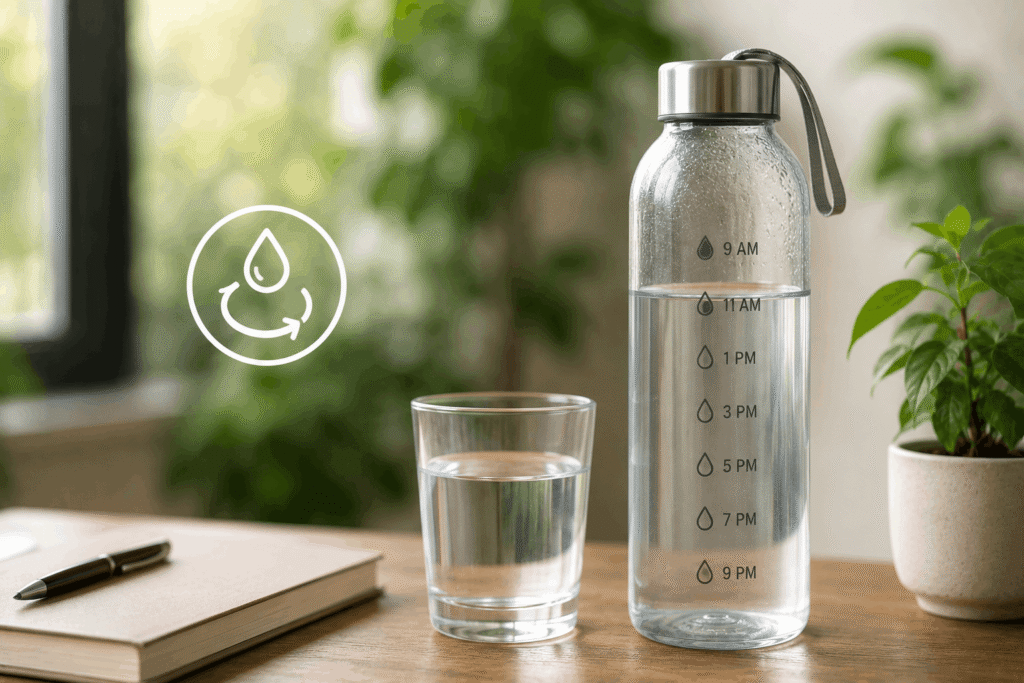
One glass at 7 AM isn’t enough, especially in India’s heat.Headaches, fatigue and the brain fog you always chalk up to workload are a classic sign of dehydration that hits you by the afternoon.
Eight to ten glasses a day, more if you’re active or it’s summer. Coconut water, chaas, herbal teas — all count, and they bring their own benefits too.
13. Cook More Meals at Home
Delivery apps have made it shamefully easy to avoid the kitchen entirely. Cooking at home provides control over portion size, salt and oil you’ll never get from a meal ordered through an app.
You don’t need to be a chef. Dal, sabzi, roti — done simply, at home — beats most restaurant meals nutritionally, no contest.
14.Set Boundaries Around Work
Hustle culture in India can be relentless — always available, always “just five more minutes.” But work without boundaries eventually catches up with you, and burnout isn’t a badge of honour, whatever LinkedIn says.
Fixed work hours, even from home. Short breaks every hour and a half or so. Actually using your leave instead of hoarding it. Logging off after hours when you can.
15. Practice Consistency: The Most Important of All Simple Wellness Habits to Improve Your Health
This may be the big one. You will miss a workout. You will eat the second gulab jamun. Big deal, so what – it’s Tuesday.
The pattern over weeks or months is what really moves the needle – not a specific day. You should give yourself permission to drop out of a habit sometimes. That breathing space makes a habit possible to begin with.
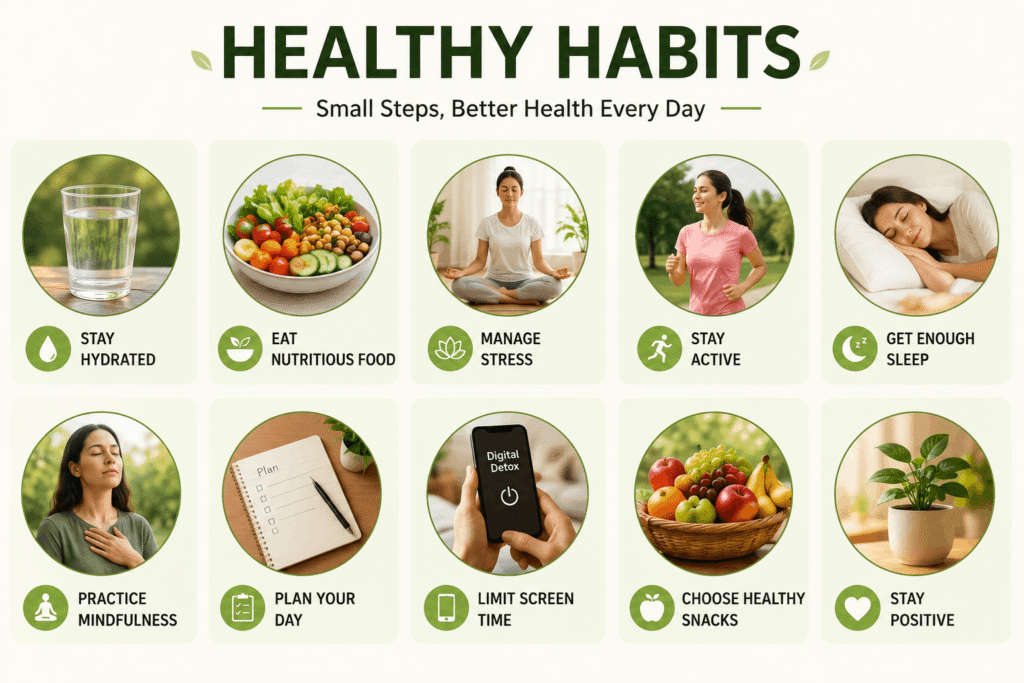
Frequently Asked Questions About Simple Wellness Habits to Improve Your Health
1: Where should I even start?
Honestly the number 1 mistake people make is to try to fix the diet, sleep, exercise, screen time – EVERYTHING on day one. It never works, I promise. Stick with just three things for a good few weeks. Water as soon as you wake up, sleep for 7-8 hours and 30 mins of walking most days.Don’t touch your diet yet. Don’t add meditation yet. Don’t sign up for a gym. Just those three.
2: How long before a habit actually sticks?
The myth that habit creation takes just 21 days sounds appealing and is very memorable. But there is no evidence it’s real – just a decades-old estimate which hasn’t been rigorously studied. The true answer is rather more complex, ranging between 3 weeks and two months, and varying in its difficulty according to habit.
Drinking a glass of water in the morning? That might feel automatic within ten days — it’s simple, low-effort, and doesn’t require much willpower.
3: Does this stuff actually help mental health too?
Absolutely! And it’s much more direct than many of us imagine. Our sleep, exercise and food isn’t in its own separate little mental wellness box; it’s hard-wired into brain chemistry. Not sleeping enough can ramp up cortisol and anxiety, movement can boost your mood via endorphins and regulate your body’s stress response, and a sugar spike or dip can literally leave you feeling foggy, sluggish and sad-and not just “tired.”
4: Do I need to spend money on any of this?
Almost none of it. Water is free. Walking is free. Breathing exercises are free. Sleep — assuming you’re not buying a fancy mattress — is free. Even cooking at home, once you factor in what you’re not spending on delivery apps, usually ends up cheaper than eating out or ordering in.
The one genuine expense in this whole list is health check-ups — blood tests, BP monitoring, eye and dental visits.
5: Is yoga really that effective?
That’s not an exaggeration — there are actually few exercises that really live up to the hype. Many activities tend to focus on one area – either cardio, strength or flexibility. Yoga, on the other hand, combines breathwork, focused mental activity and movement in unison. The rare synergy of this mix is what leads to results in a diverse range of categories.
In terms of the actual body, if you practice a few times a week you’ll increase your flexibility and range of movement much more easily than any of your other workouts – it is more long term as you are not likely to be injuring yourself the way that you may with intensive training.
Final Thoughts: Simple Wellness Habits to Improve Your Health, One Step at a Time
None of this requires a lifestyle overhaul or a credit card. Simple wellness habits to improve your health work precisely because they’re small enough to actually do, day after day, without burning out on them by week two.
Pick one. Just one. Once it feels automatic, add another. That’s really the whole strategy — not motivation, not discipline, just repetition, stacked over time.
Health isn’t a finish line. It’s just what you do on an ordinary Tuesday, repeated enough times to matter.

 Admin
Admin